Department of Pharmacological and Pharmaceutical Sciences, College of Pharmacy, University of Houston, Houston, Texas, USA.
Covance, Madison, Wisconsin, USA.
J Clin Pharmacol. 2021 Sep;61(9):1232-1242. doi: 10.1002/jcph.1876. Epub 2021 Jul 9.
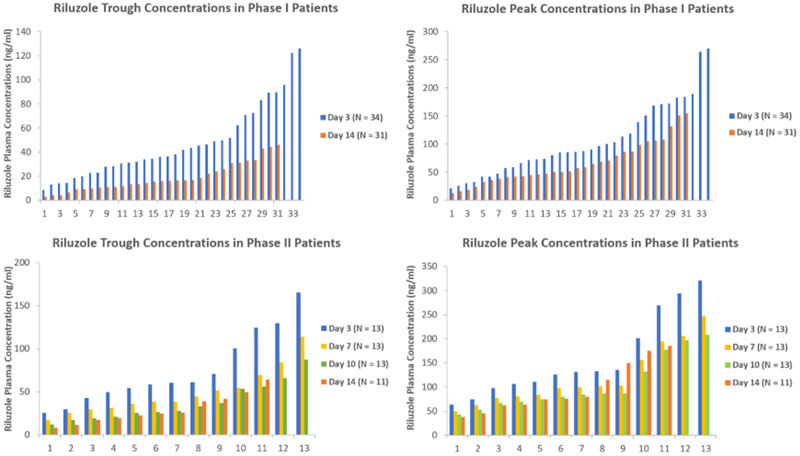
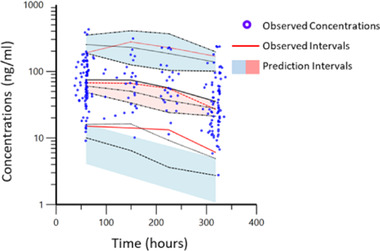
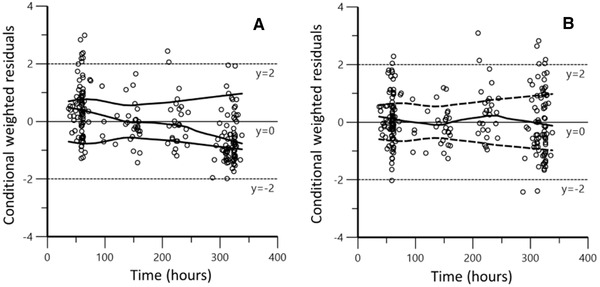
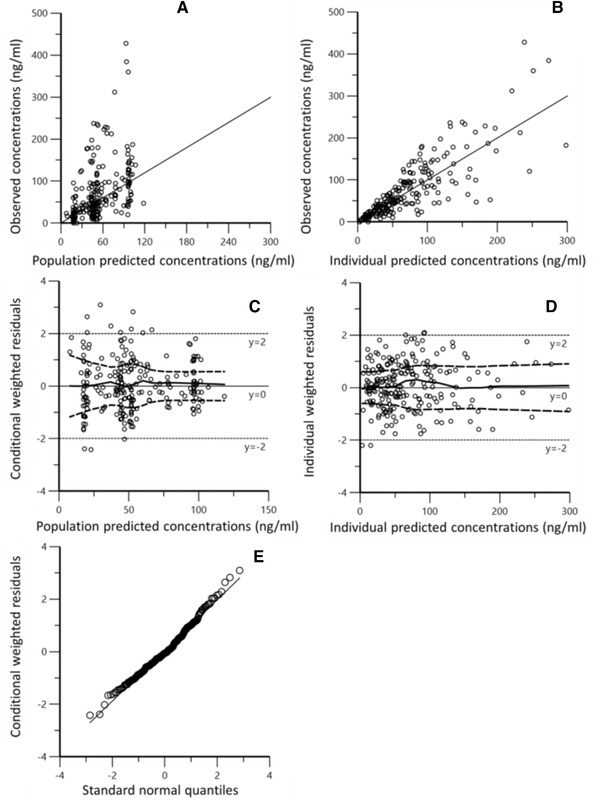
Riluzole, a benzothiazole sodium channel blocker that received US Food and Drug Administration approval to attenuate neurodegeneration in amyotrophic lateral sclerosis in 1995, was found to be safe and potentially efficacious in a spinal cord injury (SCI) population, as evident in a phase I clinical trial. The acute and progressive nature of traumatic SCI and the complexity of secondary injury processes can alter the pharmacokinetics of therapeutics. A 1-compartment with first-order elimination population pharmacokinetic model for riluzole incorporating time-dependent clearance and volume of distribution was developed from combined data of the phase 1 and the ongoing phase 2/3 trials. This change in therapeutic exposure may lead to a biased estimate of the exposure-response relationship when evaluating therapeutic effects. With the developed model, a rational, optimal dosing scheme can be designed with time-dependent modification that preserves the required therapeutic exposure of riluzole.
利鲁唑是一种苯并噻唑钠通道阻滞剂,于 1995 年获得美国食品和药物管理局批准,用于减轻肌萎缩侧索硬化症的神经退行性变。在一项脊髓损伤(SCI)人群的 I 期临床试验中,发现利鲁唑安全且可能有效。创伤性 SCI 的急性和进行性以及继发性损伤过程的复杂性可能会改变治疗药物的药代动力学。开发了一种 1 室模型,其中包括与时间相关的清除率和分布容积的一阶消除群体药代动力学模型,用于利鲁唑,该模型结合了 I 期和正在进行的 2/3 期试验的数据。当评估治疗效果时,治疗暴露的这种变化可能导致对暴露-反应关系的有偏差估计。使用该模型,可以设计出具有时间依赖性修改的合理、最佳的给药方案,以维持利鲁唑所需的治疗暴露。