Department of Biomedical Engineering, Rowan University, Glassboro, New Jersey 08028, United States.
Department of Physics and Astronomy, University of Pennsylvania, Philadelphia, Pennsylvania 19104, United States.
ACS Appl Mater Interfaces. 2021 May 12;13(18):20947-20959. doi: 10.1021/acsami.0c21868. Epub 2021 Apr 28.
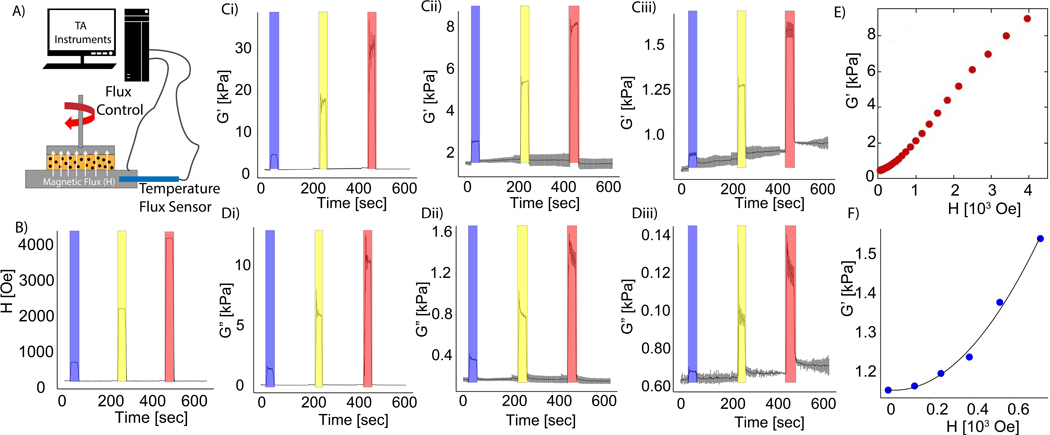
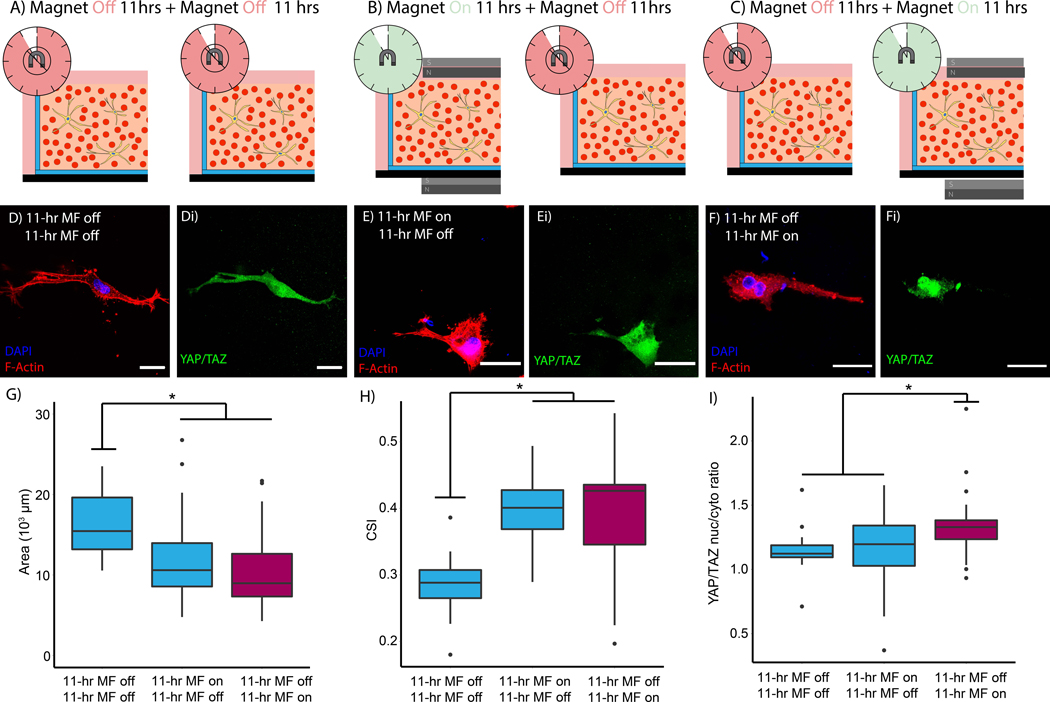
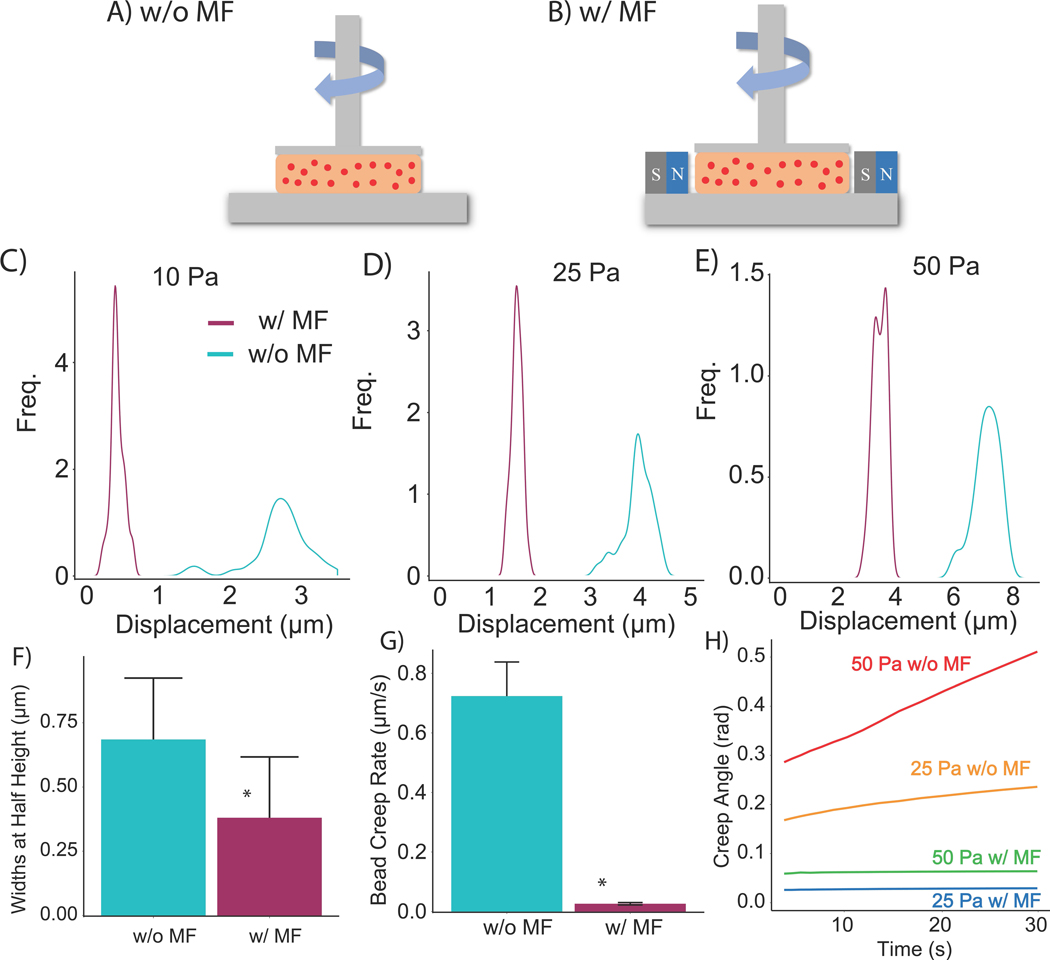
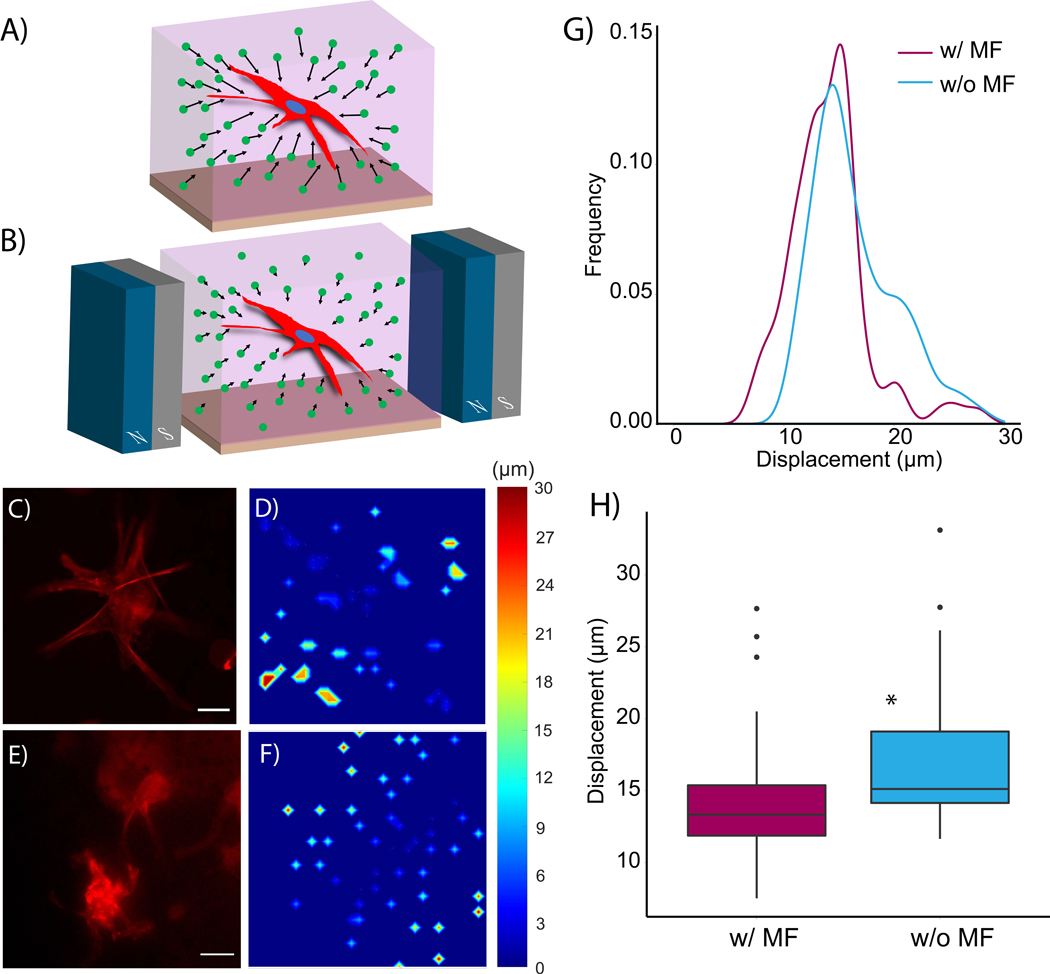
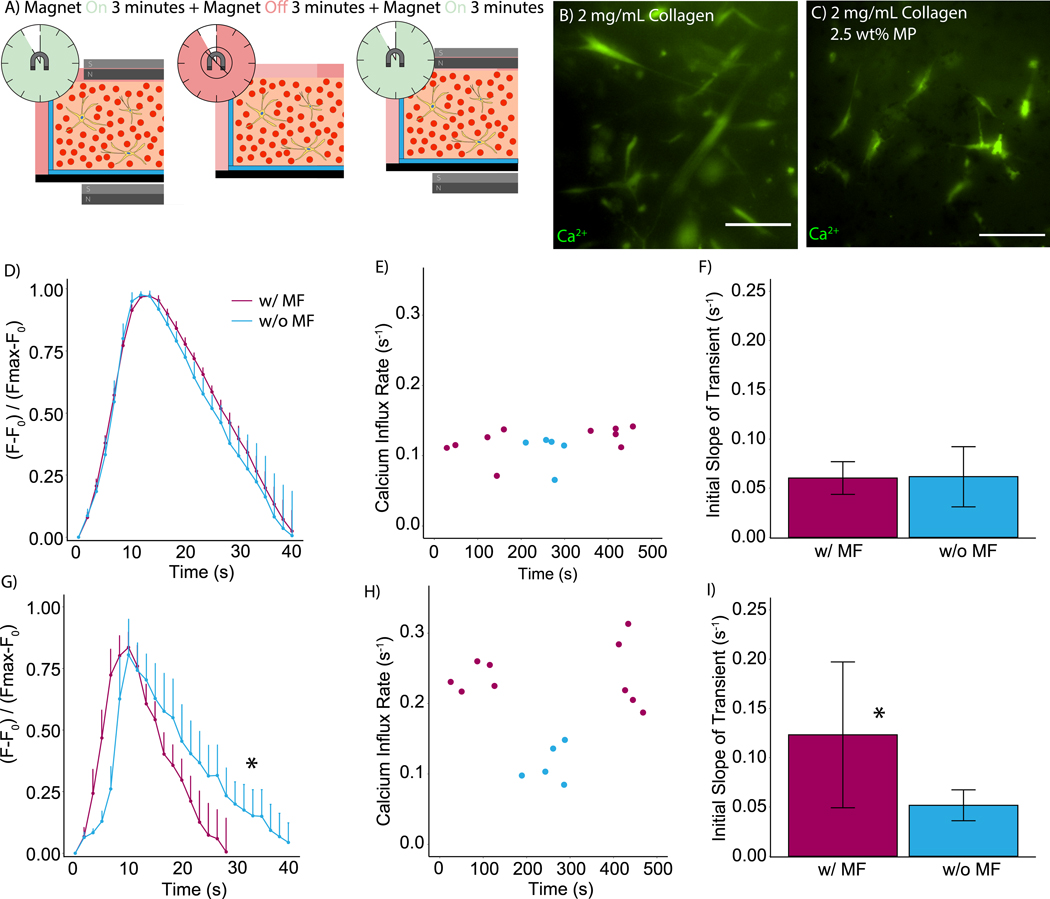
Current methods to dynamically tune three-dimensional hydrogel mechanics require specific chemistries and substrates that make modest, slow, and often irreversible changes in their mechanical properties, exclude the use of protein-based scaffolds, or alter the hydrogel microstructure and pore size. Here, we rapidly and reversibly alter the mechanical properties of hydrogels consisting of extracellular matrix proteins and proteoglycans by adding carbonyl iron microparticles (MPs) and applying external magnetic fields. This approach drastically alters hydrogel mechanics: rheology reveals that application of a 4000 Oe magnetic field to a 5 mg/mL collagen hydrogel containing 10 wt % MPs increases the storage modulus from approximately 1.5 to 30 kPa. Cell morphology experiments show that cells embedded within these hydrogels rapidly sense the magnetically induced changes in ECM stiffness. Ca transients are altered within seconds of stiffening or subsequent softening, and slower but still dynamic changes occur in YAP nuclear translocation in response to time-dependent application of a magnetic field. The near instantaneous change in hydrogel mechanics provides new insight into the effect of changing extracellular stiffness on both acute and chronic changes in diverse cell types embedded in protein-based scaffolds. Due to its flexibility, this method is broadly applicable to future studies interrogating cell mechanotransduction in three-dimensional substrates.
目前,动态调节三维水凝胶力学性能的方法需要特定的化学物质和基底,这些物质只能使水凝胶力学性能发生适度、缓慢且往往不可逆转的变化,排除了使用基于蛋白质的支架的可能性,或者改变了水凝胶的微观结构和孔径。在这里,我们通过添加羰基铁微颗粒(MPs)并施加外部磁场,快速可逆地改变由细胞外基质蛋白和蛋白聚糖组成的水凝胶的机械性能。这种方法极大地改变了水凝胶的力学性能:流变学研究表明,在含有 10wt% MPs 的 5mg/mL 胶原蛋白水凝胶中施加 4000Oe 的磁场,可将存储模量从约 1.5kPa 急剧增加到 30kPa。细胞形态学实验表明,嵌入这些水凝胶中的细胞可以快速感知 ECM 刚度的磁诱导变化。在变硬或随后变软后的几秒钟内,钙瞬变就会发生改变,而 YAP 核易位则会对磁场的时变施加产生较慢但仍然是动态的反应。水凝胶力学性能的瞬时变化为研究细胞在基于蛋白质的支架中嵌入的多种细胞类型的急性和慢性变化时细胞外基质刚度变化的影响提供了新的见解。由于其灵活性,这种方法广泛适用于未来研究三维基质中细胞力学转导的研究。