Cabral Joseph M, Cushman Camille H, Sodroski Catherine N, Knipe David M
Department of Microbiology, Blavatnik Institute, Harvard Medical School, Boston, Massachusetts, United States of America.
Program in Virology, Harvard Medical School, Boston, Massachusetts, United States of America.
PLoS Pathog. 2021 Apr 28;17(4):e1009567. doi: 10.1371/journal.ppat.1009567. eCollection 2021 Apr.
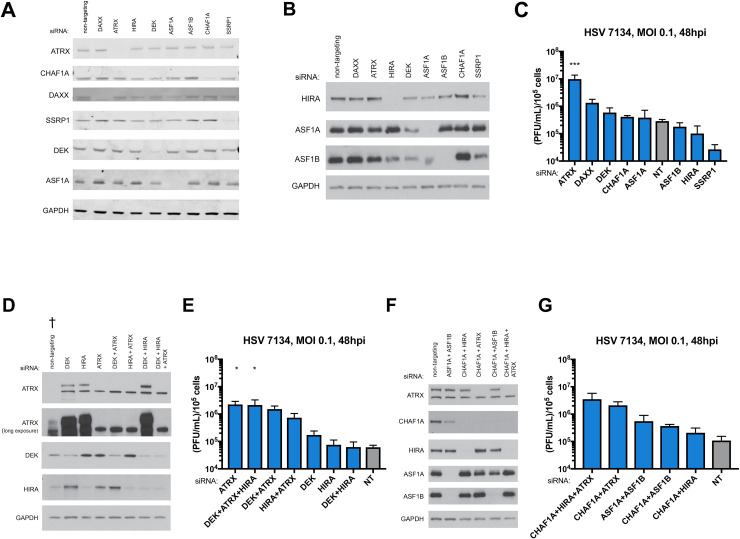
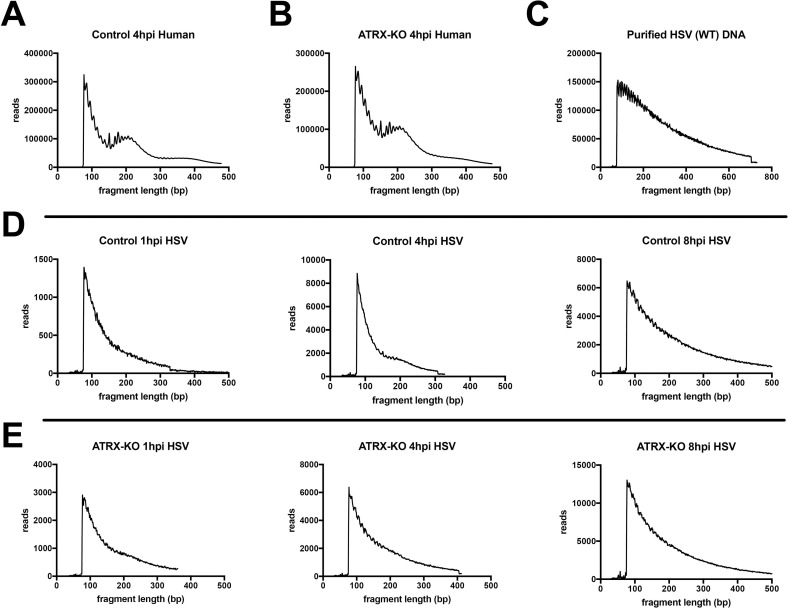
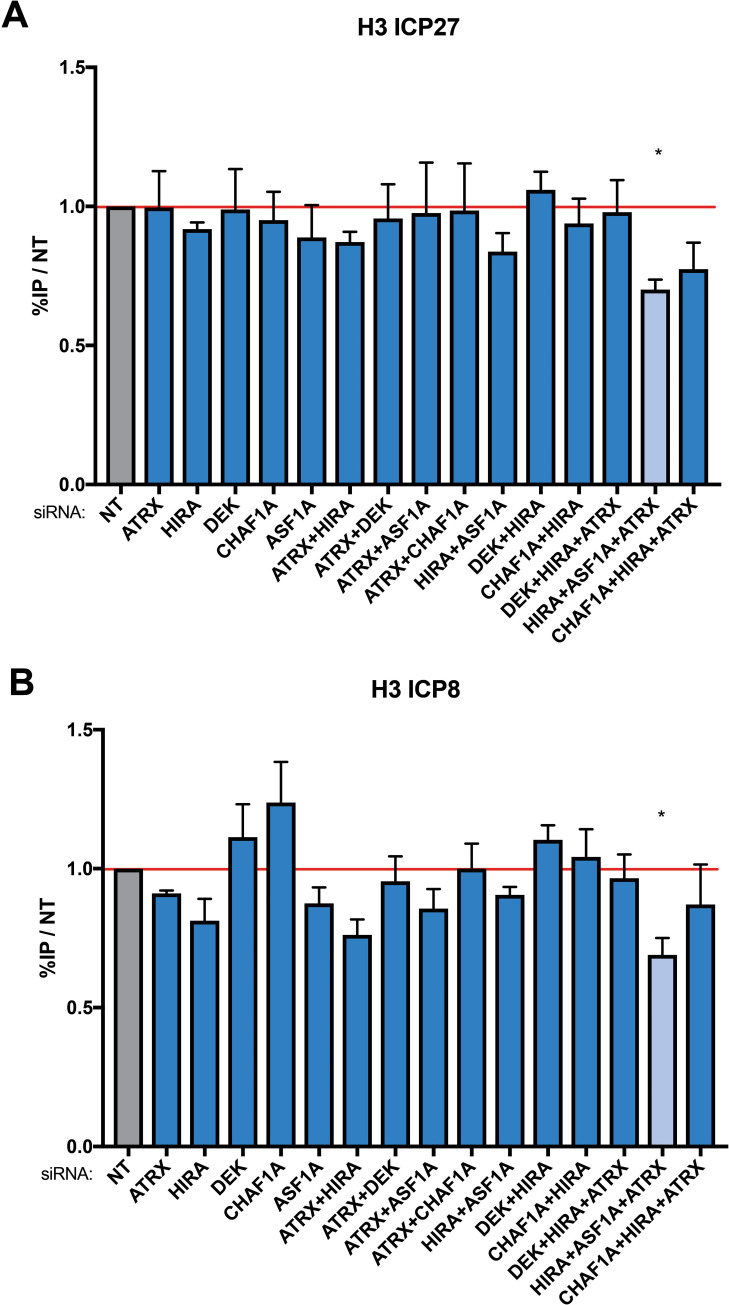
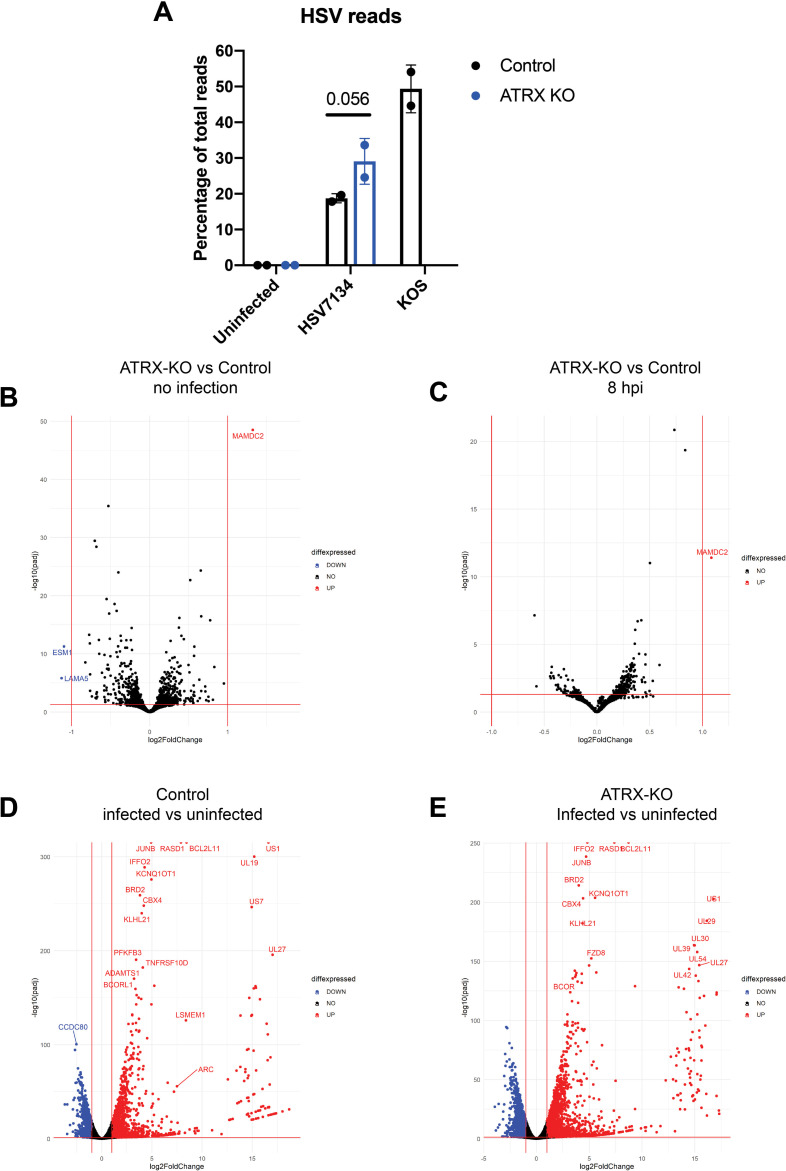
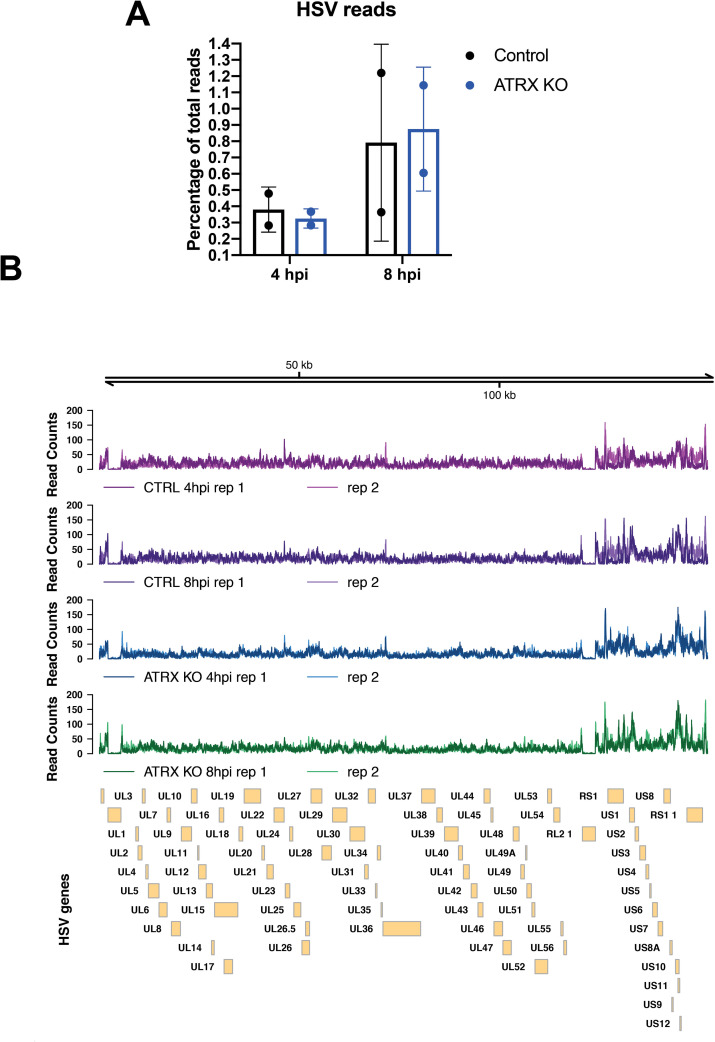
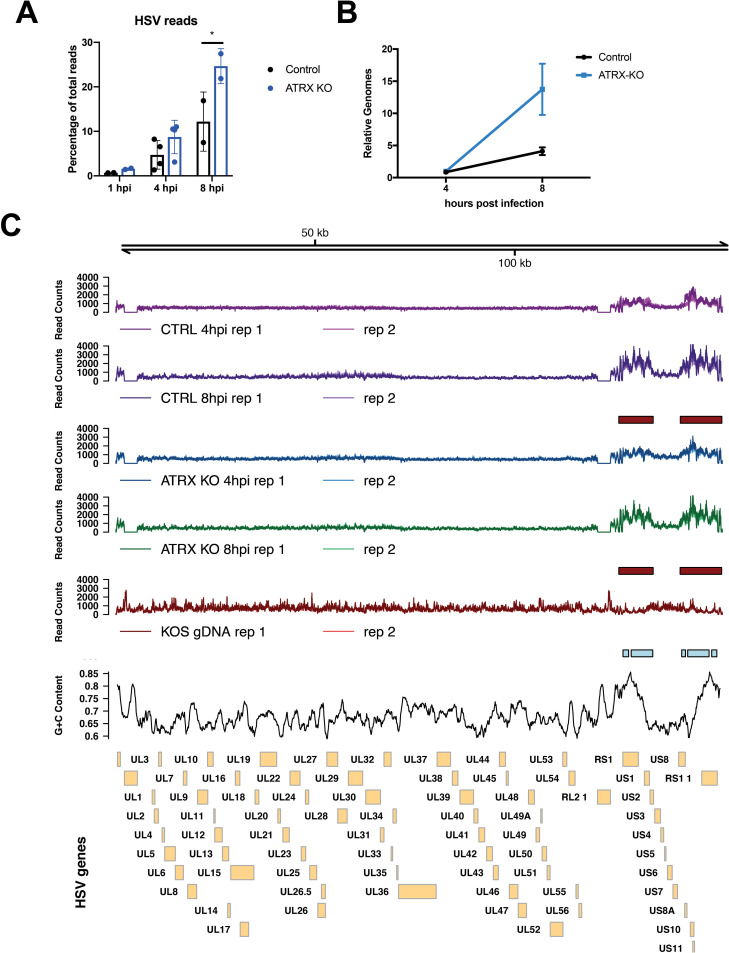
Histones are rapidly loaded on the HSV genome upon entry into the nucleus of human fibroblasts, but the effects of histone loading on viral replication have not been fully defined. We showed recently that ATRX is dispensable for de novo deposition of H3 to HSV genomes after nuclear entry but restricted infection through maintenance of viral heterochromatin. To further investigate the roles that ATRX and other histone H3 chaperones play in restriction of HSV, we infected human fibroblasts that were systematically depleted of nuclear H3 chaperones. We found that the ATRX/DAXX complex is unique among nuclear H3 chaperones in its capacity to restrict ICP0-null HSV infection. Only depletion of ATRX significantly alleviated restriction of viral replication. Interestingly, no individual nuclear H3 chaperone was required for deposition of H3 onto input viral genomes, suggesting that during lytic infection, H3 deposition may occur through multiple pathways. ChIP-seq for total histone H3 in control and ATRX-KO cells infected with ICP0-null HSV showed that HSV DNA is loaded with high levels of histones across the entire viral genome. Despite high levels of H3, ATAC-seq analysis revealed that HSV DNA is highly accessible, especially in regions of high GC content, and is not organized largely into ordered nucleosomes during lytic infection. ATRX reduced accessibility of viral DNA to the activity of a TN5 transposase and enhanced accumulation of viral DNA fragment sizes associated with nucleosome-like structures. Together, these findings support a model in which ATRX restricts viral infection by altering the structure of histone H3-loaded viral chromatin that reduces viral DNA accessibility for transcription. High GC rich regions of the HSV genome, especially the S component inverted repeats of the HSV-1 genome, show increased accessibility, which may lead to increased ability to transcribe the IE genes encoded in these regions during initiation of infection.
组蛋白在进入人成纤维细胞核后迅速加载到单纯疱疹病毒(HSV)基因组上,但组蛋白加载对病毒复制的影响尚未完全明确。我们最近表明,ATRX对于核进入后H3在HSV基因组上的从头沉积是可有可无的,但通过维持病毒异染色质来限制感染。为了进一步研究ATRX和其他组蛋白H3伴侣蛋白在HSV限制中的作用,我们感染了系统性缺失核H3伴侣蛋白的人成纤维细胞。我们发现,ATRX/DAXX复合物在限制ICP0缺失的HSV感染能力方面在核H3伴侣蛋白中是独特的。只有ATRX的缺失显著减轻了对病毒复制的限制。有趣的是,将H3沉积到输入的病毒基因组上不需要单个核H3伴侣蛋白,这表明在裂解感染期间H3沉积可能通过多种途径发生。对感染ICP0缺失的HSV的对照细胞和ATRX基因敲除(KO)细胞中的总组蛋白H3进行染色质免疫沉淀测序(ChIP-seq)显示,HSV DNA在整个病毒基因组上都加载有高水平的组蛋白。尽管H3水平很高,但转座酶可及染色质分析(ATAC-seq)表明HSV DNA具有高度可及性,特别是在高GC含量区域,并且在裂解感染期间在很大程度上没有组织成有序的核小体。ATRX降低了病毒DNA对TN5转座酶活性的可及性,并增强了与核小体样结构相关的病毒DNA片段大小的积累。总之,这些发现支持了一个模型,即ATRX通过改变加载有组蛋白H3的病毒染色质结构来限制病毒感染,从而降低病毒DNA转录的可及性。HSV基因组的高GC丰富区域,特别是HSV-1基因组的S组分反向重复序列,显示出可及性增加,这可能导致在感染开始时转录这些区域编码的立即早期(IE)基因的能力增强。