Everlasting Nature of Asia (ELNA), Ogasawara Marine Center, Ogasawara, Tokyo, Japan.
Okinawa Churaumi Aquarium, Motobu, Okinawa, Japan.
PLoS One. 2021 Apr 29;16(4):e0250873. doi: 10.1371/journal.pone.0250873. eCollection 2021.
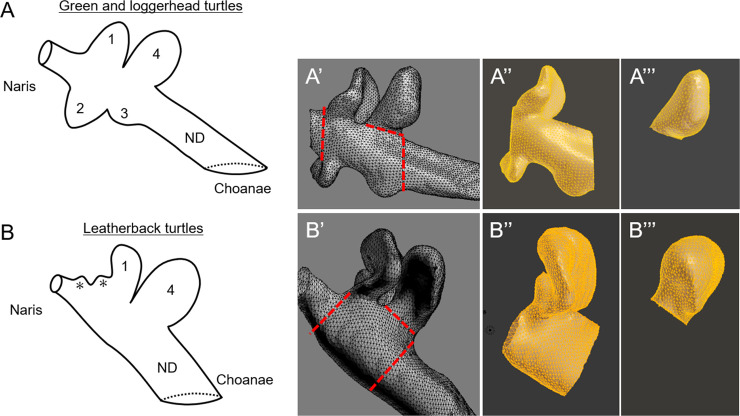
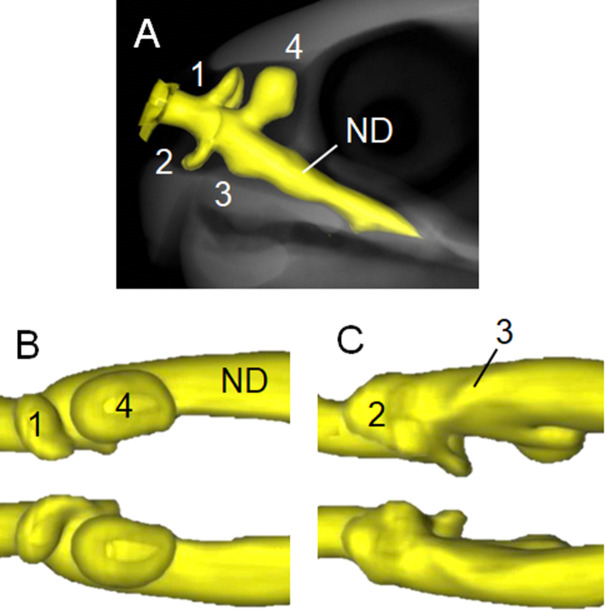
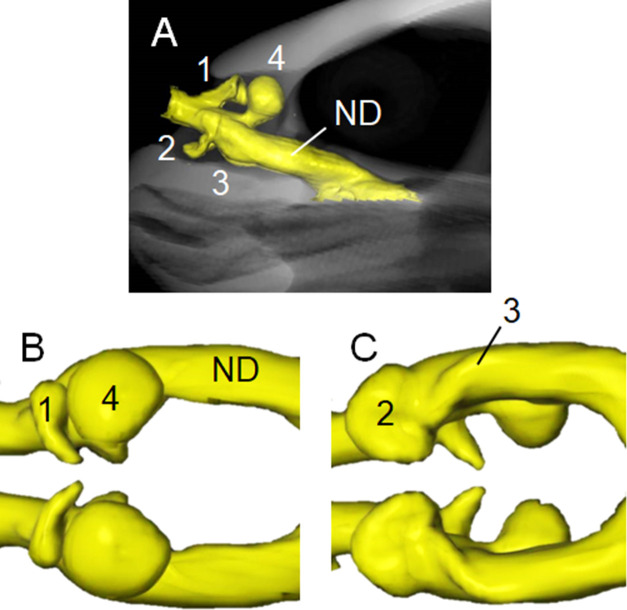
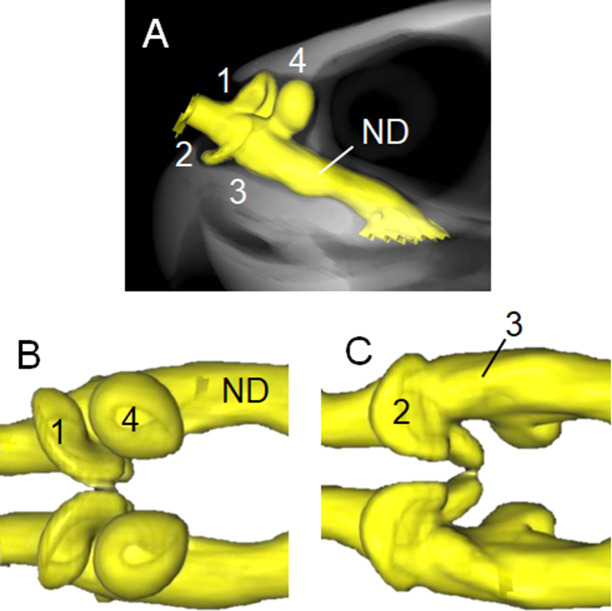
We analyzed the internal structure of the nasal cavities of hawksbill, olive ridley and black sea turtles from computed tomography images. The nasal cavities of all three species consisted of a vestibule, nasopharyngeal duct and cavum nasi proprium that included anterodorsal, posterodorsal and anteroventral diverticula, and a small posteroventral salience formed by a fossa of the wall. These findings were similar to those of green and loggerhead sea turtles (Cheloniidae), but differed from those of leatherback sea turtles (Dermochelyidae). Compared to the Cheloniidae species, the nasal cavity in leatherback sea turtles was relatively shorter, wider and larger in volume. Those structural features of the nasal cavity of leatherback sea turtles might help to suppress heat dissipation and reduce water pressure within the nasal cavity in cold and deep waters.
我们分析了鹰龟、榄蠵龟和黑海龟的鼻腔内部结构的计算机断层扫描图像。这三种海龟的鼻腔均由前庭、鼻后管和固有鼻腔组成,固有鼻腔包括前背侧、后背侧和前腹侧憩室,以及一个由壁凹形成的小后背腹侧突出部。这些发现与绿海龟和红海龟(Cheloniidae)的相似,但与棱皮龟(Dermochelyidae)的不同。与 Cheloniidae 物种相比,棱皮龟的鼻腔相对较短、较宽且体积较大。棱皮龟鼻腔的这些结构特征可能有助于抑制热量散失,并减少在寒冷和深水中鼻腔内的水压。