Jurak Małgorzata, Szafran Klaudia, Cea Pilar, Martín Santiago
Department of Interfacial Phenomena, Institute of Chemical Sciences, Faculty of Chemistry, Maria Curie-Skłodowska University, 20031 Lublin, Poland.
Instituto de Nanociencia y Materiales de Aragón (INMA), CSIC-Universidad de Zaragoza, 50009 Zaragoza, Spain.
Langmuir. 2021 May 11;37(18):5601-5616. doi: 10.1021/acs.langmuir.1c00434. Epub 2021 Apr 29.
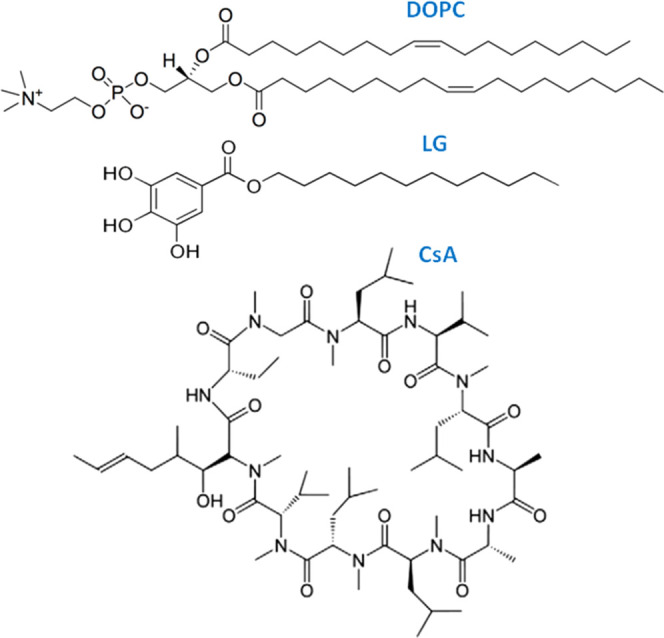
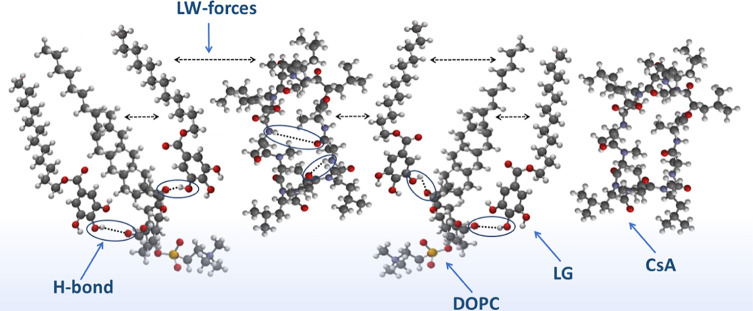
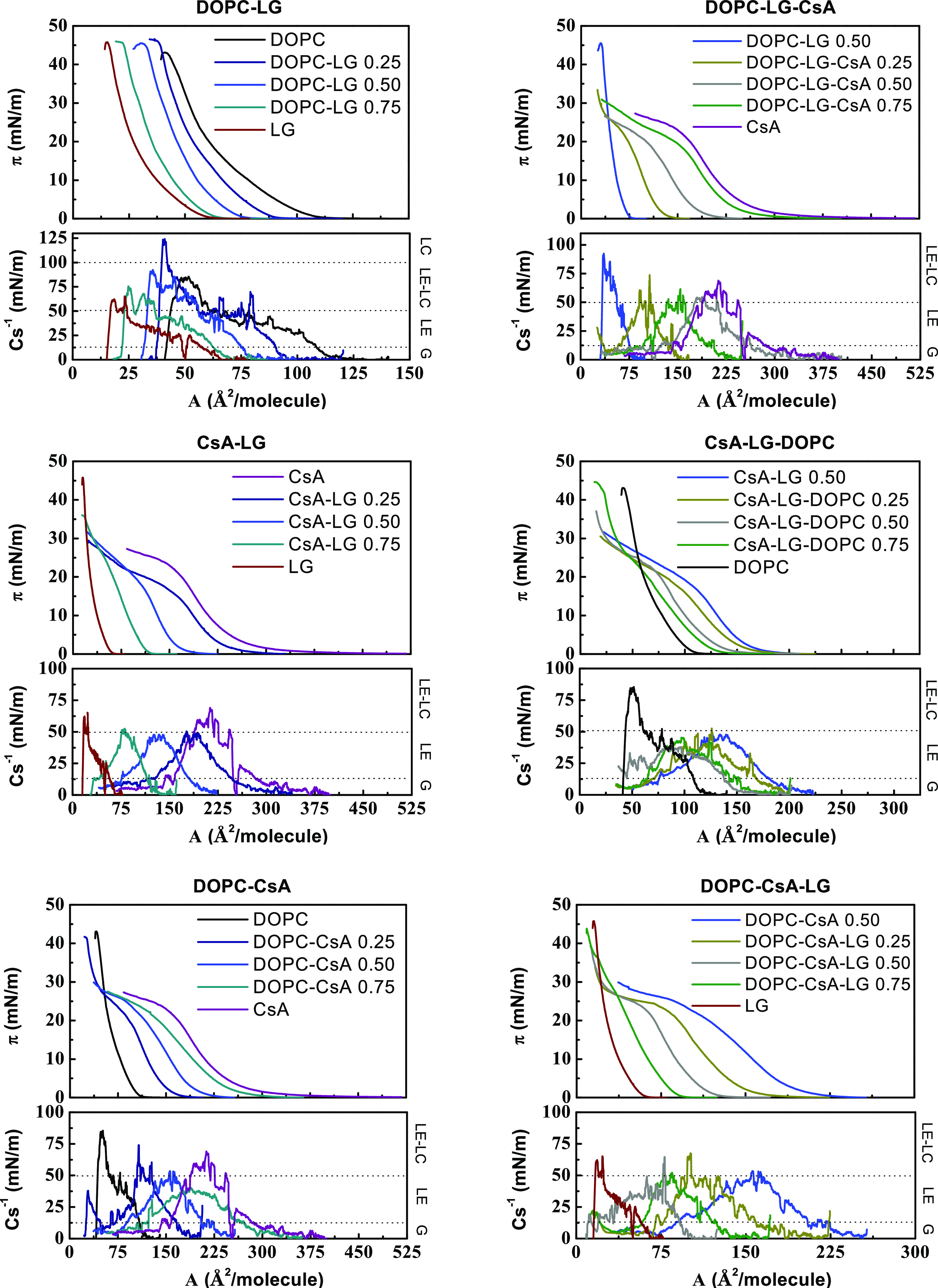
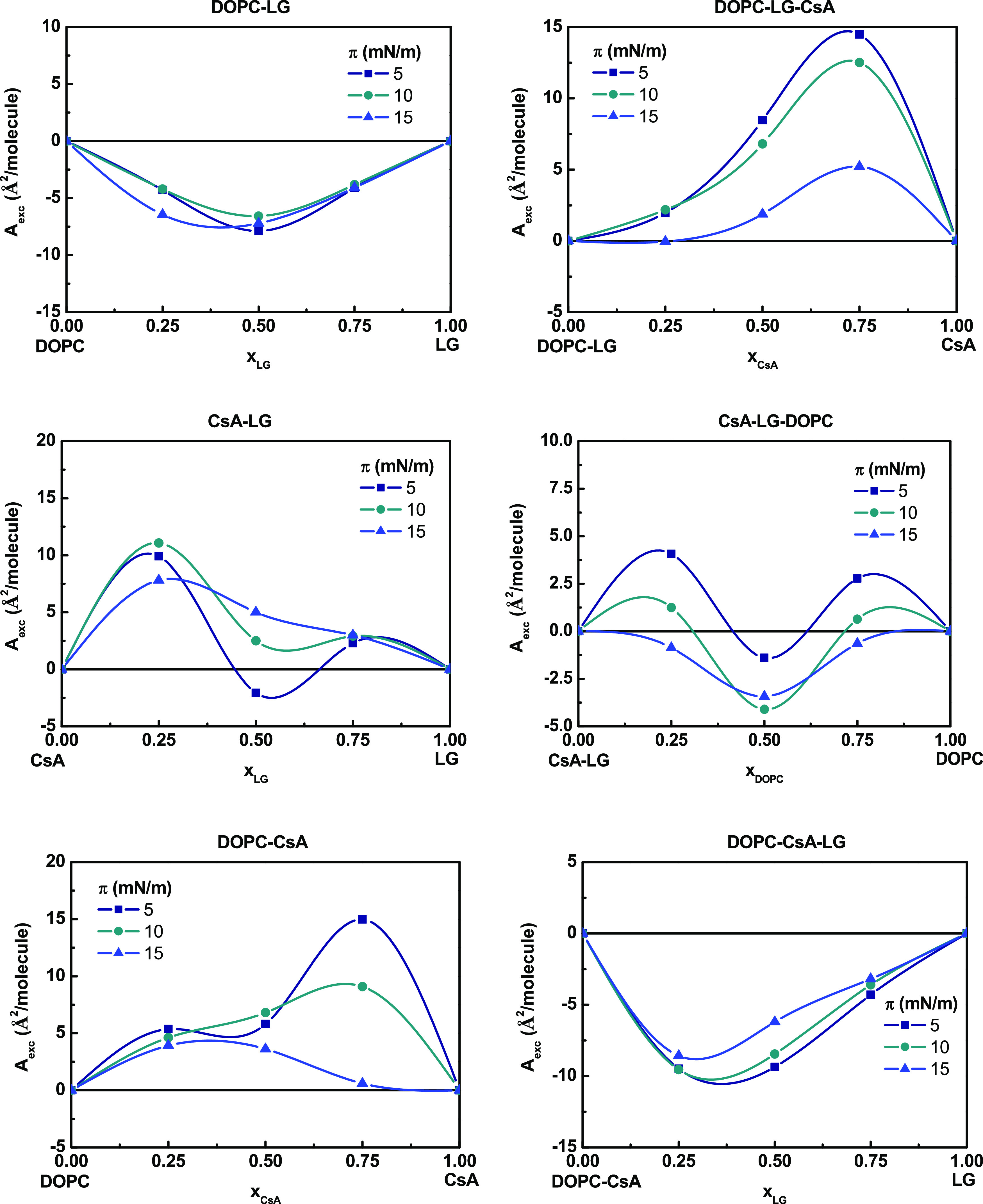
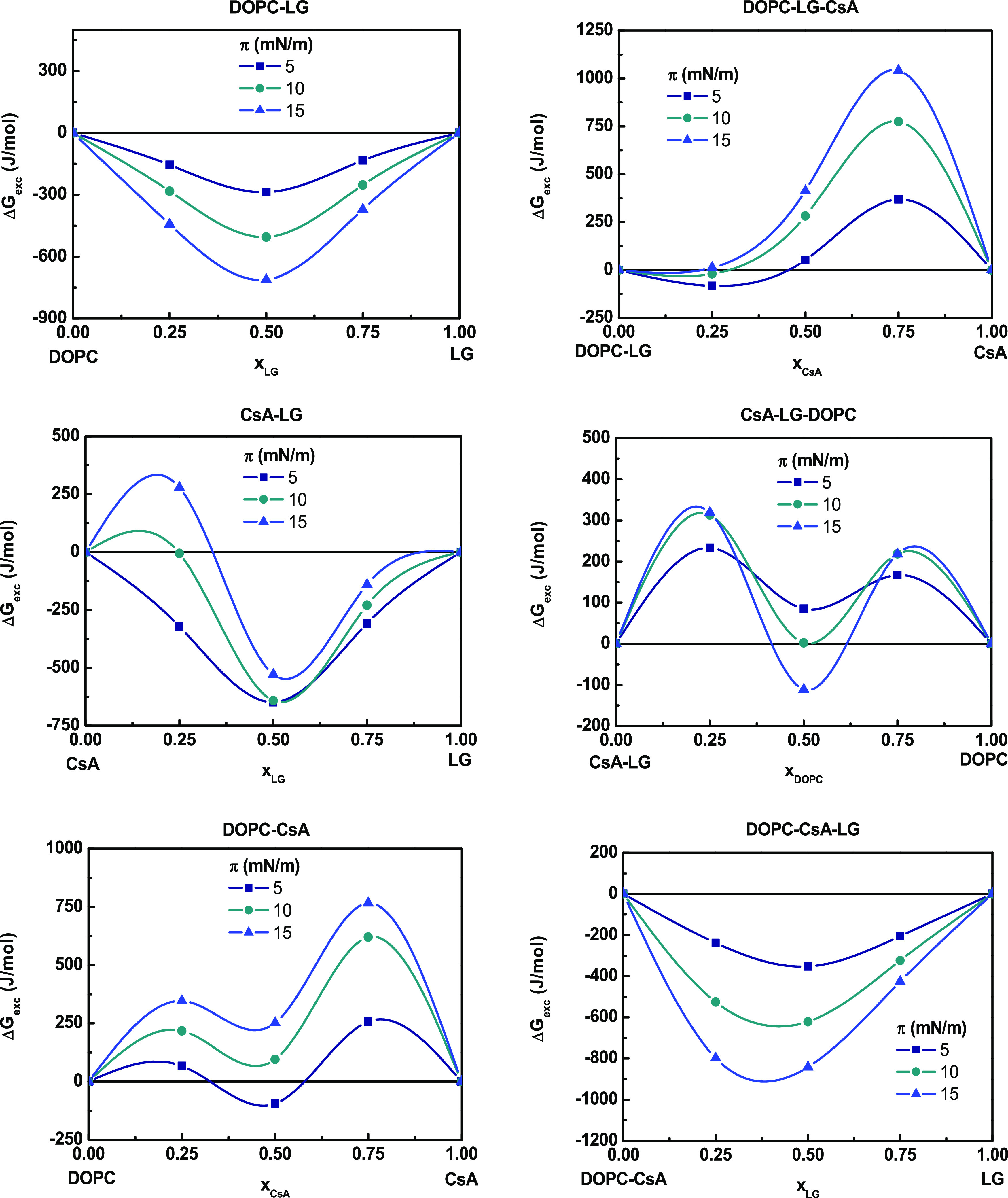
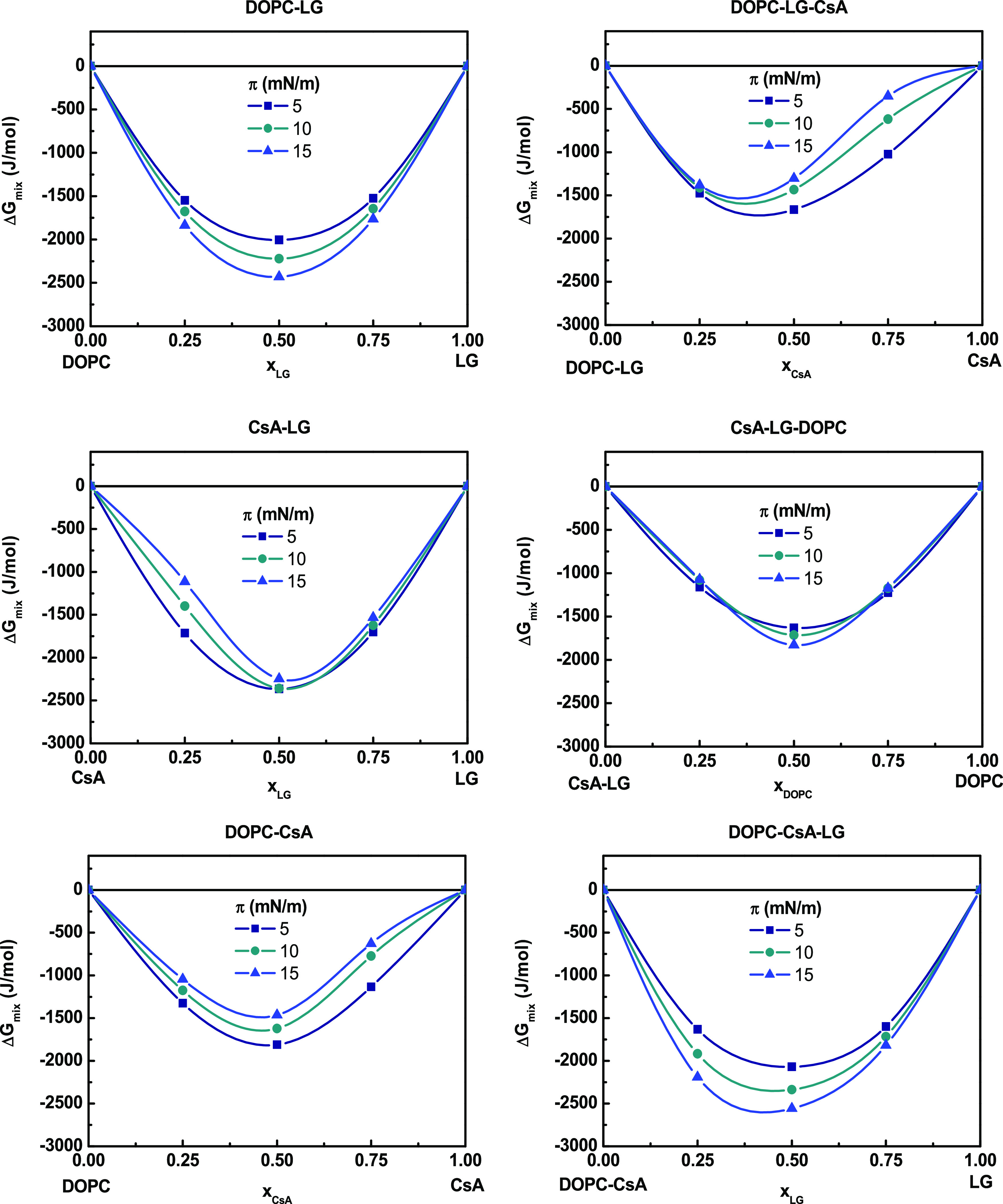
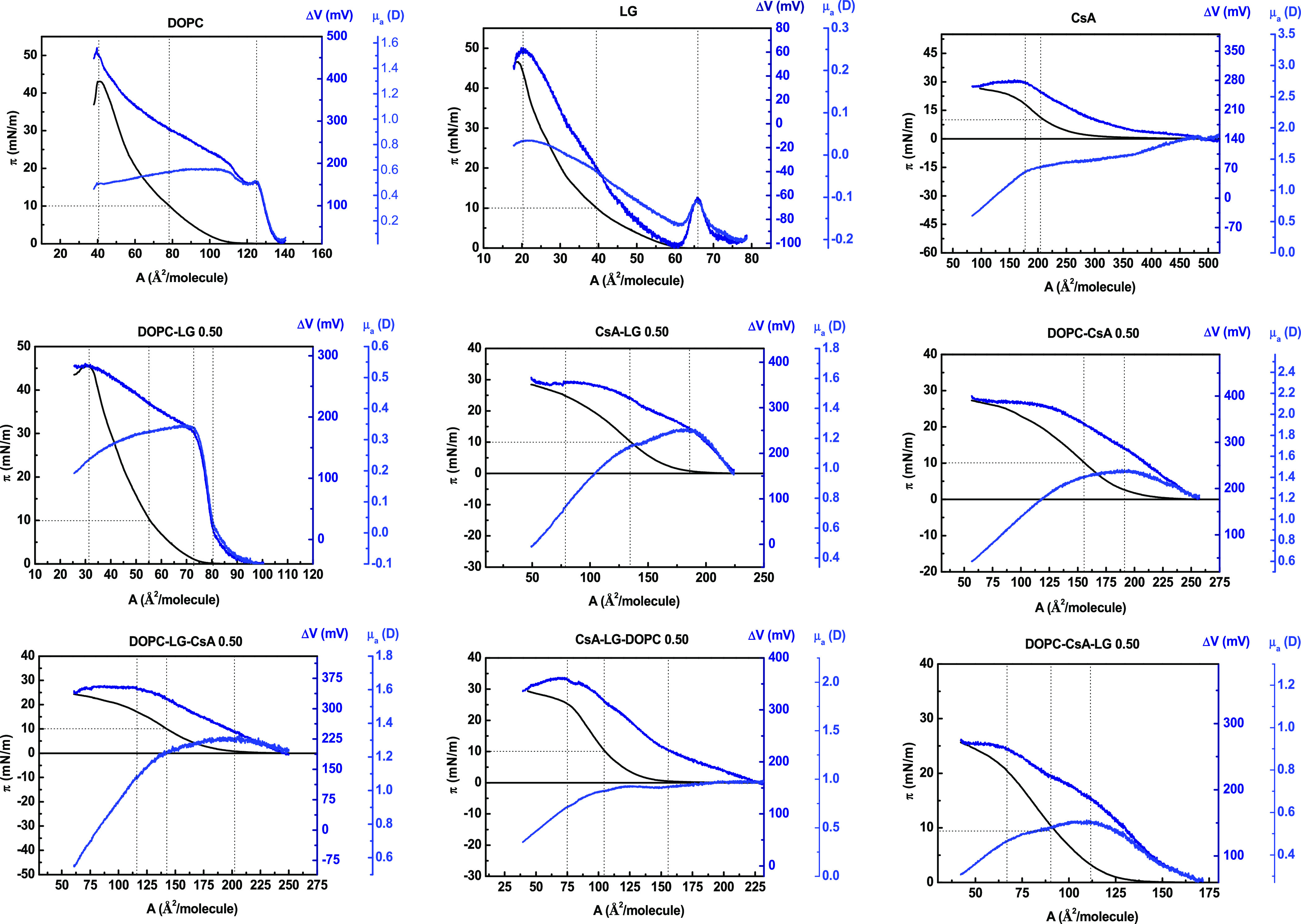
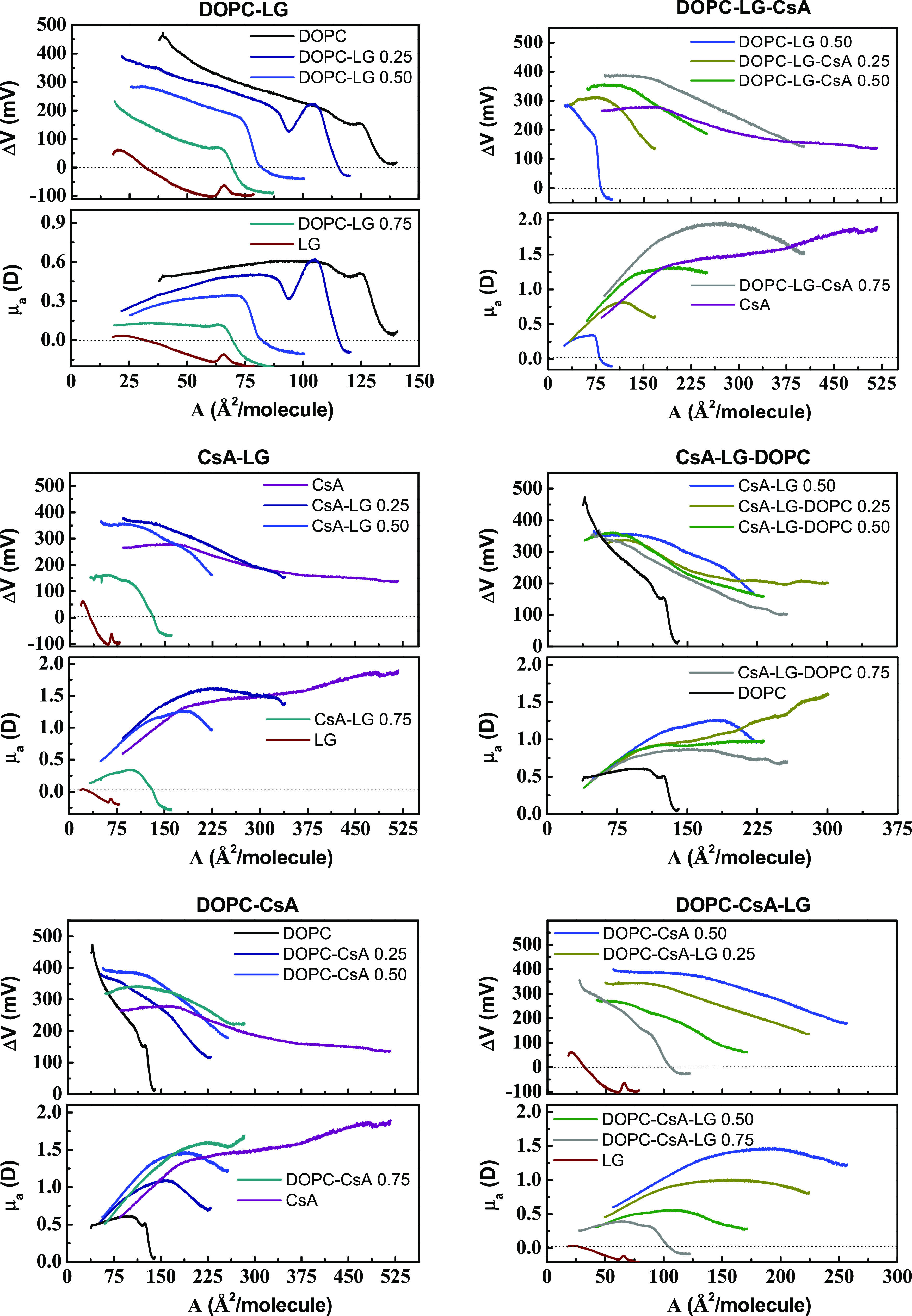
The study of Langmuir monolayers incorporating biomimetic and bioactive substances plays an important role today in assessing the properties and quality of the molecular films for potential biomedical applications. Here, miscibility of binary and ternary monolayers of phospholipid (dioleoyl phosphatidylcholine, DOPC), immunosuppressant (cyclosporine A, CsA), and antioxidant (lauryl gallate, LG) of varying molar fractions was analyzed by means of the Langmuir technique coupled with a surface potential (Δ) module at the air-water interface. The surface pressure-area per molecule (π-) isotherms provided information on the physical state of the films at a given surface pressure, the monolayer packing and ordering, and the type and strength of intermolecular interactions. Surface potential-area (Δ-) isotherms revealed the molecular orientation changes at the interface upon compression. In addition, the apparent dipole moment of the monolayer-forming molecules was determined from the surface potential isotherms. The obtained results indicated that the film compression provoked subsequent changes of CsA conformation and/or orientation, conferring better affinity for the hydrocarbon environment. The mutual interactions between the components were analyzed here in terms of the excess and total Gibbs energy of mixing, whose values depended on the stoichiometry of the mixed films. The strongest attraction, thus the highest thermodynamic stability, was found for a DOPC-CsA-LG mixture with a 1:1:2 molar ratio. Based on these results, a molecular model for the organization of the molecules within the Langmuir film was proposed. Through this model, we elucidated the significant role of LG in improving the miscibility of CsA in the model DOPC membrane and thus in increasing the stability of self-assembled monolayers by noncovalent interactions, such as H-bonds and Lifshitz-van der Waals forces. The above 1:1:2 combination of three components is revealed as the most promising film composition for the modification of implant device surfaces to improve their biocompatibility. Further insight into mechanisms concerning drug-membrane interactions at the molecular level is provided, which results in great importance for biocoating design and development as well as for drug release at target sites.
如今,对包含仿生和生物活性物质的朗缪尔单分子层的研究,在评估用于潜在生物医学应用的分子膜的性质和质量方面发挥着重要作用。在此,通过在空气 - 水界面处结合表面电势(Δ)模块的朗缪尔技术,分析了不同摩尔分数的磷脂(二油酰磷脂酰胆碱,DOPC)、免疫抑制剂(环孢素A,CsA)和抗氧化剂(月桂基没食子酸酯,LG)的二元和三元单分子层的混溶性。表面压力 - 每分子面积(π - )等温线提供了有关给定表面压力下膜的物理状态、单分子层堆积和有序性以及分子间相互作用的类型和强度的信息。表面电势 - 面积(Δ - )等温线揭示了压缩时界面处分子取向的变化。此外,由表面电势等温线确定了形成单分子层分子的表观偶极矩。所得结果表明,膜压缩引发了CsA构象和/或取向的后续变化,赋予了对烃环境更好的亲和力。在此根据混合的过量和总吉布斯自由能分析了各组分之间的相互作用,其值取决于混合膜的化学计量。对于摩尔比为1:1:2的DOPC - CsA - LG混合物,发现了最强的吸引力,因此具有最高的热力学稳定性。基于这些结果,提出了朗缪尔膜内分子组织的分子模型。通过该模型,我们阐明了LG在改善CsA在模型DOPC膜中的混溶性以及通过非共价相互作用(如氢键和 Lifshitz - 范德华力)提高自组装单分子层稳定性方面的重要作用。上述三种组分的1:1:2组合被揭示为用于修饰植入装置表面以改善其生物相容性的最有前景的膜组合物。提供了对分子水平上药物 - 膜相互作用机制的进一步深入了解,这对于生物涂层的设计和开发以及靶位点的药物释放具有重要意义。