Matzek Dana, Baldauf Hanna-Mari, Schieweck Rico, Popper Bastian
Biomedical Center, Core Facility Animal Models, Faculty of Medicine, Ludwig-Maximilians-Universität Munich, Großhaderner Straße 9, 82152 Planegg-Martinsried, Germany.
Max von Pettenkofer Institute & Gene Center, Virology, National Reference Center for Retroviruses, Faculty of Medicine, Ludwig-Maximilians-Universität Munich, 80336 Munich, Germany.
Animals (Basel). 2021 Apr 1;11(4):977. doi: 10.3390/ani11040977.
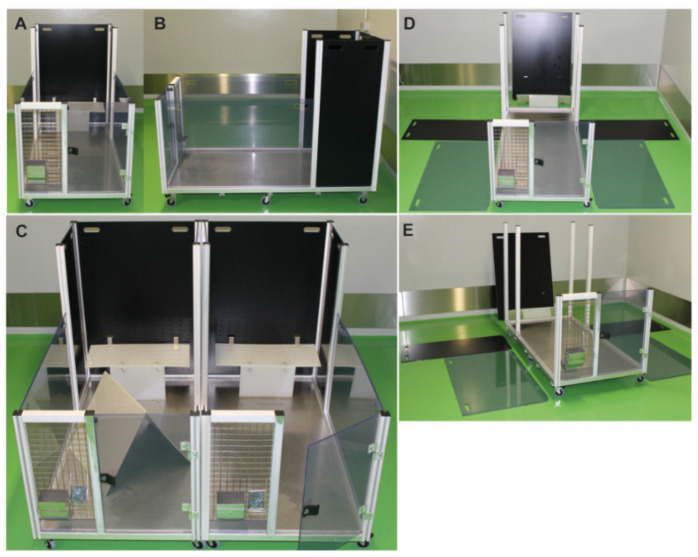
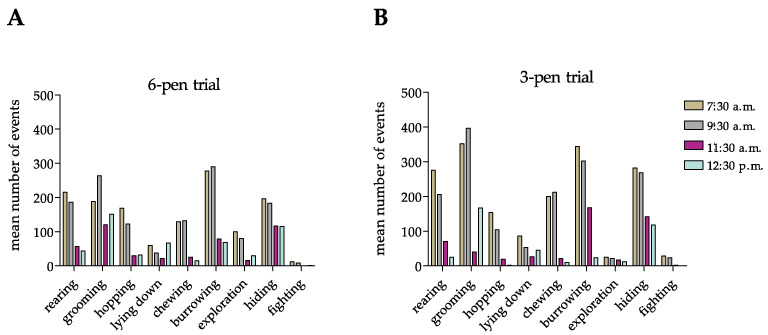
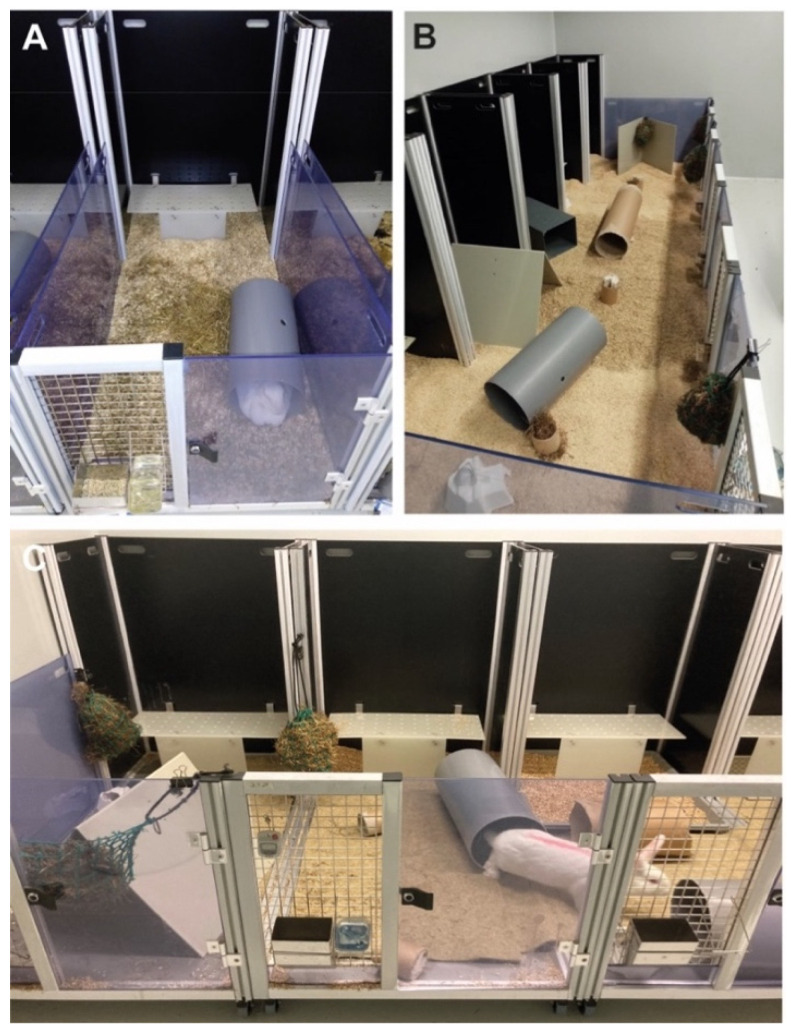
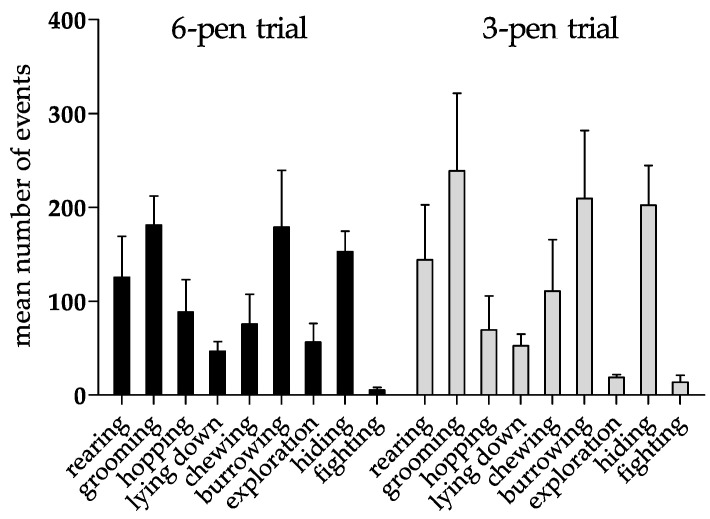
The major responsibility of researchers and laboratory animal facilities is to ensure animal well-being during the time of acclimatization, experiments, and recovery. In this context, animal housing conditions are of utmost importance. Here, we implemented a mobile and modular floor-pen housing system for laboratory rabbits that combines rabbits' natural behavioral requirements and the high hygiene standards needed in biomedical science. Twelve female New Zealand White (NZW) rabbits were single- or group-housed for 12 months in mobile and modular floor-pens. Their general health status was evaluated at the end of the experimental setup. Further, we performed behavioral analysis of six additional NZW females group-housed for eight weeks in pens of two different sizes. We show that our improved housing concept supported species-specific behavioral patterns. Taken together, our housing system provides an optimal setup for rabbits in animal facilities that combines strict requirements for animal experiments with animal welfare.
研究人员和实验动物设施的主要职责是在适应期、实验期和恢复期确保动物的健康。在此背景下,动物饲养条件至关重要。在此,我们为实验兔实施了一种移动模块化地面围栏饲养系统,该系统结合了兔子的自然行为需求和生物医学科学所需的高卫生标准。12只雌性新西兰白兔(NZW)在移动模块化地面围栏中单独或成群饲养12个月。在实验设置结束时评估它们的总体健康状况。此外,我们对另外6只雌性NZW进行了行为分析,它们在两种不同大小的围栏中群居8周。我们表明,我们改进的饲养概念支持特定物种的行为模式。综上所述,我们的饲养系统为动物设施中的兔子提供了最佳设置,将动物实验的严格要求与动物福利结合在一起。