Fouladian Paris, Jin Qiuyang, Arafat Mohammad, Song Yunmei, Guo Xiuli, Blencowe Anton, Garg Sanjay
Pharmaceutical Innovation and Development (PIDG) Group, Clinical and Health Sciences, University of South Australia, Adelaide, SA 5000, Australia.
Key Laboratory of Chemical Biology (Ministry of Education), Department of Pharmacology, School of Pharmaceutical Sciences, Shandong University, Jinan 250012, China.
Pharmaceuticals (Basel). 2021 Apr 1;14(4):311. doi: 10.3390/ph14040311.
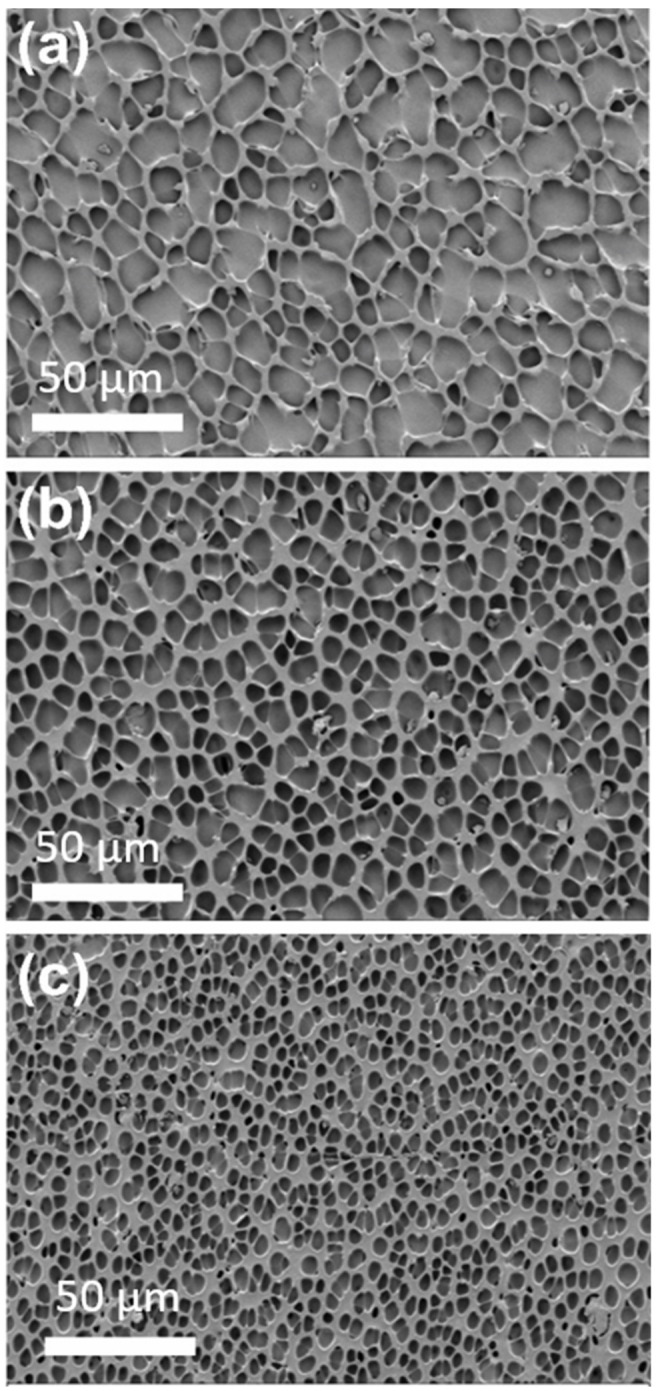
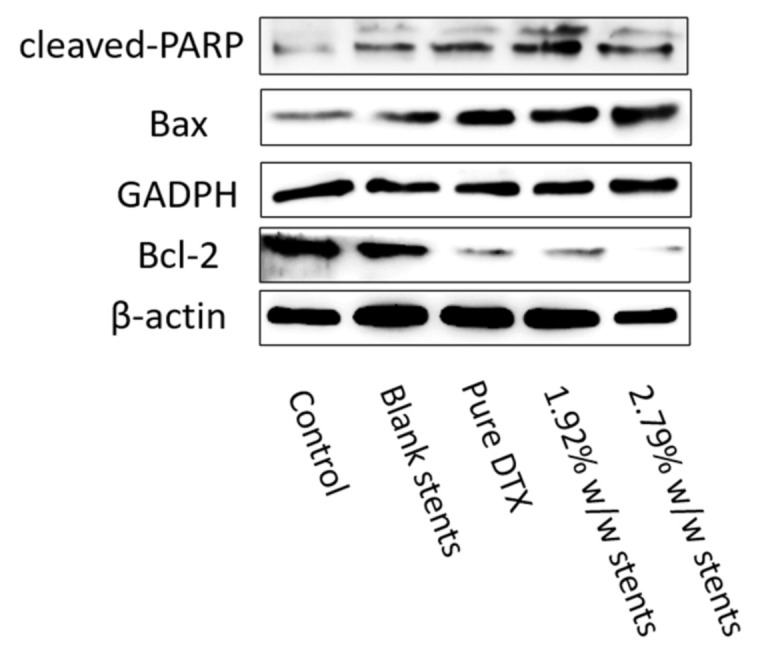
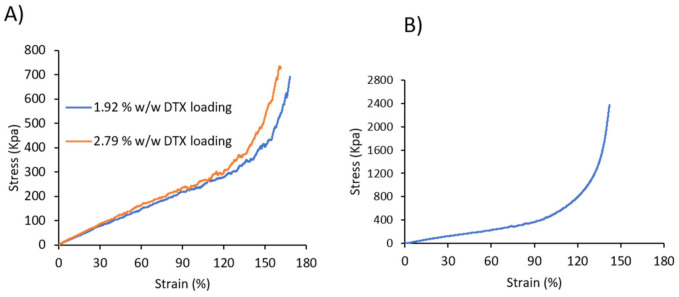
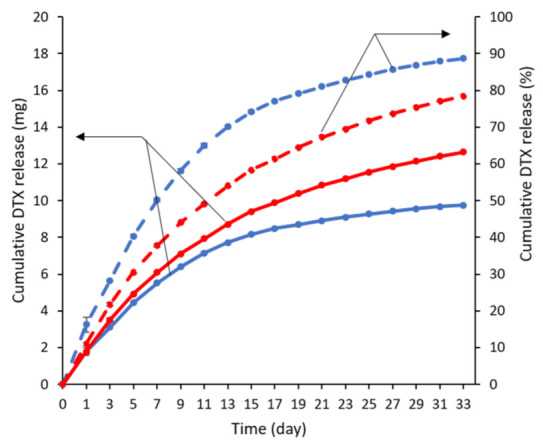
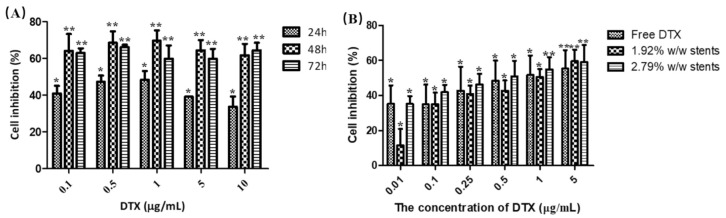
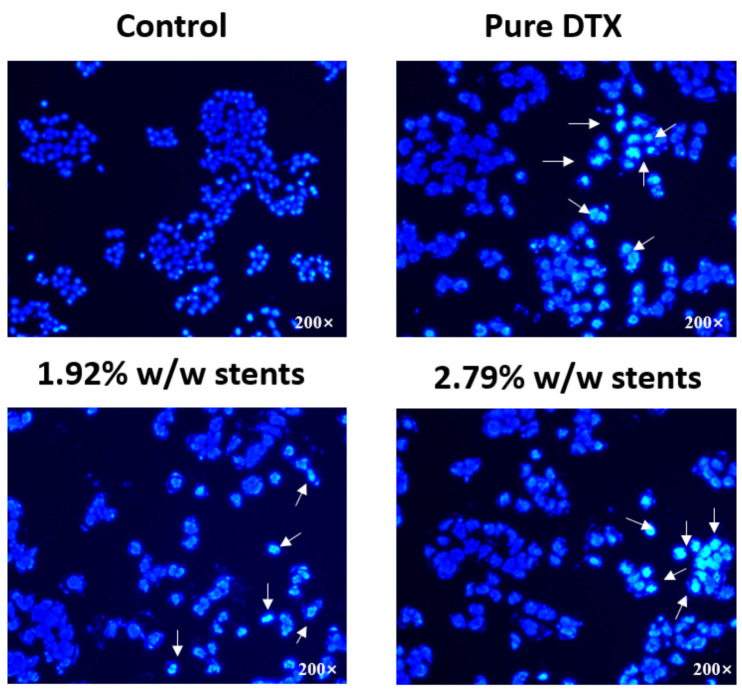
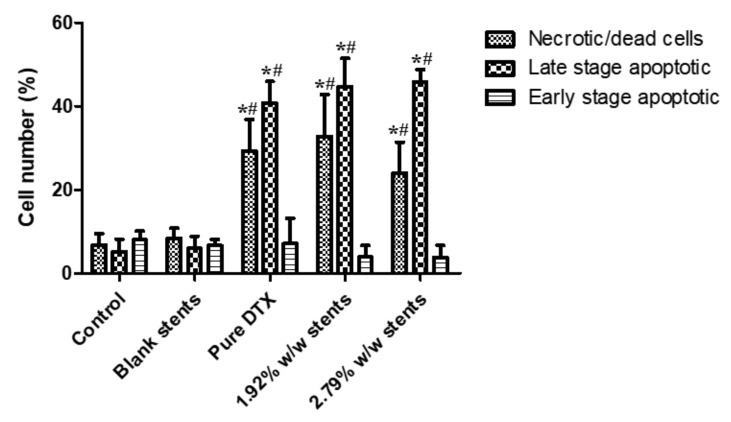
For several decades, self-expanding metal stents (SEMSs) have shown significant clinical success in the palliation of obstructive metastatic oesophageal cancer. However, these conventional oesophageal stents can suffer from stent blockage caused by malignant tumour cell growth. To overcome this challenge, there is growing interest in drug-releasing stents that, in addition to palliation, provide a sustained and localized release of anticancer drugs to minimise tumour growth. Therefore, in this study we prepared and evaluated an oesophageal stent-based drug delivery platform to provide the sustained release of docetaxel (DTX) for the treatment of oesophageal cancer-related obstructions. The DTX-loaded oesophageal stents were fabricated via dip-coating of bare nitinol stents with DTX-polyurethane (PU) solutions to provide PU coated stents with DTX loadings of 1.92 and 2.79% /. Mechanical testing of the DTX-PU coated stents revealed that an increase in the drug loading resulted in a reduction in the ultimate tensile strength, toughness and Young's modulus. In vitro release studies showed a sustained release of DTX, with ~80-90% released over a period of 33 days. While the DTX-loaded stents exhibited good stability to gamma radiation sterilisation, UV sterilisation or accelerated storage at elevated temperatures (40 °C) resulted in significant DTX degradation. Cell proliferation, apoptosis and Western blotting assays revealed that the DTX released from the stents had comparable anticancer activity to pure DTX against oesophageal cancer cells (KYSE-30). This research demonstrates that the dip-coating technique can be considered as a promising approach for the fabrication of drug-eluting stents (DESs) for oesophageal cancer treatment.
几十年来,自膨式金属支架(SEMSs)在缓解梗阻性转移性食管癌方面已取得显著的临床成效。然而,这些传统的食管支架可能会因恶性肿瘤细胞生长而出现支架堵塞的情况。为克服这一挑战,人们对药物释放支架的兴趣与日俱增,这类支架除了具有缓解作用外,还能持续局部释放抗癌药物,以尽量减少肿瘤生长。因此,在本研究中,我们制备并评估了一种基于食管支架的药物递送平台,用于持续释放多西他赛(DTX)以治疗食管癌相关梗阻。通过用DTX - 聚氨酯(PU)溶液对裸镍钛诺支架进行浸涂来制造负载DTX的食管支架,从而得到DTX负载量为1.92%和2.79%的PU涂层支架。对DTX - PU涂层支架的力学测试表明,药物负载量的增加导致极限抗拉强度、韧性和杨氏模量降低。体外释放研究显示DTX呈持续释放,在33天内释放了约80 - 90%。虽然负载DTX的支架对γ射线灭菌表现出良好的稳定性,但紫外线灭菌或在高温(40°C)下加速储存会导致DTX显著降解。细胞增殖、凋亡和蛋白质印迹分析表明,从支架释放的DTX对食管癌细胞(KYSE - 30)具有与纯DTX相当的抗癌活性。这项研究表明,浸涂技术可被视为一种有前景的方法,用于制造治疗食管癌的药物洗脱支架(DESs)。