Skurkyte-Papieviene Virginija, Abraitiene Ausra, Sankauskaite Audrone, Rubeziene Vitalija, Baltusnikaite-Guzaitiene Julija
Department of Textile Technologies, Center for Physical Sciences and Technology, 48485 Kaunas, Lithuania.
Department of Textiles Physical-Chemical Testing, Center for Physical Sciences and Technology, 48485 Kaunas, Lithuania.
Polymers (Basel). 2021 Apr 1;13(7):1120. doi: 10.3390/polym13071120.
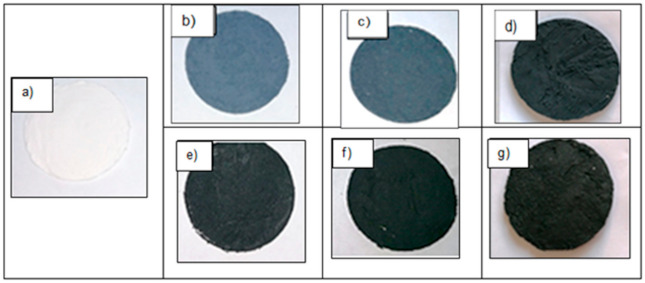
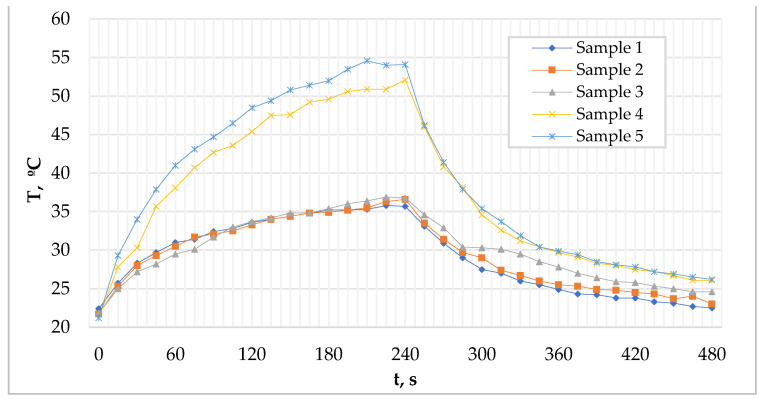
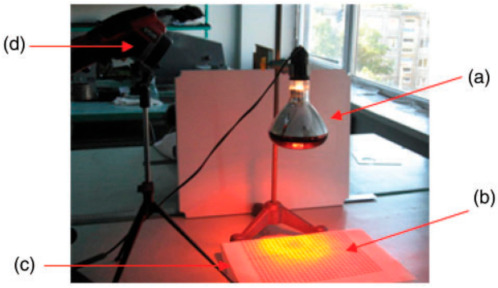
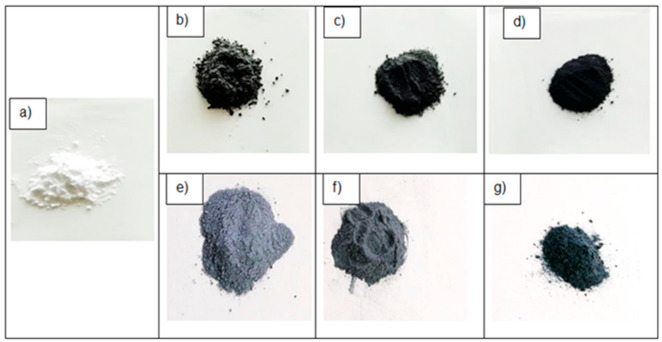
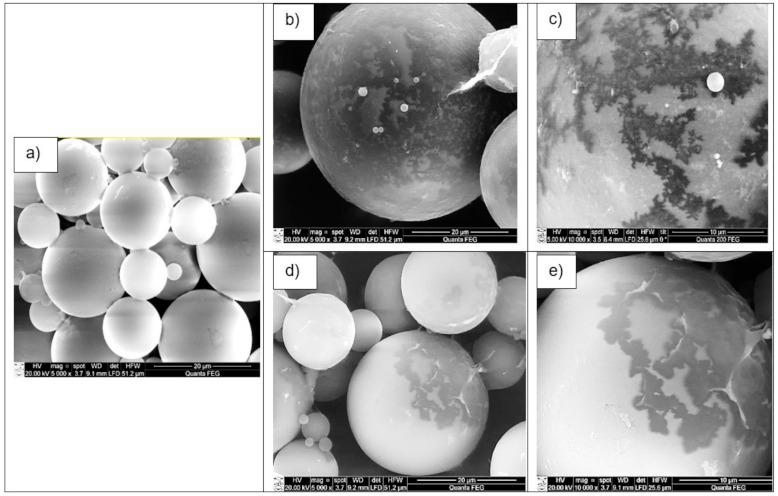
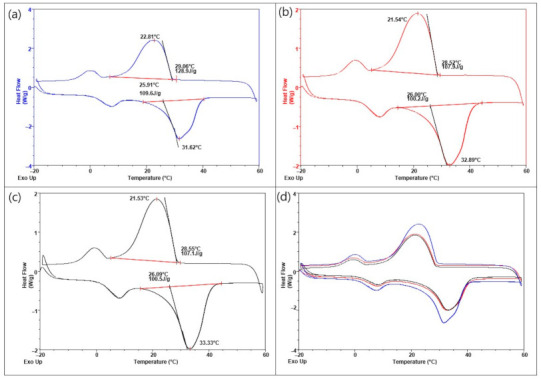
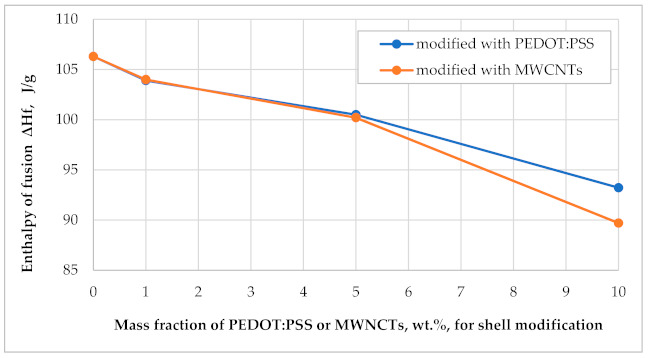
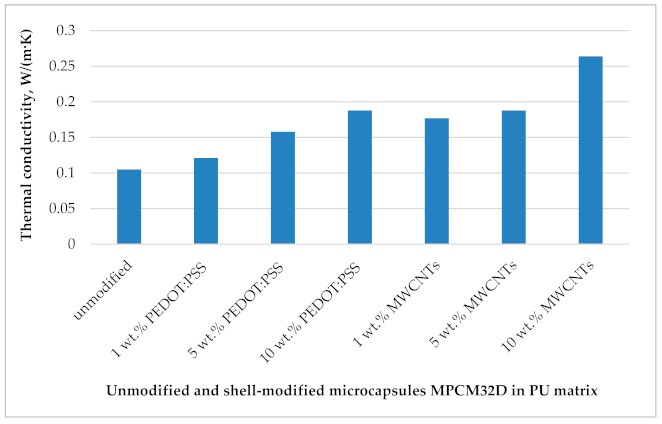
Phase changing materials (PCMs) microcapsules MPCM32D, consisting of a polymeric melamine-formaldehyde (MF) resin shell surrounding a paraffin core (melting point: 30-32 °C), have been modified by introducing thermally conductive additives on their outer shell surface. As additives, multiwall carbon nanotubes (MWCNTs) and poly (3,4-ethylenedioxyoxythiophene) poly (styrene sulphonate) (PEDOT: PSS) were used in different parts by weight (1 wt.%, 5 wt.%, and 10 wt.%). The main aim of this modification-to enhance the thermal performance of the microencapsulated PCMs intended for textile applications. The morphologic analysis of the newly formed coating of MWCNTs or PEDOT: PSS microcapsules shell was observed by SEM. The heat storage and release capacity were evaluated by changing microcapsules MPCM32D shell modification. In order to evaluate the influence of the modified MF outer shell on the thermal properties of paraffin PCM, a thermal conductivity coefficient (λ) of these unmodified and shell-modified microcapsules was also measured by the comparative method. Based on the identified optimal parameters of the thermal performance of the tested PCM microcapsules, a 3D warp-knitted spacer fabric from PET was treated with a composition containing 5 wt.% MWCNTs or 5 wt.% PEDOT: PSS shell-modified microcapsules MPCM32D and acrylic resin binder. To assess the dynamic thermal behaviour of the treated fabric samples, an IR heating source and IR camera were used. The fabric with 5 wt.% MWCNTs or 5 wt.% PEDOT: PSS in shell-modified paraffin microcapsules MPCM32D revealed much faster heating and significantly slower cooling compared to the fabric treated with the unmodified ones. The thermal conductivity of the investigated fabric samples with modified microcapsules MPCM32D has been improved in comparison to the fabric samples with unmodified ones. That confirms the positive influence of using thermally conductive enhancing additives for the heat transfer rate within the textile sample containing these modified paraffin PCM microcapsules.
相变材料(PCM)微胶囊MPCM32D由围绕石蜡芯(熔点:30 - 32°C)的三聚氰胺 - 甲醛(MF)聚合物树脂壳组成,已通过在其外壳表面引入导热添加剂进行了改性。作为添加剂,多壁碳纳米管(MWCNT)和聚(3,4 - 乙撑二氧噻吩)聚(苯乙烯磺酸盐)(PEDOT:PSS)以不同的重量百分比(1 wt.%、5 wt.%和10 wt.%)使用。这种改性的主要目的是提高用于纺织应用的微胶囊化PCM的热性能。通过扫描电子显微镜(SEM)观察了新形成的MWCNT或PEDOT:PSS微胶囊壳涂层的形态分析。通过改变微胶囊MPCM32D壳的改性来评估储热和释热能力。为了评估改性MF外壳对石蜡PCM热性能的影响,还通过比较法测量了这些未改性和壳改性微胶囊的导热系数(λ)。基于所确定的测试PCM微胶囊热性能的最佳参数,用含有5 wt.% MWCNT或5 wt.% PEDOT:PSS壳改性微胶囊MPCM32D和丙烯酸树脂粘合剂的组合物处理了由聚酯(PET)制成的三维经编间隔织物。为了评估处理后的织物样品的动态热行为,使用了红外加热源和红外摄像机。与用未改性微胶囊处理的织物相比,壳改性石蜡微胶囊MPCM32D中含有5 wt.% MWCNT或5 wt.% PEDOT:PSS的织物显示出更快的加热速度和明显更慢的冷却速度。与未改性的织物样品相比,含有改性微胶囊MPCM32D的研究织物样品的导热率得到了提高。这证实了使用导热增强添加剂对含有这些改性石蜡PCM微胶囊的纺织样品内的热传递速率有积极影响。