Bellotti Valentina, Simonutti Roberto
Department of Materials Science, Università Degli Studi di Milano-Bicocca, Via R. Cozzi, 55, 20125 Milan, Italy.
Polymers (Basel). 2021 Apr 1;13(7):1119. doi: 10.3390/polym13071119.
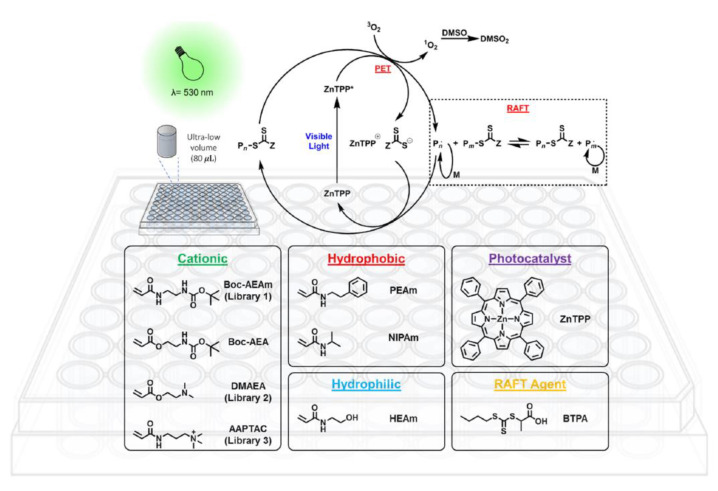
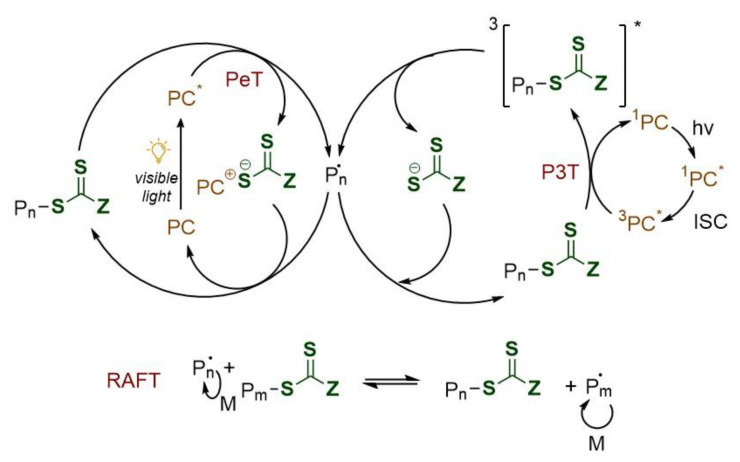
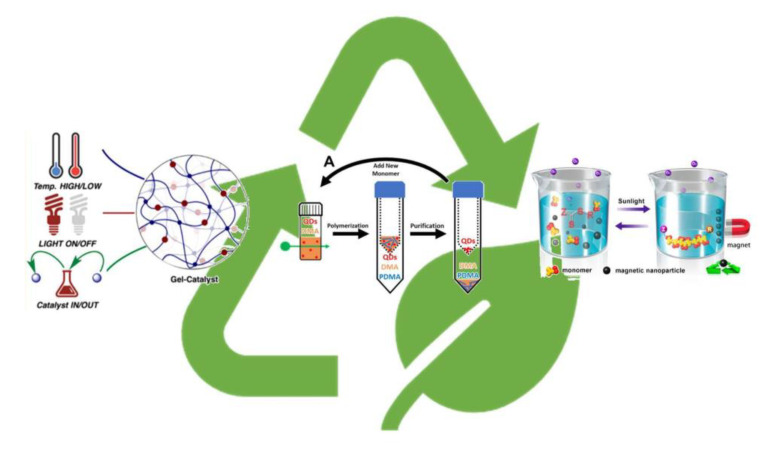
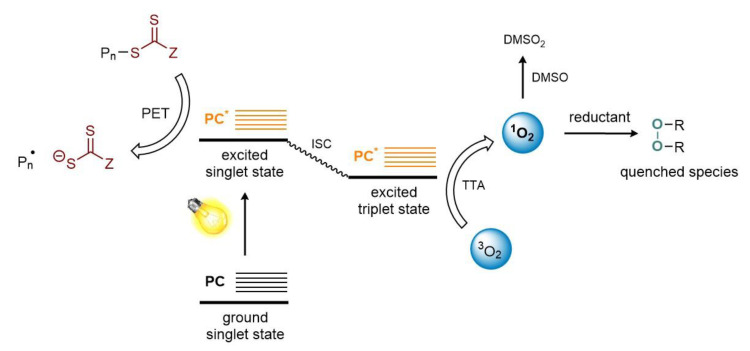
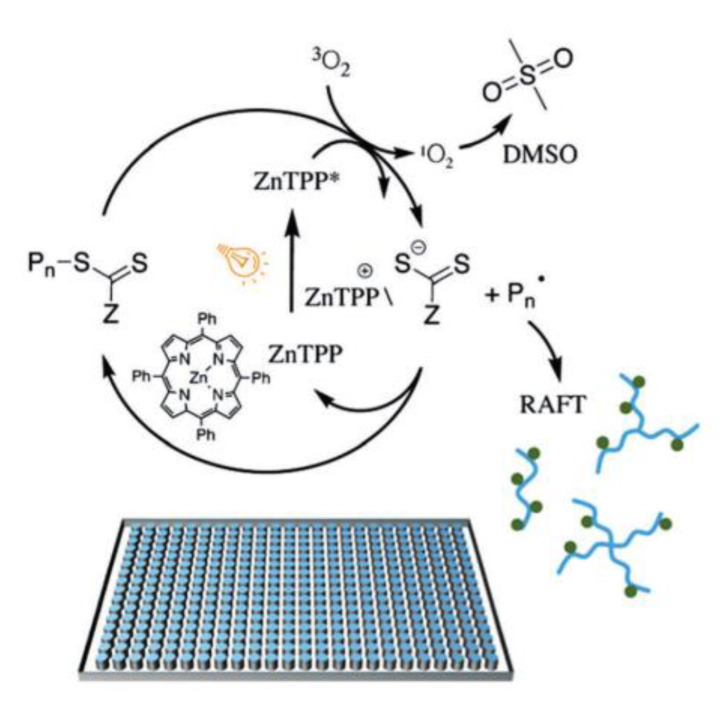
Photochemistry has attracted great interest in the last decades in the field of polymer and material science for the synthesis of innovative materials. The merging of photochemistry and reversible-deactivation radical polymerizations (RDRP) provides good reaction control and can simplify elaborate reaction protocols. These advantages open the doors to multidisciplinary fields going from composite materials to bio-applications. Photoinduced Electron/Energy Transfer Reversible Addition-Fragmentation Chain-Transfer (PET-RAFT) polymerization, proposed for the first time in 2014, presents significant advantages compared to other photochemical techniques in terms of applicability, cost, and sustainability. This review has the aim of providing to the readers the basic knowledge of PET-RAFT polymerization and explores the new possibilities that this innovative technique offers in terms of industrial applications, new materials production, and green conditions.
在过去几十年中,光化学在聚合物和材料科学领域引起了极大的关注,用于合成创新材料。光化学与可逆失活自由基聚合(RDRP)的结合提供了良好的反应控制,并可以简化复杂的反应方案。这些优势为从复合材料到生物应用的多学科领域打开了大门。2014年首次提出的光诱导电子/能量转移可逆加成-断裂链转移(PET-RAFT)聚合,在适用性、成本和可持续性方面与其他光化学技术相比具有显著优势。本综述旨在向读者提供PET-RAFT聚合的基础知识,并探索这种创新技术在工业应用、新材料生产和绿色条件方面提供的新可能性。