Dmitrenko Mariia, Liamin Vladislav, Kuzminova Anna, Lahderanta Erkki, Solovyev Nikolay, Penkova Anastasia
St. Petersburg State University, 7/9 Universitetskaya nab., St. Petersburg 199034, Russia.
Laboratory of Physics, Lappeenranta University of Technology, Box 20, 53851 Lappeenranta, Finland.
Membranes (Basel). 2021 Apr 1;11(4):255. doi: 10.3390/membranes11040255.
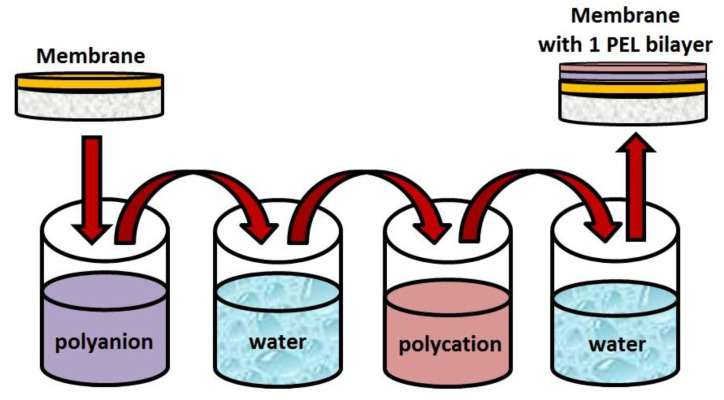
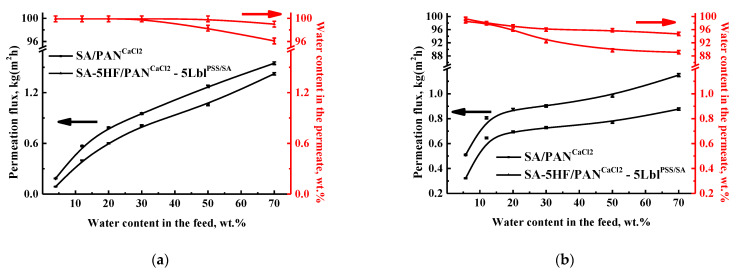
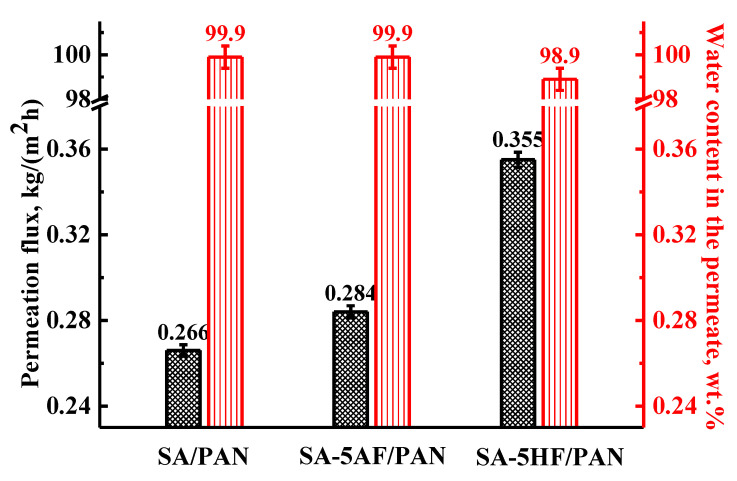
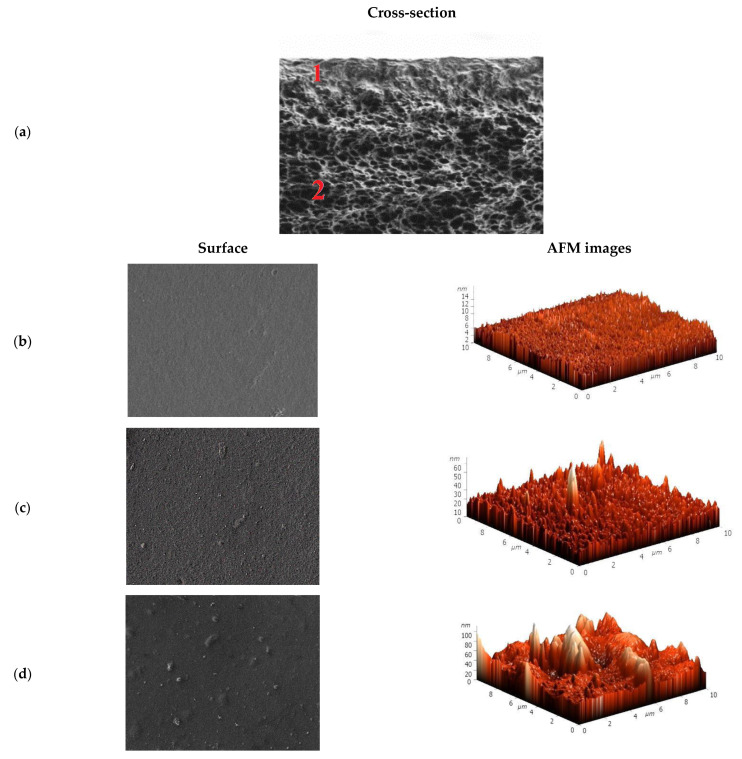
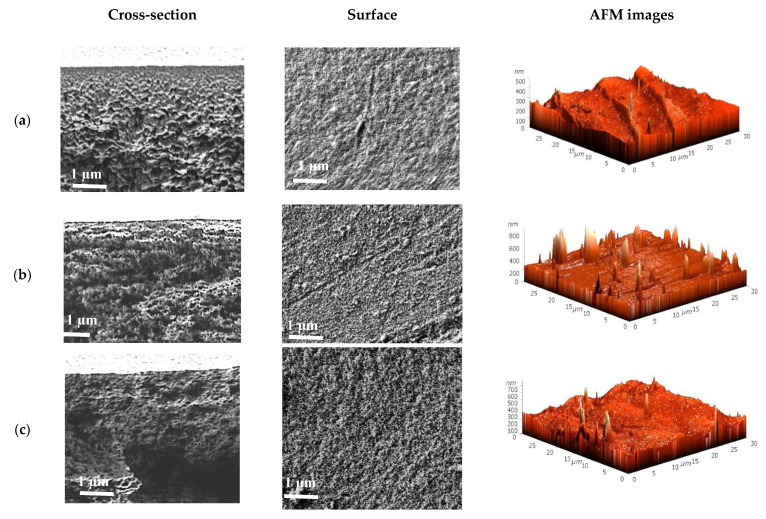
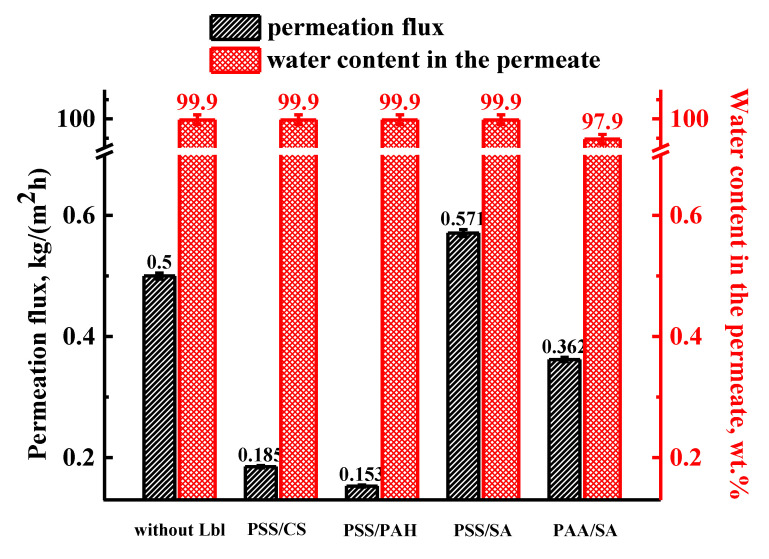
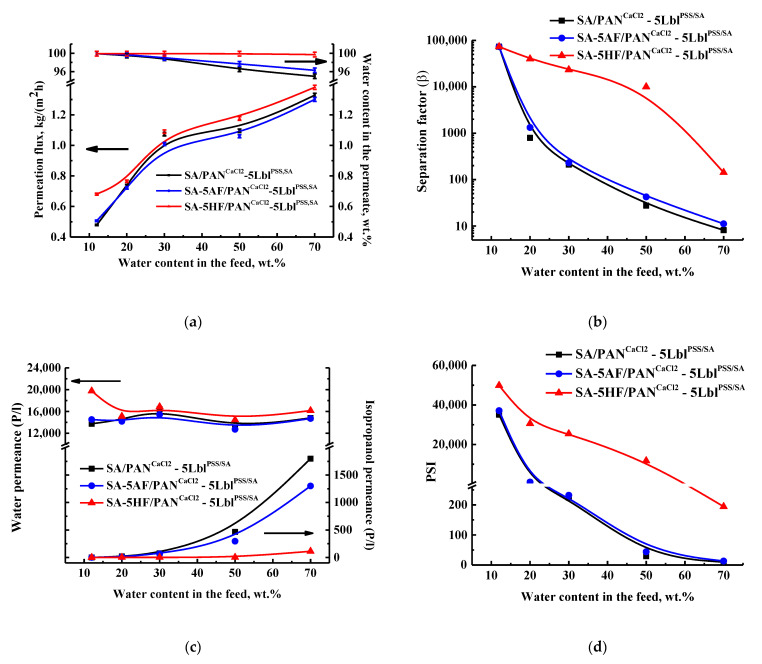
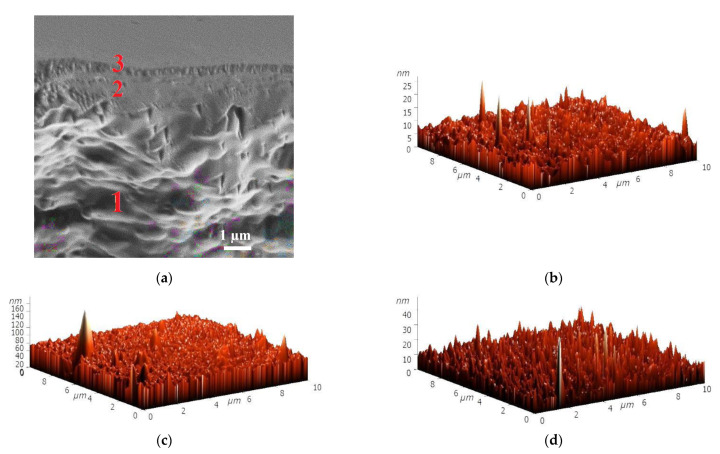
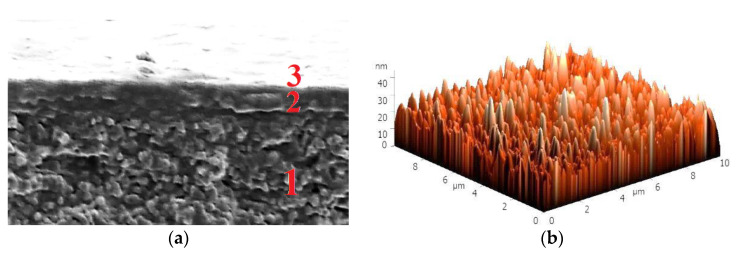
Transport characteristics of sodium alginate (SA) membranes cross-linked with CaCl and modified with fullerenol and fullerene derivative with L-arginine for pervaporation dehydration were improved applying various approaches, including the selection of a porous substrate for the creation of a thin selective SA-based layer, and the deposition of nano-sized polyelectrolyte (PEL) layers through the use of a layer-by-layer (Lbl) method. The impacts of commercial porous substrates made of polyacrylonitrile (PAN), regenerated cellulose, and aromatic polysulfone amide were investigated by scanning electron microscopy (SEM), atomic force microscopy (AFM), standard porosimetry method, and water filtration. The effects of PEL combinations (such as poly(sodium 4-styrene sulfonate) (PSS)/SA, PSS/chitosan, PSS/polyacrylic acid, PSS/poly(allylamine hydrochloride)) and the number of PEL bilayers deposited with the Lbl technique on the properties of the SA and SA/fullerene derivative membranes were studied by SEM, AFM, and contact angle measurements. The best characteristics were exhibited by a cross-linked PAN-supported SA/fullerenol (5%) membrane with five PSS/SA bilayers: permeation flux of 0.68-1.38 kg/(mh), 0.18-1.55 kg/(mh), and 0.50-1.15 kg/(mh), and over 99.7, 99.0, and 89.0 wt.% water in the permeate for the pervaporation dehydration of isopropanol (12-70 wt.% water), ethanol (4-70 wt.% water), and tetrahydrofuran (5.7-70 wt.% water), respectively. It was demonstrated that the mutual application of bulk and surface modifications essentially improved the membrane's characteristics in pervaporation dehydration.
通过多种方法改善了海藻酸钠(SA)膜的传输特性,该膜用氯化钙交联,并与富勒醇和含L-精氨酸的富勒烯衍生物进行改性,用于渗透汽化脱水,这些方法包括选择多孔基材以形成基于SA的薄选择层,以及通过逐层(Lbl)方法沉积纳米级聚电解质(PEL)层。通过扫描电子显微镜(SEM)、原子力显微镜(AFM)、标准孔隙率测定法和水过滤研究了由聚丙烯腈(PAN)、再生纤维素和芳族聚砜酰胺制成的商用多孔基材的影响。通过SEM、AFM和接触角测量研究了PEL组合(如聚(4-苯乙烯磺酸钠)(PSS)/SA、PSS/壳聚糖、PSS/聚丙烯酸、PSS/聚(烯丙胺盐酸盐))以及用Lbl技术沉积的PEL双层数量对SA和SA/富勒烯衍生物膜性能的影响。具有五个PSS/SA双层的交联PAN支撑的SA/富勒醇(5%)膜表现出最佳特性:对于异丙醇(12 - 70 wt.%水)、乙醇(4 - 70 wt.%水)和四氢呋喃(5.7 - 70 wt.%水)的渗透汽化脱水,渗透通量分别为0.68 - 1.38 kg/(m·h)、0.18 - 1.55 kg/(m·h)和0.50 - 1.15 kg/(m·h),渗透物中的水含量分别超过99.7、99.0和89.0 wt.%。结果表明,本体改性和表面改性的相互应用在渗透汽化脱水中显著改善了膜的特性。