Liu Hanhan, Prokosch Verena
Department of Ophthalmology, Faculty of Medicine and University Hospital Cologne, University of Cologne, 50937 Cologne, Germany.
Int J Mol Sci. 2021 Apr 1;22(7):3689. doi: 10.3390/ijms22073689.
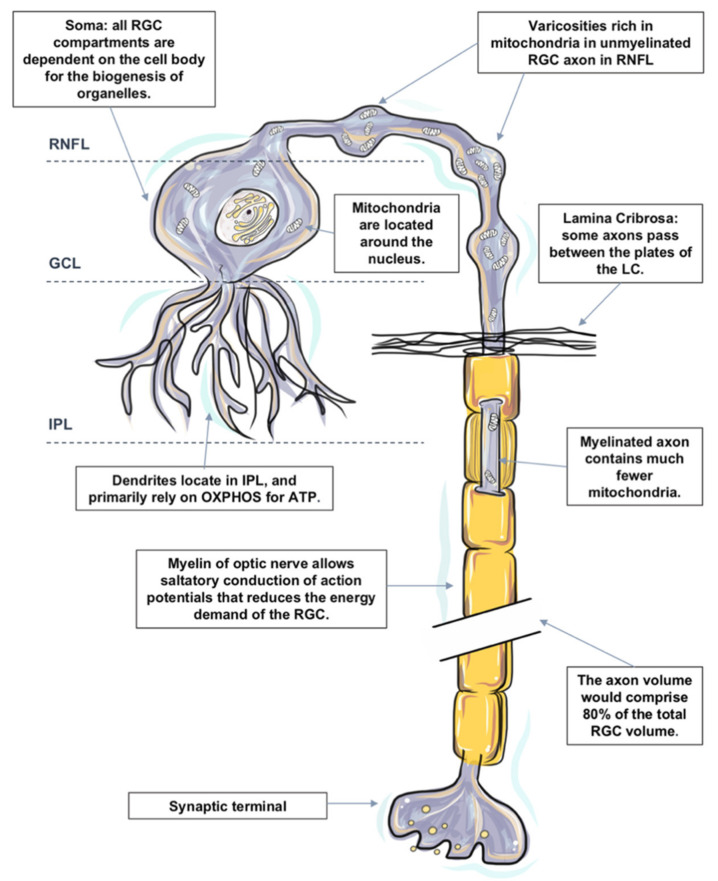
Glaucoma, the leading cause of irreversible blindness, is a heterogeneous group of diseases characterized by progressive loss of retinal ganglion cells (RGCs) and their axons and leads to visual loss and blindness. Risk factors for the onset and progression of glaucoma include systemic and ocular factors such as older age, lower ocular perfusion pressure, and intraocular pressure (IOP). Early signs of RGC damage comprise impairment of axonal transport, downregulation of specific genes and metabolic changes. The brain is often cited to be the highest energy-demanding tissue of the human body. The retina is estimated to have equally high demands. RGCs are particularly active in metabolism and vulnerable to energy insufficiency. Understanding the energy metabolism of the inner retina, especially of the RGCs, is pivotal for understanding glaucoma's pathophysiology. Here we review the key contributors to the high energy demands in the retina and the distinguishing features of energy metabolism of the inner retina. The major features of glaucoma include progressive cell death of retinal ganglions and optic nerve damage. Therefore, this review focuses on the energetic budget of the retinal ganglion cells, optic nerve and the relevant cells that surround them.
青光眼是不可逆失明的主要原因,是一组异质性疾病,其特征是视网膜神经节细胞(RGCs)及其轴突逐渐丧失,最终导致视力丧失和失明。青光眼发病和进展的风险因素包括全身和眼部因素,如年龄增长、眼部灌注压降低和眼压(IOP)。RGC损伤的早期迹象包括轴突运输受损、特定基因下调和代谢变化。大脑常被认为是人体能量需求最高的组织。据估计,视网膜的能量需求同样很高。RGCs在新陈代谢方面特别活跃,并且容易受到能量不足的影响。了解视网膜内层,尤其是RGCs的能量代谢,对于理解青光眼的病理生理学至关重要。在此,我们综述了视网膜能量高需求的关键因素以及视网膜内层能量代谢的显著特征。青光眼的主要特征包括视网膜神经节细胞的进行性细胞死亡和视神经损伤。因此,本综述重点关注视网膜神经节细胞、视神经及其周围相关细胞的能量收支情况。