Pereira Sara, Yao Ruwei, Gomes Mariana, Jørgensen Per Trolle, Wengel Jesper, Azevedo Nuno Filipe, Sobral Santos Rita
Laboratory for Process Engineering, Environment, Biotechnology and Energy (LEPABE), Faculty of Engineering, University of Porto, R. Dr. Roberto Frias, 4200-465 Porto, Portugal.
Biomolecular Nanoscale Engineering Center, Department of Physics, Chemistry and Pharmacy, University of Southern Denmark, Campusvej 55, 5230 Odense M, Denmark.
Antibiotics (Basel). 2021 Apr 3;10(4):379. doi: 10.3390/antibiotics10040379.
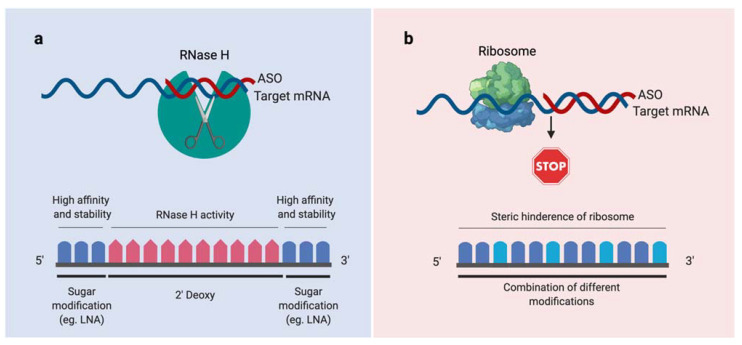
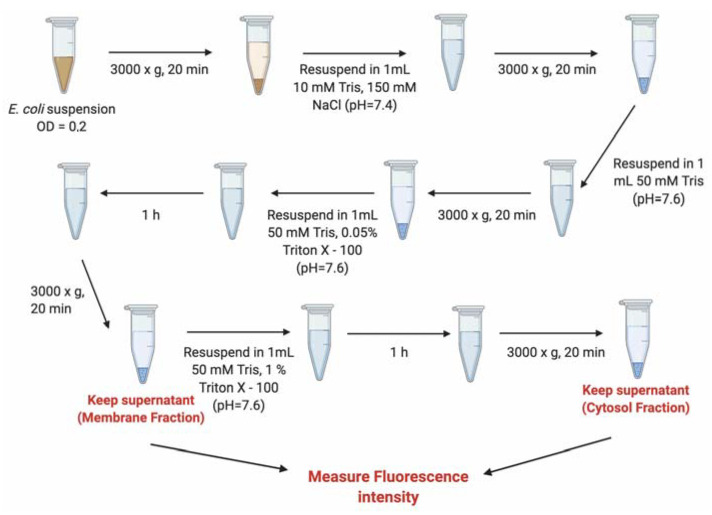
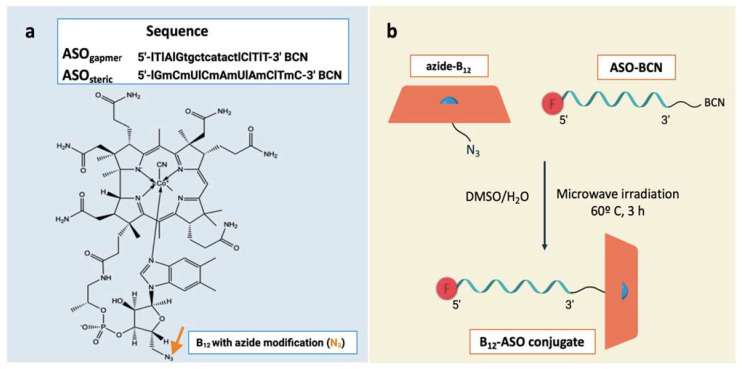
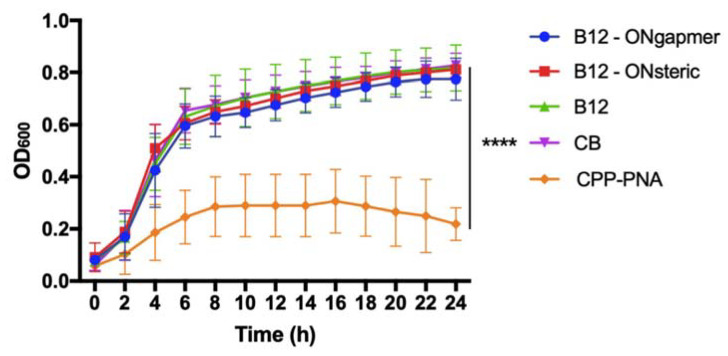
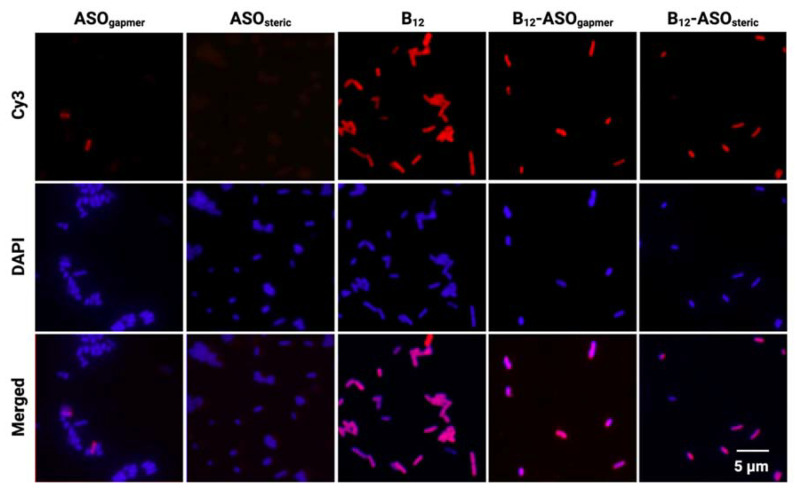
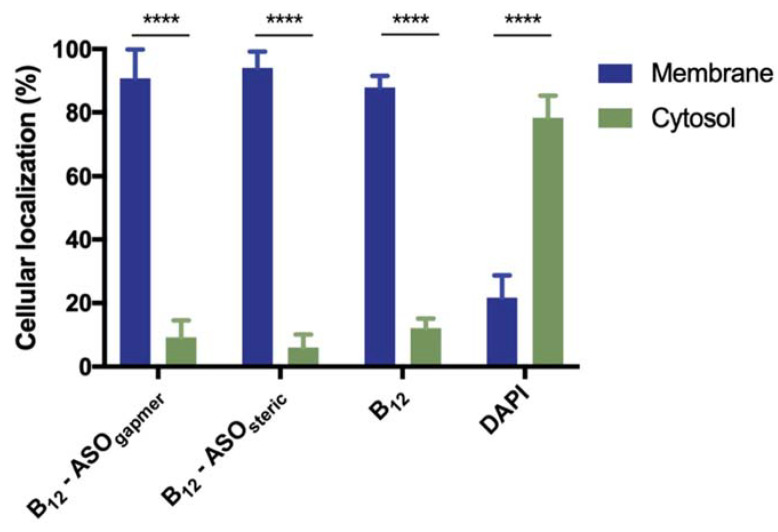
The emergence of bacterial resistance to traditional small-molecule antibiotics is fueling the search for innovative strategies to treat infections. Inhibiting the expression of essential bacterial genes using antisense oligonucleotides (ASOs), particularly composed of nucleic acid mimics (NAMs), has emerged as a promising strategy. However, their efficiency depends on their association with vectors that can translocate the bacterial envelope. Vitamin B is among the largest molecules known to be taken up by bacteria and has very recently started to gain interest as a trojan-horse vector. Gapmers and steric blockers were evaluated as ASOs against (). Both ASOs were successfully conjugated to B by copper-free azide-alkyne click-chemistry. The biological effect of the two conjugates was evaluated together with their intracellular localization in . Although not only B but also both B-ASO conjugates interacted strongly with , they were mostly colocalized with the outer membrane. Only 6-9% were detected in the cytosol, which showed to be insufficient for bacterial growth inhibition. These results suggest that the internalization of B-ASO conjugates is strongly affected by the low uptake rate of the B in and that further studies are needed before considering this strategy against biofilms in vivo.
细菌对传统小分子抗生素产生耐药性,这推动了人们寻找治疗感染的创新策略。使用反义寡核苷酸(ASO)抑制细菌必需基因的表达已成为一种有前景的策略,尤其是由核酸模拟物(NAM)组成的ASO。然而,它们的效率取决于与能够穿过细菌包膜的载体的结合。维生素B是已知可被细菌摄取的最大分子之一,最近作为一种特洛伊木马载体开始受到关注。针对()评估了缺口mers和空间位阻阻滞剂作为ASO。两种ASO均通过无铜叠氮化物-炔烃点击化学成功与B偶联。评估了两种偶联物的生物学效应及其在()中的细胞内定位。尽管不仅B而且两种B-ASO偶联物都与()强烈相互作用,但它们大多与外膜共定位。仅在胞质溶胶中检测到6-9%,这表明不足以抑制细菌生长。这些结果表明,B-ASO偶联物的内化受到()中B摄取率低的强烈影响,在考虑将该策略用于体内生物膜之前,还需要进一步研究。