Centro de Biología Molecular "Severo Ochoa" (CBMSO) (CSIC-UAM), Consejo Superior de Investigaciones Científicas (CSIC), Campus de Cantoblanco, 28049 Madrid, Spain.
Centro de Investigación Biomédica en Red de Enfermedades Hepáticas y Digestivas (CIBERehd) del Instituto de Salud Carlos III, 28029 Madrid, Spain.
Viruses. 2021 Apr 3;13(4):616. doi: 10.3390/v13040616.
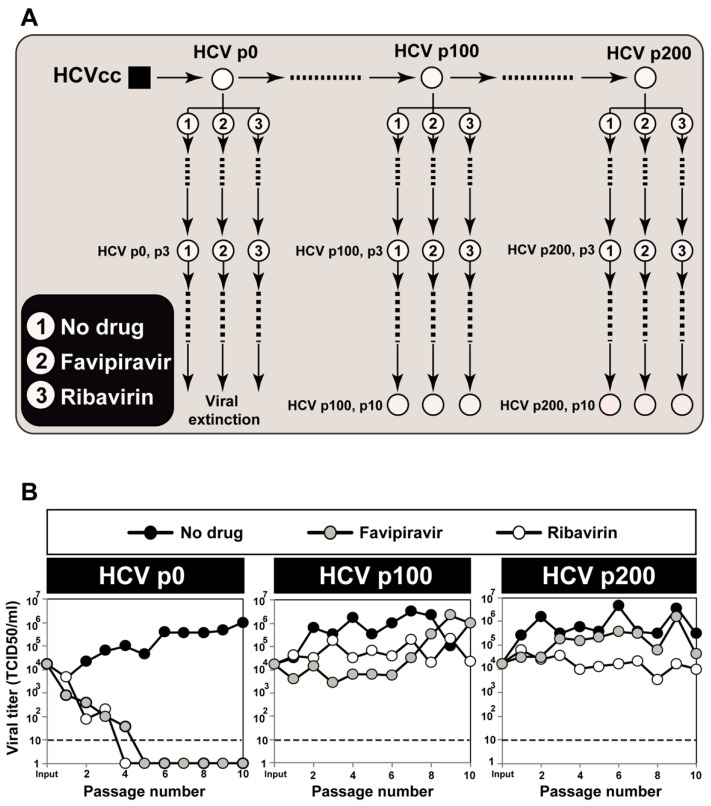
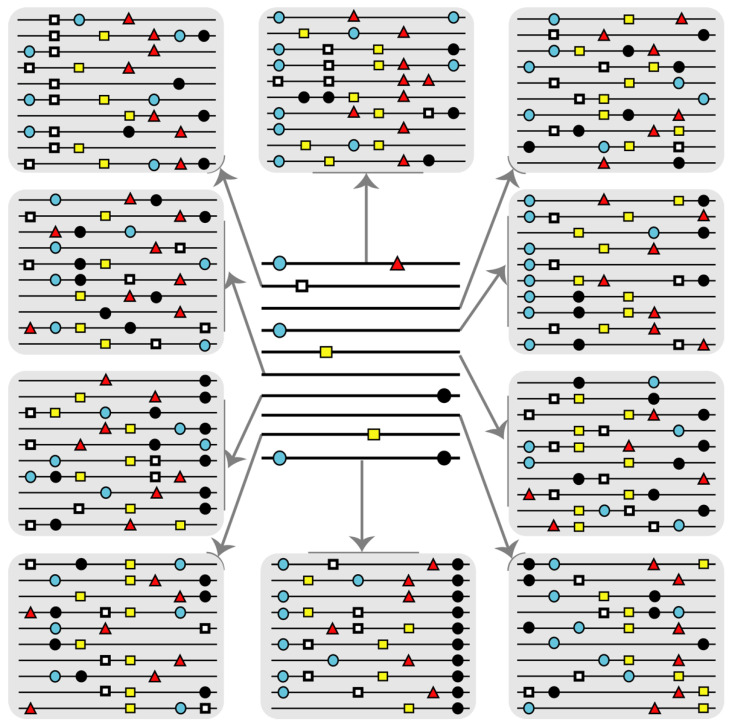
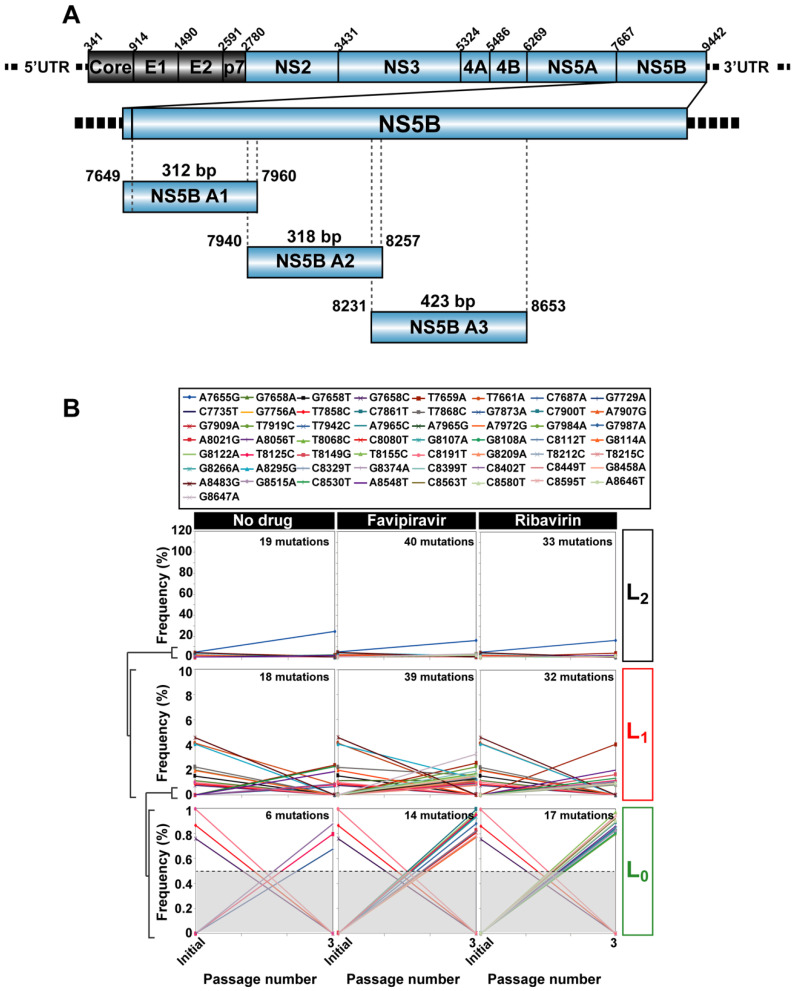
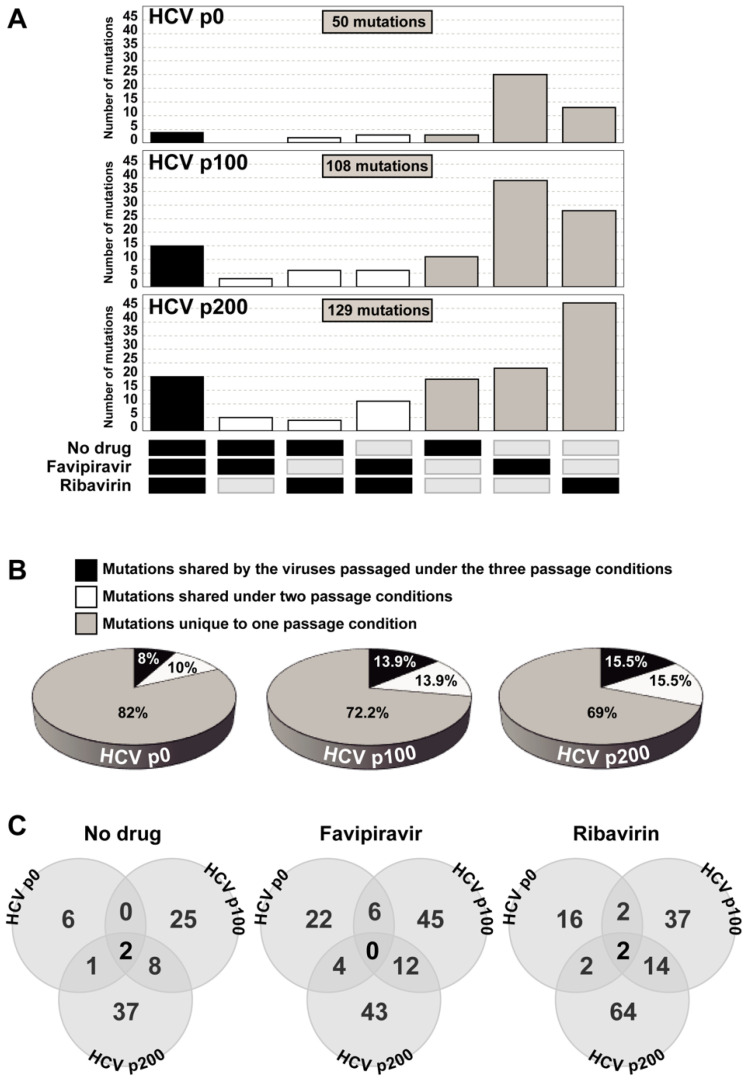
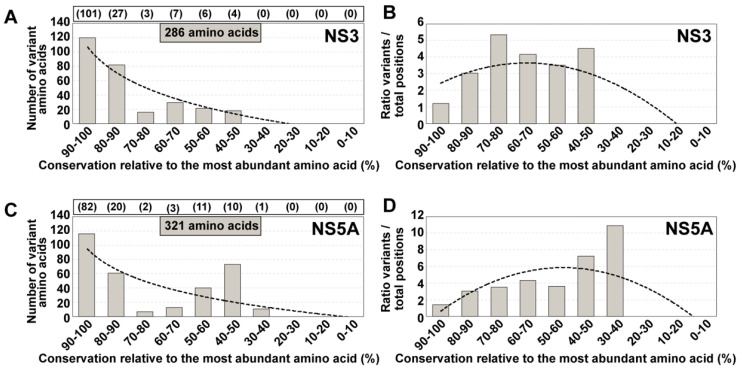
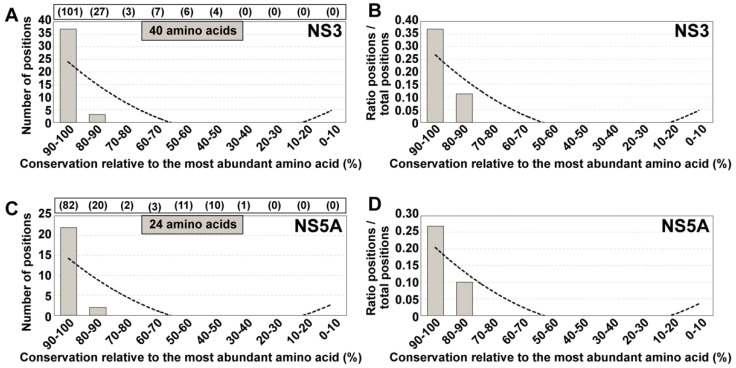
Replication of RNA viruses is characterized by exploration of sequence space which facilitates their adaptation to changing environments. It is generally accepted that such exploration takes place mainly in response to positive selection, and that further diversification is boosted by modifications of virus population size, particularly bottleneck events. Our recent results with hepatitis C virus (HCV) have shown that the expansion in sequence space of a viral clone continues despite prolonged replication in a stable cell culture environment. Diagnosis of the expansion was based on the quantification of diversity indices, the occurrence of intra-population mutational waves (variations in mutant frequencies), and greater individual residue variations in mutant spectra than those anticipated from sequence alignments in data banks. In the present report, we review our previous results, and show additionally that mutational waves in amplicons from the NS5A-NS5B-coding region are equally prominent during HCV passage in the absence or presence of the mutagenic nucleotide analogues favipiravir or ribavirin. In addition, by extending our previous analysis to amplicons of the NS3- and NS5A-coding region, we provide further evidence of the incongruence between amino acid conservation scores in mutant spectra from infected patients and in the Los Alamos National Laboratory HCV data banks. We hypothesize that these observations have as a common origin a permanent state of HCV population disequilibrium even upon extensive viral replication in the absence of external selective constraints or changes in population size. Such a persistent disequilibrium-revealed by the changing composition of the mutant spectrum-may facilitate finding alternative mutational pathways for HCV antiviral resistance. The possible significance of our model for other genetically variable viruses is discussed.
RNA 病毒的复制以探索序列空间为特征,这有助于它们适应不断变化的环境。人们普遍认为,这种探索主要发生在正选择的情况下,病毒种群大小的改变,特别是瓶颈事件,进一步促进了多样化。我们最近对丙型肝炎病毒(HCV)的研究结果表明,尽管在稳定的细胞培养环境中复制时间延长,但病毒克隆在序列空间中的扩展仍在继续。扩展的诊断基于多样性指数的量化、种群内突变波的发生(突变频率的变化)以及突变体谱中个体残基变异的增加,超过了从数据库序列比对中预期的变异。在本报告中,我们回顾了我们以前的结果,并进一步表明,在没有或存在致突变核苷酸类似物法匹拉韦或利巴韦林的情况下,NS5A-NS5B 编码区扩增子中的突变波在 HCV 传代过程中同样显著。此外,通过将我们以前的分析扩展到 NS3 和 NS5A 编码区的扩增子,我们提供了进一步的证据,证明感染患者的突变体谱中的氨基酸保守评分与洛斯阿拉莫斯国家实验室 HCV 数据库中的评分不一致。我们假设,这些观察结果的共同起源是 HCV 种群失衡的永久状态,即使在没有外部选择压力或种群大小变化的情况下,病毒也能进行广泛复制。这种持续的失衡——通过突变体谱组成的变化来揭示——可能有助于发现 HCV 抗病毒耐药性的替代突变途径。我们的模型对其他遗传变异病毒的可能意义进行了讨论。