Department of Medicine, McMaster University, Hamilton, ON L8S 4K1, Canada.
Cells. 2021 Apr 6;10(4):817. doi: 10.3390/cells10040817.
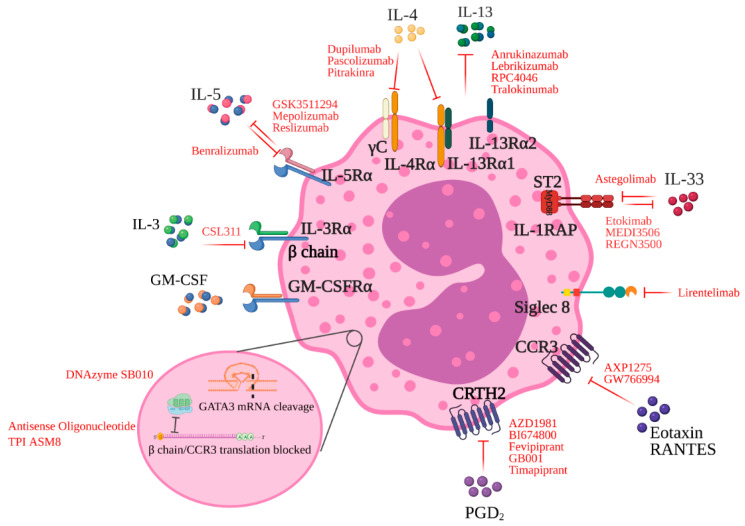
Asthma is a complex and chronic inflammatory disease of the airways, characterized by variable and recurring symptoms, reversible airflow obstruction, bronchospasm, and airway eosinophilia. As the pathophysiology of asthma is becoming clearer, the identification of new valuable drug targets is emerging. IL-5 is one of these such targets because it is the major cytokine supporting eosinophilia and is responsible for terminal differentiation of human eosinophils, regulating eosinophil proliferation, differentiation, maturation, migration, and prevention of cellular apoptosis. Blockade of the IL-5 pathway has been shown to be efficacious for the treatment of eosinophilic asthma. However, several other inflammatory pathways have been shown to support eosinophilia, including IL-13, the alarmin cytokines TSLP and IL-33, and the IL-3/5/GM-CSF axis. These and other alternate pathways leading to airway eosinophilia will be described, and the efficacy of therapeutics that have been developed to block these pathways will be evaluated.
哮喘是一种气道的复杂和慢性炎症性疾病,其特征是可变和反复出现的症状、可逆转的气流阻塞、支气管痉挛和气道嗜酸性粒细胞增多。随着哮喘的病理生理学变得越来越清晰,新的有价值的药物靶点的识别也在出现。IL-5 就是这样一个靶点,因为它是支持嗜酸性粒细胞增多的主要细胞因子,负责人类嗜酸性粒细胞的终末分化,调节嗜酸性粒细胞的增殖、分化、成熟、迁移和细胞凋亡的预防。IL-5 通路的阻断已被证明对治疗嗜酸性哮喘有效。然而,已经表明其他几个炎症通路也支持嗜酸性粒细胞增多,包括 IL-13、警报素细胞因子 TSLP 和 IL-33 以及 IL-3/5/GM-CSF 轴。本文将描述导致气道嗜酸性粒细胞增多的这些和其他替代途径,并评估为阻断这些途径而开发的治疗药物的疗效。