Department of Electrical and Computer Engineering, University of Houston, Houston, TX 77204, USA.
Sensors (Basel). 2021 Apr 8;21(8):2622. doi: 10.3390/s21082622.
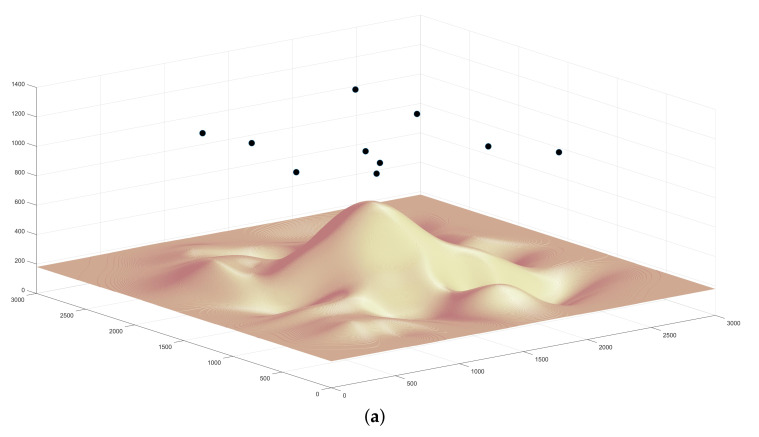
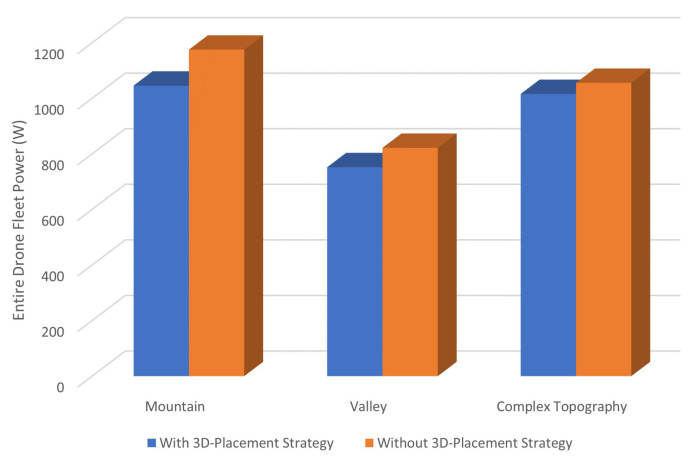
Unmanned Aerial Vehicles (UAVs, also known as drones) have become increasingly appealing with various applications and services over the past years. Drone-based remote sensing has shown its unique advantages in collecting ground-truth and real-time data due to their affordable costs and relative ease of operability. This paper presents a 3D placement scheme for multi-drone sensing/monitoring platforms, where a fleet of drones are sent for conducting a mission in a given area. It can range from environmental monitoring of forestry, survivors searching in a disaster zone to exploring remote regions such as deserts and mountains. The proposed drone placing algorithm covers the entire region without dead zones while minimizing the number of cooperating drones deployed. Naturally, drones have limited battery supplies which need to cover mechanical motions, message transmissions and data calculation. Consequently, the drone energy model is explicitly investigated and dynamic adjustments are deployed on drone locations. The proposed drone placement algorithm is 3D landscaping-aware and it takes the line-of-sight into account. The energy model considers inter-communications within drones. The algorithm not only minimizes the overall energy consumption, but also maximizes the whole drone team's lifetime in situations where no power recharging facilities are available in remote/rural areas. Simulations show the proposed placement scheme has significantly prolonged the lifetime of the drone fleet with the least number of drones deployed under various complex terrains.
近年来,随着各种应用和服务的出现,无人飞行器(UAV,也称为无人机)变得越来越吸引人。由于成本低廉且相对易于操作,基于无人机的遥感在收集地面真实数据和实时数据方面显示出了独特的优势。本文提出了一种多无人机感测/监测平台的 3D 布置方案,其中派遣一队无人机在给定区域执行任务。任务范围可以从林业环境监测、灾区幸存者搜索到探索沙漠和山区等偏远地区。所提出的无人机布置算法可以覆盖整个区域而没有死区,同时最小化部署的合作无人机数量。当然,无人机的电池电量有限,需要覆盖机械运动、消息传输和数据计算。因此,明确研究了无人机的能量模型,并对无人机位置进行了动态调整。所提出的无人机布置算法具有 3D 景观感知能力,并考虑了视线。能量模型考虑了无人机内部的相互通信。在没有充电设施的偏远/农村地区,该算法不仅可以最小化整体能耗,还可以最大化整个无人机团队的寿命。仿真结果表明,在所提出的布置方案下,在各种复杂地形下,无人机队的寿命得到了显著延长,同时部署的无人机数量最少。