Jianu Călin, Stoin Daniela, Cocan Ileana, David Ioan, Pop Georgeta, Lukinich-Gruia Alexandra Teodora, Mioc Marius, Mioc Alexandra, Șoica Codruța, Muntean Delia, Rusu Laura-Cristina, Goleț Ionuț, Horhat Delia Ioana
Faculty of Food Engineering, Banat's University of Agricultural Sciences and Veterinary Medicine "King Michael I of Romania" from Timisoara, Calea Aradului 119, RO-300645 Timișoara, Romania.
Faculty of Agriculture, Banat's University of Agricultural Sciences and Veterinary Medicine "King Michael I of Romania" from Timisoara, Calea Aradului 119, RO-300645 Timișoara, Romania.
Foods. 2021 Apr 9;10(4):815. doi: 10.3390/foods10040815.
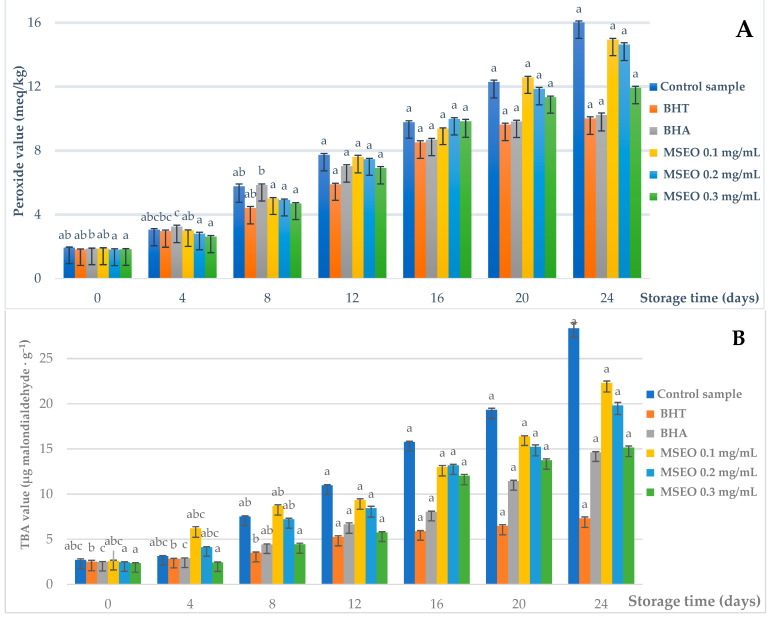
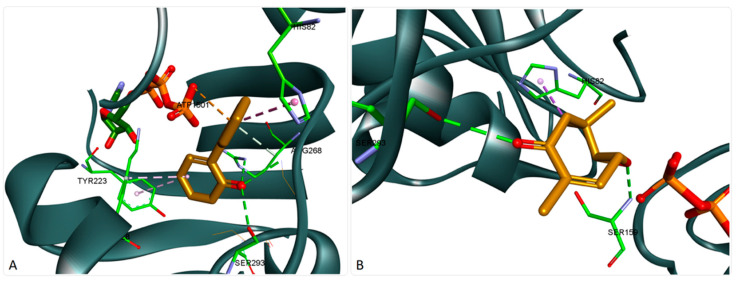
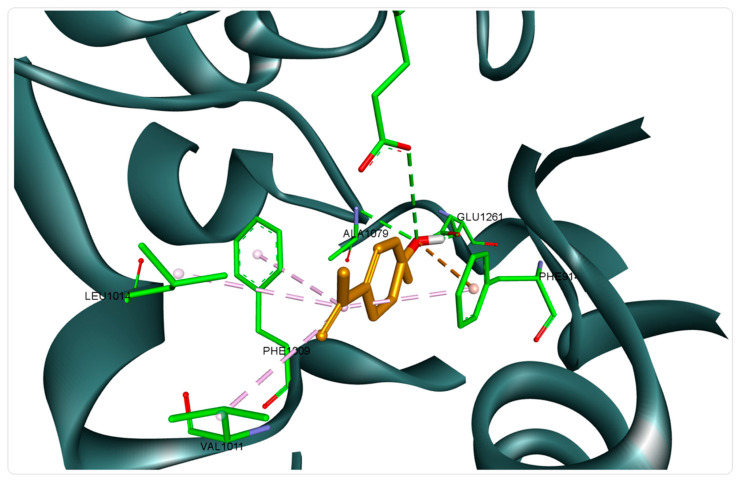
This study was conducted to identify the volatile compounds of × essential oil (MSEO) and evaluate its antioxidant and antibacterial potential. The essential oil (EO) content was assessed by gas chromatography-mass spectrometry (GC-MS). Carvone (55.71%), limonene (18.83%), -carveol (3.54%), -carveol (2.72%), beta-bourbonene (1.94%), and caryophyllene oxide (1.59%) were the main identified compounds. The MSEO displayed broad-spectrum antibacterial effects and was also found to be the most effective antifungal agent against C and . The antioxidant activity of MSEO was tested against cold-pressed sunflower oil by peroxide, thiobarbituric acid, 1,1-diphenyl-2-picrylhydrazyl radical (DPPH), and β-carotene/linoleic acid bleaching methods. The EO showed strong antioxidant effects as reflected by IC values of 0.83 ± 0.01 mg/mL and relative antioxidative activity of 87.32 ± 0.03% in DPPH and β-carotene/linoleic acid bleaching assays, respectively. Moreover, in the first 8 days of the incubation period, the inhibition of primary and secondary oxidation compounds induced by the MSEO (0.3 mg/mL) was significantly stronger 0.05) than that of butylated hydroxyanisole. In silico molecular docking studies were conducted to highlight the underlying antimicrobial mechanism as well as the in vitro antioxidant potential. Recorded data showed that the antimicrobial activity of MSEO compounds could be exerted through the D-Alanine-d-alanine ligase (DDl) inhibition and may be attributed to a cumulative effect. The most active compounds are minor components of the MSEO. Docking results also revealed that several mint EO components could exert their in vitro antioxidant activity by employing xanthine oxidase inhibition. Consequently, MSEO could be a new natural source of antioxidants and antiseptics, with potential applications in the food and pharmaceutical industries as an alternative to the utilization of synthetic additives.
本研究旨在鉴定×精油(MSEO)的挥发性成分,并评估其抗氧化和抗菌潜力。采用气相色谱-质谱联用(GC-MS)法测定精油(EO)含量。主要鉴定出的化合物有香芹酮(55.71%)、柠檬烯(18.83%)、反式香芹醇(3.54%)、顺式香芹醇(2.72%)、β-波旁烯(1.94%)和氧化石竹烯(1.59%)。MSEO具有广谱抗菌作用,也是对C和最有效的抗真菌剂。通过过氧化物、硫代巴比妥酸、1,1-二苯基-2-苦基肼自由基(DPPH)和β-胡萝卜素/亚油酸漂白法测试了MSEO对冷榨葵花籽油的抗氧化活性。在DPPH和β-胡萝卜素/亚油酸漂白试验中,EO表现出较强的抗氧化作用,IC值分别为0.83±0.01mg/mL,相对抗氧化活性为87.32±0.03%。此外,在培养期的前8天,MSEO(0.3mg/mL)对一级和二级氧化化合物的抑制作用明显强于丁基羟基茴香醚(P<0.05)。进行了计算机分子对接研究,以突出潜在的抗菌机制以及体外抗氧化潜力。记录的数据表明,MSEO化合物的抗菌活性可能通过抑制D-丙氨酸-D-丙氨酸连接酶(DDl)发挥作用,可能归因于累积效应。最具活性的化合物是MSEO的次要成分。对接结果还表明,几种薄荷EO成分可通过抑制黄嘌呤氧化酶发挥其体外抗氧化活性。因此,MSEO可能是一种新的抗氧化剂和防腐剂天然来源,在食品和制药行业具有潜在应用,可替代合成添加剂的使用。