Shu Dan, Zhu Ying, Lu Meng, He Ao-Di, Chen Jiang-Bin, Ye Ding-Song, Liu Yue, Zeng Xiang-Bin, Ma Rong, Ming Zhang-Yin
Department of Pharmacology, School of Basic Medicine, Tongji Medical College of Huazhong, University of Science and Technology, 13 Hangkong Road, Wuhan 430030, China.
The Key Laboratory for Drug Target Research and Pharmacodynamic Evaluation of Hubei Province, 13 Hangkong Road, Wuhan 430030, China.
Biomedicines. 2021 Apr 21;9(5):444. doi: 10.3390/biomedicines9050444.
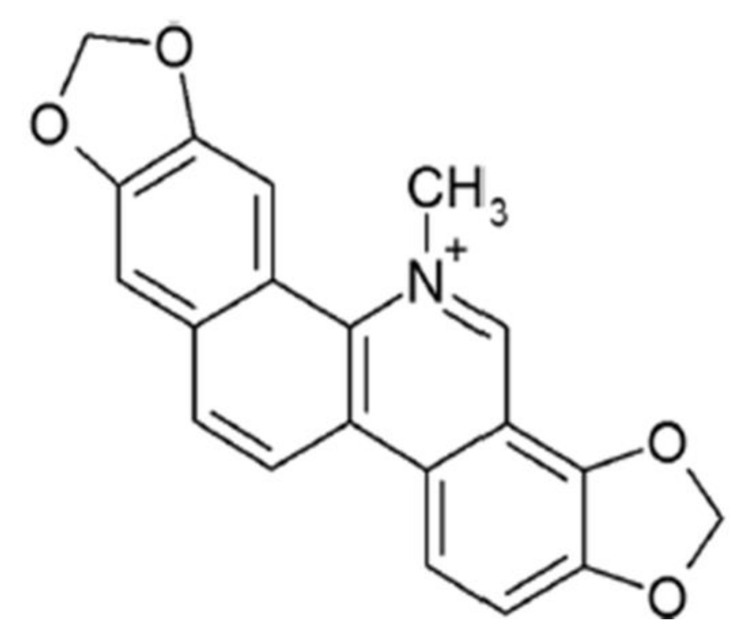
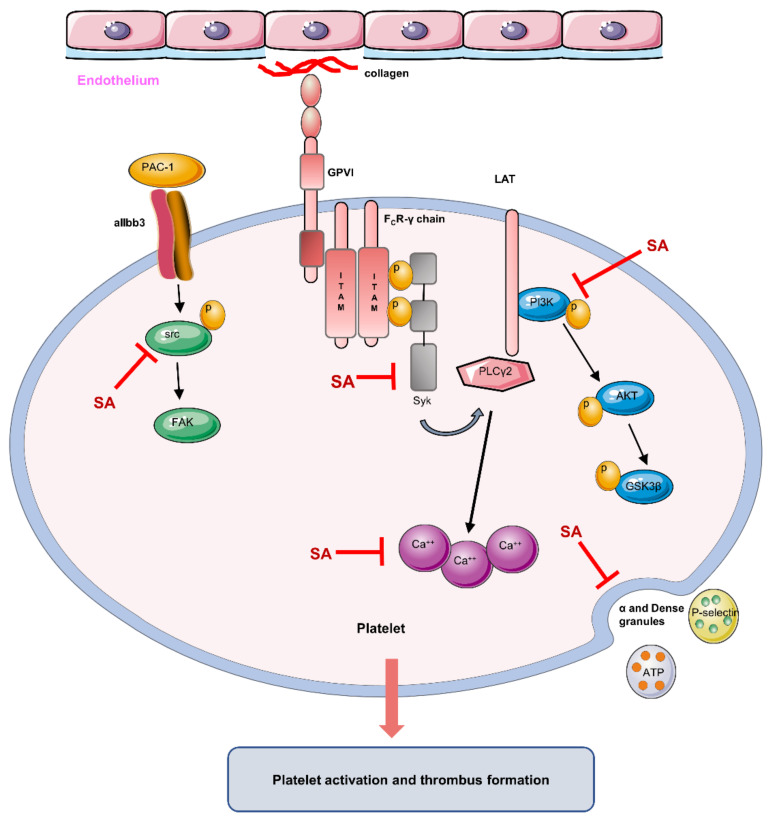
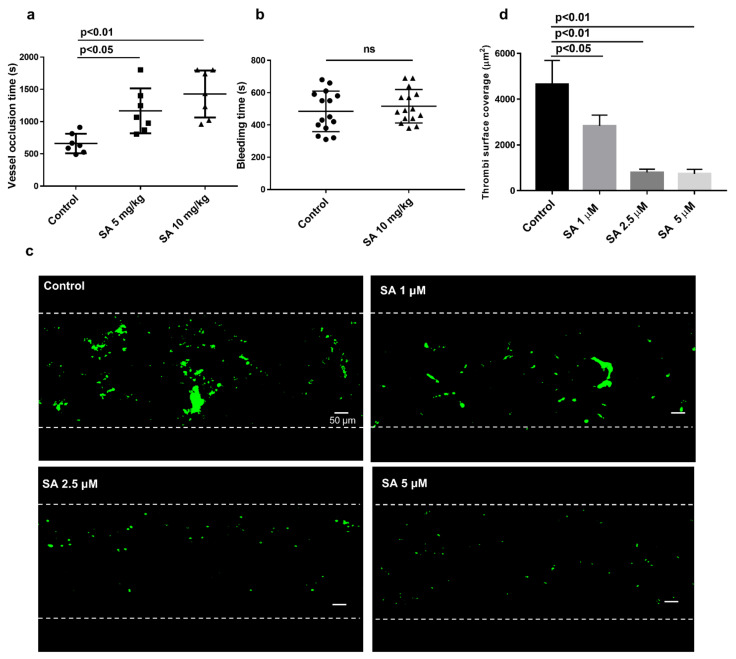
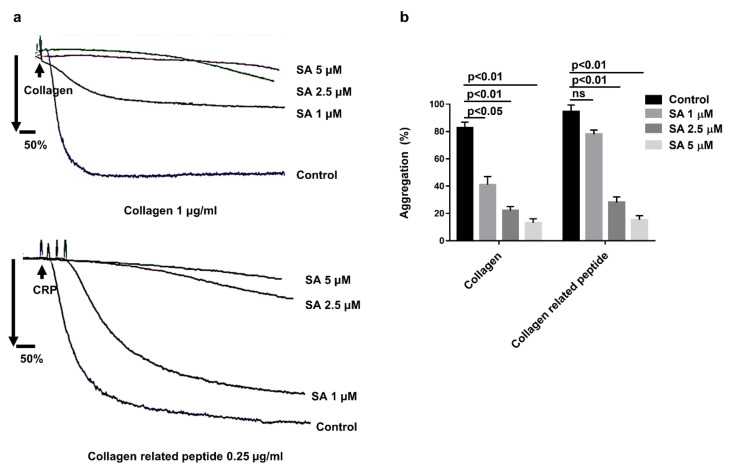
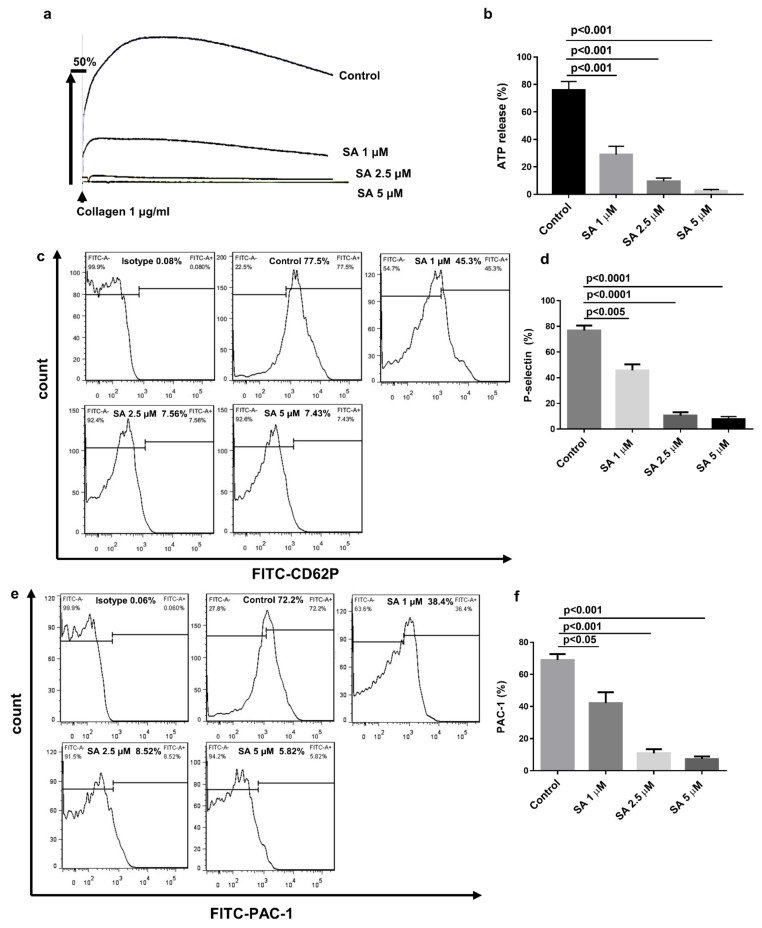
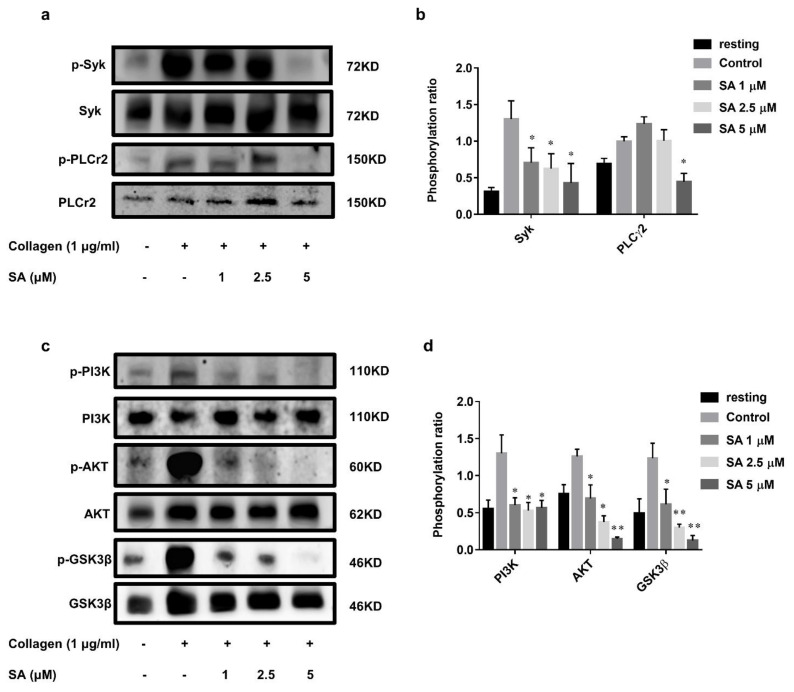
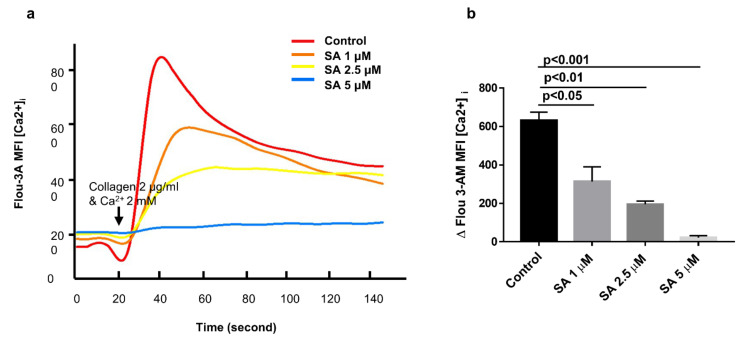
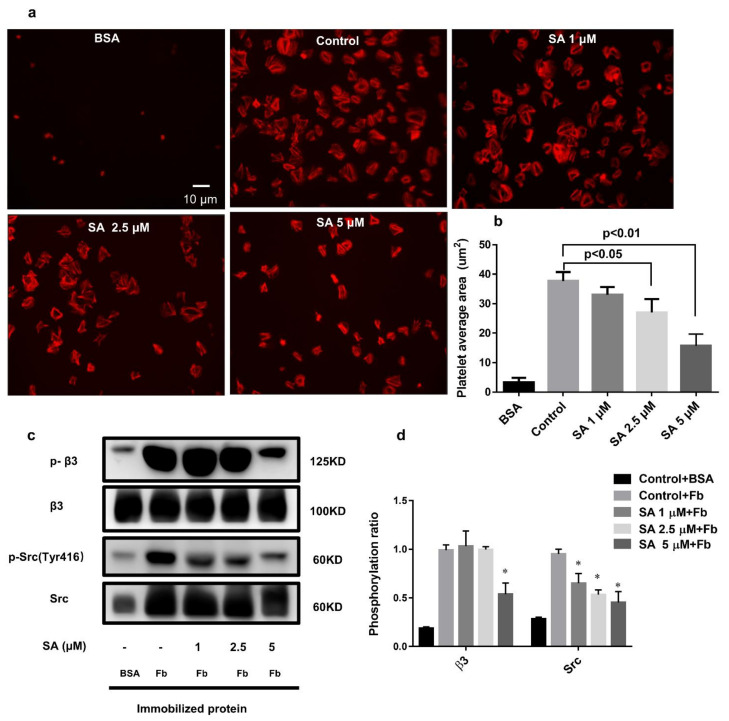
Sanguinarine, a benzophenanthridine alkaloid, has been described to have an antiplatelet activity. However, its antithrombotic effect and the mechanism of platelet inhibition have not thoroughly been explored. The current study found that sanguinarine had an inhibitory effect on thrombus formation. This inhibitory effect was quite evident both in the flow-chamber assays as well as in a murine model of FeCl-induced carotid artery thrombosis. Further investigations also revealed that sanguinarine inhibited the collagen-induced human platelet aggregation and granule release. At the same time, it also prevented platelet spreading and adhesion to immobilized fibrinogen. The molecular mechanisms of its antiplatelet activity were found to be as follows: 1. Reduced phosphorylation of the downstream signaling pathways in collagen specific receptor GPVI (Syk-PLCγ2 and PI3K-Akt-GSK3β); 2. Inhibition of collagen-induced increase in the intracellular Ca concentration ([Ca]i); 3. Inhibition of integrin αIIbβ3 outside-in signaling via reducing β3 and Src (Tyr-416) phosphorylation. It can be concluded that sanguinarine inhibits collagen-induced platelet activation and reduces thrombus formation. This effect is mediated via inhibiting the phosphorylation of multiple components in the GPVI signaling pathway. Current data also indicate that sanguinarine can be of some clinical value to treat cardiovascular diseases involving an excess of platelet activation.
血根碱是一种苯并菲啶生物碱,已被描述具有抗血小板活性。然而,其抗血栓形成作用及血小板抑制机制尚未得到充分研究。当前研究发现,血根碱对血栓形成具有抑制作用。这种抑制作用在流动腔试验以及FeCl诱导的小鼠颈动脉血栓形成模型中均十分明显。进一步研究还表明,血根碱可抑制胶原蛋白诱导的人血小板聚集和颗粒释放。同时,它还能阻止血小板铺展以及与固定化纤维蛋白原的黏附。其抗血小板活性的分子机制如下:1. 胶原蛋白特异性受体GPVI下游信号通路(Syk-PLCγ2和PI3K-Akt-GSK3β)的磷酸化减少;2. 抑制胶原蛋白诱导的细胞内Ca浓度([Ca]i)升高;3. 通过减少β3和Src(Tyr-416)磷酸化来抑制整合素αIIbβ3外向信号转导。可以得出结论,血根碱可抑制胶原蛋白诱导的血小板活化并减少血栓形成。这种作用是通过抑制GPVI信号通路中多个成分的磷酸化来介导的。目前的数据还表明,血根碱在治疗涉及血小板过度活化的心血管疾病方面可能具有一定的临床价值。