Prieto-Carrasco Rodrigo, García-Arroyo Fernando E, Aparicio-Trejo Omar Emiliano, Rojas-Morales Pedro, León-Contreras Juan Carlos, Hernández-Pando Rogelio, Sánchez-Lozada Laura Gabriela, Tapia Edilia, Pedraza-Chaverri José
Department of Biology, Faculty of Chemistry, National Autonomous University of Mexico (UNAM), Mexico City 04510, Mexico.
Department of Cardio-Renal Pathophysiology, National Institute of Cardiology "Ignacio Chávez", Mexico City 14080, Mexico.
Biology (Basel). 2021 Apr 21;10(5):349. doi: 10.3390/biology10050349.
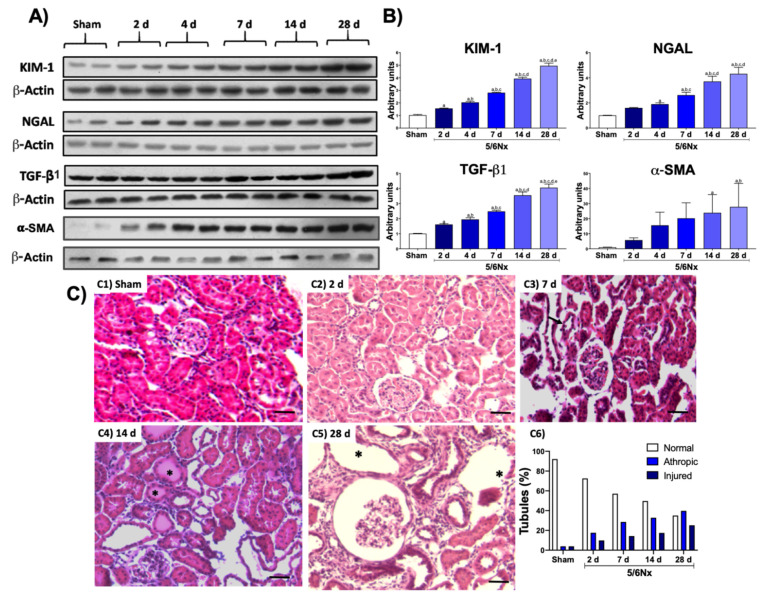
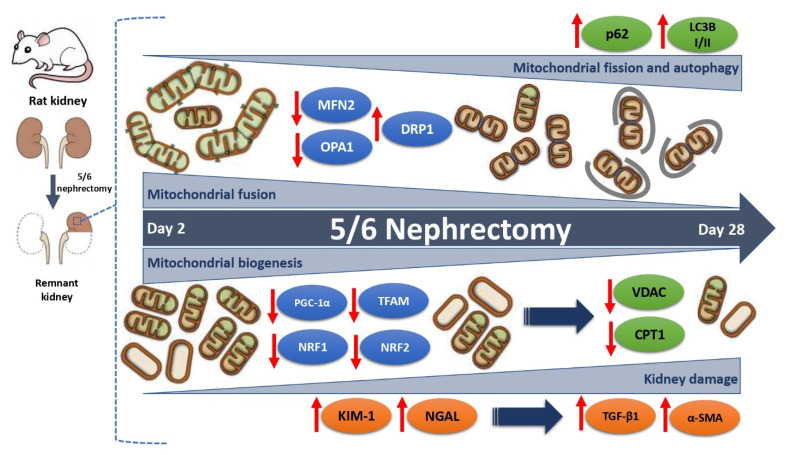
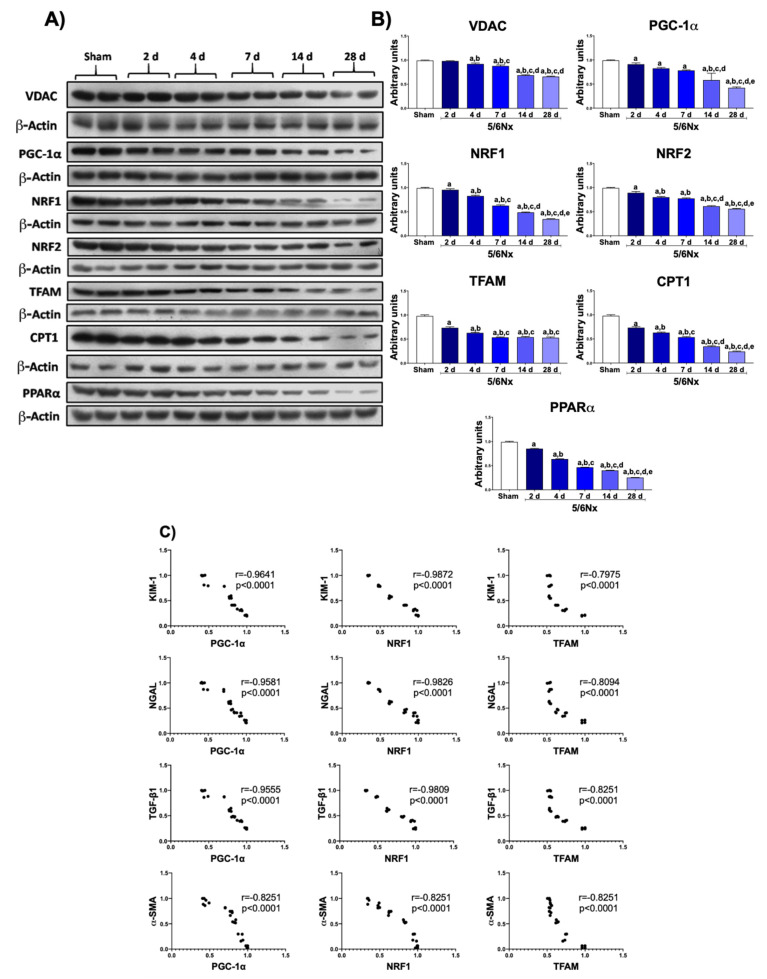
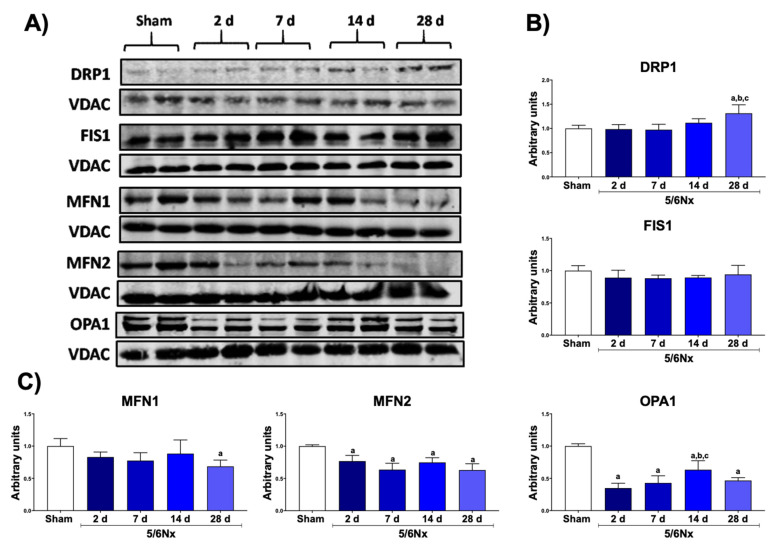
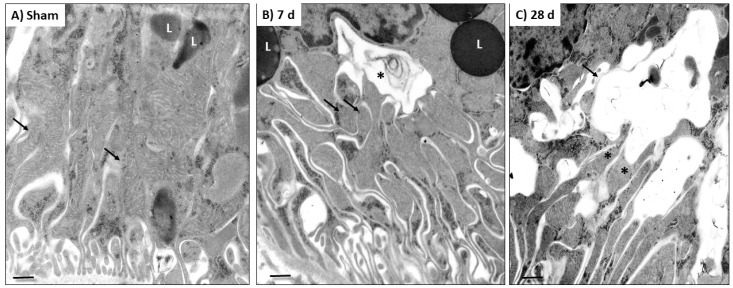
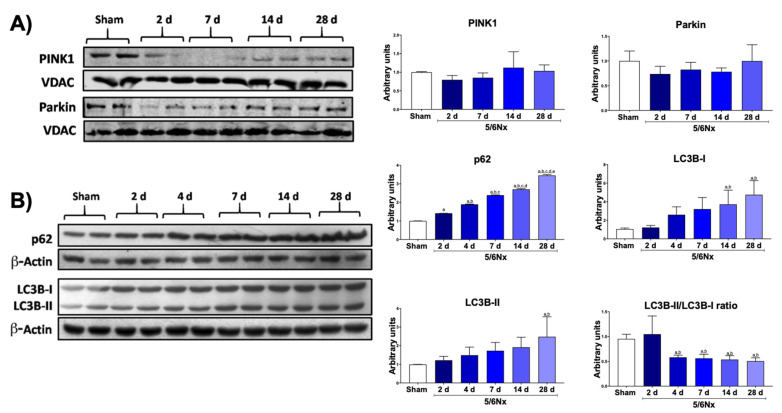
The five-sixth nephrectomy (5/6Nx) model is widely used to study the mechanisms involved in chronic kidney disease (CKD) progression. Mitochondrial impairment is a critical mechanism that favors CKD progression. However, until now, there are no temporal studies of the change in mitochondrial biogenesis and dynamics that allow determining the role of these processes in mitochondrial impairment and renal damage progression in the 5/6Nx model. In this work, we determined the changes in mitochondrial biogenesis and dynamics markers in remnant renal mass from days 2 to 28 after 5/6Nx. Our results show a progressive reduction in mitochondrial biogenesis triggered by reducing two principal regulators of mitochondrial protein expression, the peroxisome proliferator-activated receptor-gamma coactivator 1-alpha and the peroxisome proliferator-activated receptor alpha. Furthermore, the reduction in mitochondrial biogenesis proteins strongly correlates with the increase in renal damage markers. Additionally, we found a slow and gradual change in mitochondrial dynamics from fusion to fission, favoring mitochondrial fragmentation at later stages after 5/6Nx. Together, our results suggest that 5/6Nx induces the progressive reduction in mitochondrial mass over time via the decrease in mitochondrial biogenesis factors and a slow shift from mitochondrial fission to fusion; both mechanisms favor CKD progression in the remnant renal mass.
五分之六肾切除术(5/6Nx)模型被广泛用于研究慢性肾脏病(CKD)进展所涉及的机制。线粒体损伤是促进CKD进展的关键机制。然而,到目前为止,尚无关于线粒体生物发生和动力学变化的时间进程研究,无法确定这些过程在5/6Nx模型中线粒体损伤和肾损伤进展中的作用。在这项研究中,我们确定了5/6Nx术后第2天至28天残余肾组织中线粒体生物发生和动力学标志物的变化。我们的结果显示,通过降低线粒体蛋白表达的两个主要调节因子,即过氧化物酶体增殖物激活受体γ共激活因子1α和过氧化物酶体增殖物激活受体α,线粒体生物发生逐渐减少。此外,线粒体生物发生蛋白的减少与肾损伤标志物的增加密切相关。此外,我们发现线粒体动力学从融合到裂变有一个缓慢而渐进的变化,在5/6Nx术后后期有利于线粒体碎片化。总之,我们的结果表明,5/6Nx通过线粒体生物发生因子的减少以及从线粒体裂变到融合的缓慢转变,随时间诱导线粒体质量逐渐减少;这两种机制都有利于残余肾组织中CKD的进展。