Child Neurology Unit, AUSL-IRCCS di Reggio Emilia, 42122 Reggio Emilia, Italy.
Medical Genetics, Department of Clinical and Experimental Medicine, University Hospital of Parma, 43126 Parma, Italy.
Int J Mol Sci. 2021 Apr 18;22(8):4202. doi: 10.3390/ijms22084202.
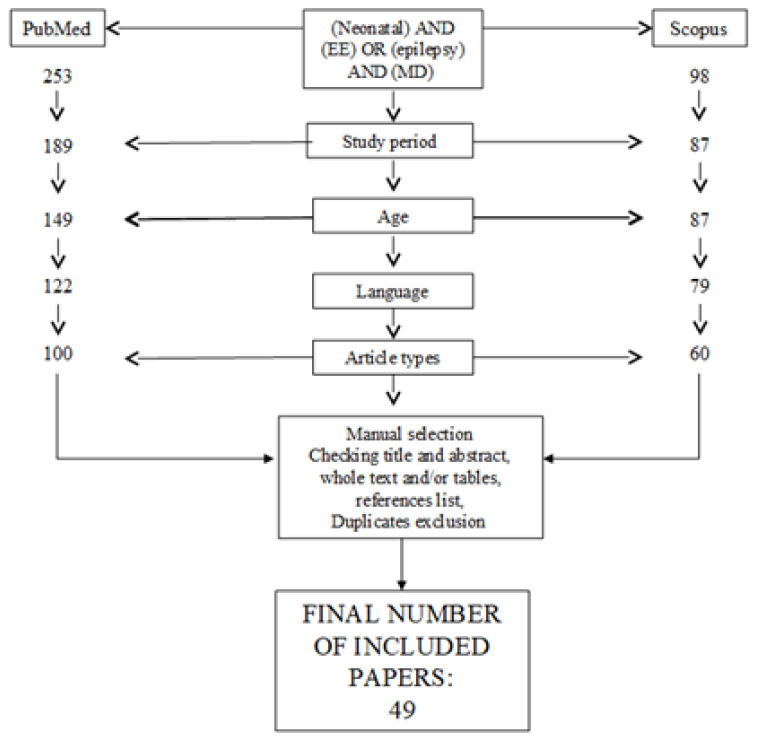
Despite expanding next generation sequencing technologies and increasing clinical interest into complex neurologic phenotypes associating epilepsies and developmental/epileptic encephalopathies (DE/EE) with movement disorders (MD), these monogenic conditions have been less extensively investigated in the neonatal period compared to infancy. We reviewed the medical literature in the study period 2000-2020 to report on monogenic conditions characterized by neonatal onset epilepsy and/or DE/EE and development of an MD, and described their electroclinical, genetic and neuroimaging spectra. In accordance with a PRISMA statement, we created a data collection sheet and a protocol specifying inclusion and exclusion criteria. A total of 28 different genes (from 49 papers) leading to neonatal-onset DE/EE with multiple seizure types, mainly featuring tonic and myoclonic, but also focal motor seizures and a hyperkinetic MD in 89% of conditions, with neonatal onset in 22%, were identified. Neonatal seizure semiology, or MD age of onset, were not always available. The rate of hypokinetic MD was low, and was described from the neonatal period only, with WW domain containing oxidoreductase ( pathogenic variants. The outcome is characterized by high rates of associated neurodevelopmental disorders and microcephaly. Brain MRI findings are either normal or nonspecific in most conditions, but serial imaging can be necessary in order to detect progressive abnormalities. We found high genetic heterogeneity and low numbers of described patients. Neurological phenotypes are complex, reflecting the involvement of genes necessary for early brain development. Future studies should focus on accurate neonatal epileptic phenotyping, and detailed description of semiology and time-course, of the associated MD, especially for the rarest conditions.
尽管下一代测序技术不断发展,临床对癫痫和发育性/癫痫性脑病(DE/EE)伴运动障碍(MD)等复杂神经表型的兴趣日益增加,但与婴儿期相比,这些单基因疾病在新生儿期的研究较少。我们回顾了 2000 年至 2020 年研究期间的医学文献,报告了以新生儿期起病癫痫和/或 DE/EE 以及 MD 发作为特征的单基因疾病,并描述了它们的电临床、遗传和神经影像学特征。根据 PRISMA 声明,我们创建了一个数据收集表和一份方案,其中规定了纳入和排除标准。共确定了 28 种不同的基因(来自 49 篇论文),这些基因导致新生儿起病的 DE/EE 伴多种癫痫发作类型,主要表现为强直和肌阵挛,但也有局灶性运动性癫痫发作和 89%的情况下出现高动力性 MD,22%的情况下新生儿起病。新生儿癫痫发作的临床表现或 MD 的发病年龄并不总是可用。低动力性 MD 的发生率较低,仅在新生儿期描述过,其特征是 WW 结构域包含氧化还原酶(致病性变异。其结局的特点是相关神经发育障碍和小头畸形的发生率较高。大多数情况下,脑 MRI 发现正常或非特异性,但为了检测进行性异常,可能需要连续进行影像学检查。我们发现遗传异质性高,描述的患者数量少。神经表型复杂,反映了早期脑发育所需基因的参与。未来的研究应侧重于对新生儿癫痫发作表型的准确评估,以及对相关 MD 的临床表现和时间进程的详细描述,尤其是对于最罕见的情况。