Gomis-Pastor Mar, Mirabet Perez Sonia, Roig Minguell Eulalia, Brossa Loidi Vicenç, Lopez Lopez Laura, Ros Abarca Sandra, Galvez Tugas Elisabeth, Mas-Malagarriga Núria, Mangues Bafalluy Mª Antonia
Pharmacy Department, Hospital de la Santa Creu i Sant Pau, IIB Sant Pau, 08025 Barcelona, Catalonia, Spain.
Cardiology Department, Hospital de la Santa Creu i Santa Pau and CIBER de Enfermedades Cardiovasculares (CIBER-CV), 08041 Barcelona, Catalonia, Spain.
Healthcare (Basel). 2021 Apr 14;9(4):463. doi: 10.3390/healthcare9040463.
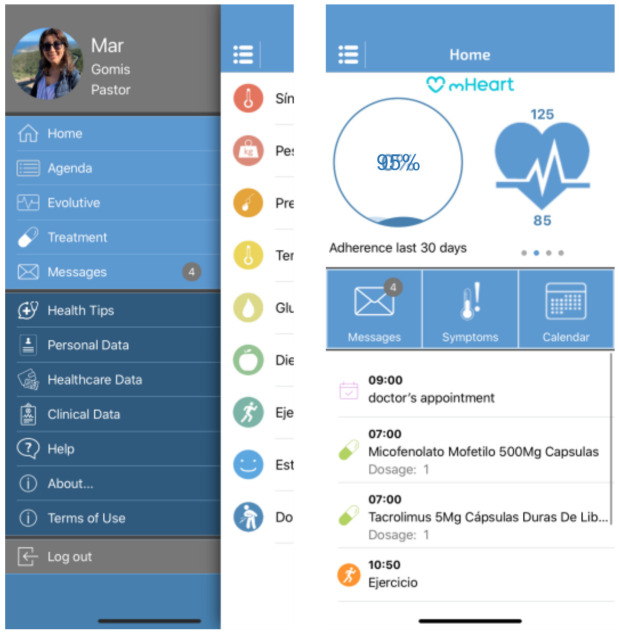
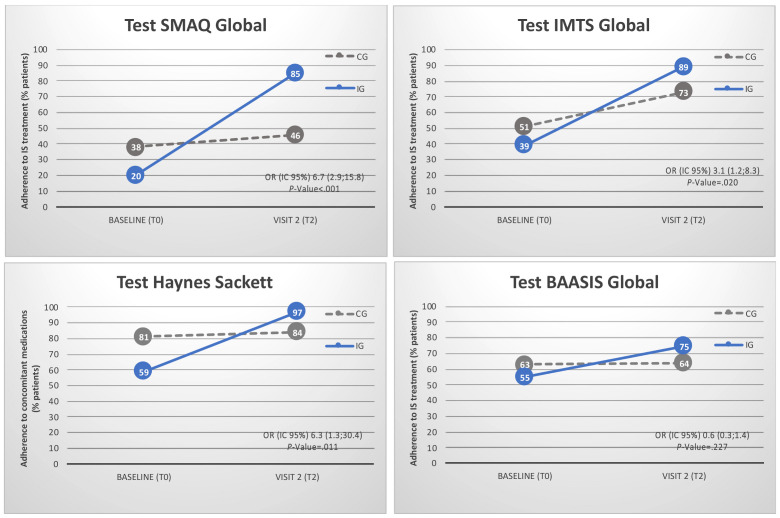
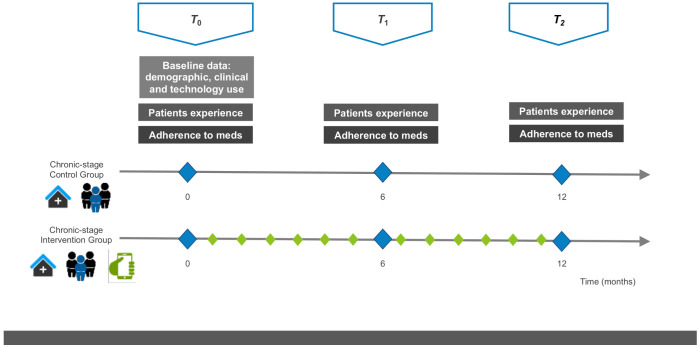
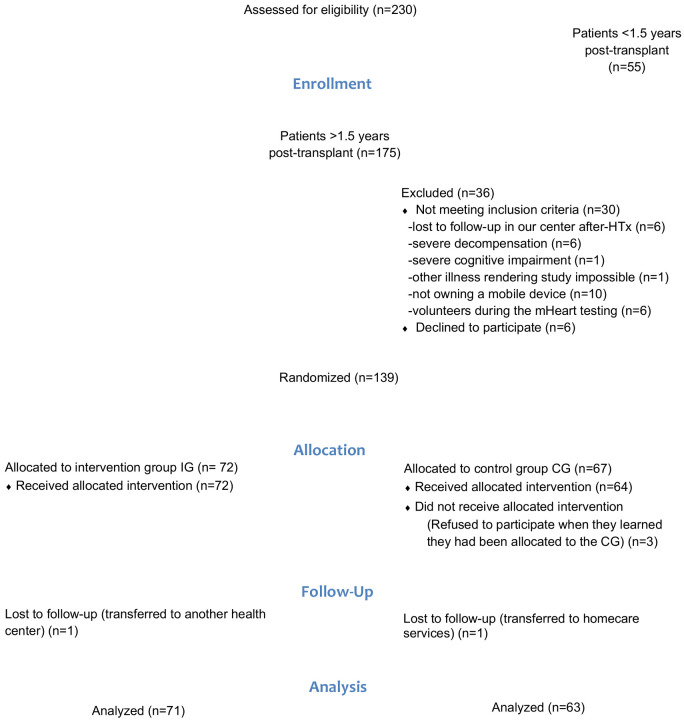
Non-adherence after heart transplantation (HTx) is a significant problem. The main objective of this study was to evaluate if a mHealth strategy is more effective than standard care in improving adherence and patients' experience in heart transplant recipients. Methods: This was a single-center, randomized controlled trial (RCT) in adult recipients >1.5 years post-HTx. Participants were randomized to standard care (control group) or to the mHeart Strategy (intervention group). For patients randomized to the mHeart strategy, multifaceted theory-based interventions were provided during the study period to optimize therapy management using the mHeart mobile application. Patient experience regarding their medication regimens were evaluated in a face-to-face interview. Medication adherence was assessed by performing self-reported questionnaires. A composite adherence score that included the SMAQ questionnaire, the coefficient of variation of drug levels and missing visits was also reported. : A total of 134 HTx recipients were randomized (intervention N = 71; control N = 63). Mean follow-up was 1.6 (SD 0.6) years. Improvement in adherence from baseline was significantly higher in the intervention group versus the control group according to the SMAQ questionnaire (85% vs. 46%, OR = 6.7 (2.9; 15.8), -value < 0.001) and the composite score (51% vs. 23%, OR = 0.3 (0.1; 0.6), -value = 0.001). Patients' experiences with their drug therapy including knowledge of their medication timing intakes (-value = 0.019) and the drug indications or uses that they remembered (-value = 0.003) significantly improved in the intervention versus the control group. : In our study, the mHealth-based strategy significantly improved adherence and patient beliefs regarding their medication regimens among the HTx population. The mHeart mobile application was used as a feasible tool for providing long-term, tailor-made interventions to HTx recipients to improve the goals assessed.
心脏移植(HTx)后的不依从是一个重大问题。本研究的主要目的是评估移动健康(mHealth)策略在提高心脏移植受者的依从性和患者体验方面是否比标准护理更有效。方法:这是一项针对成年HTx术后超过1.5年受者的单中心随机对照试验(RCT)。参与者被随机分为标准护理组(对照组)或mHeart策略组(干预组)。对于随机分配到mHeart策略组的患者,在研究期间提供基于多方面理论的干预措施,以使用mHeart移动应用程序优化治疗管理。通过面对面访谈评估患者对其药物治疗方案的体验。通过自我报告问卷评估药物依从性。还报告了一个综合依从性评分,其中包括SMAQ问卷、药物水平的变异系数和漏诊情况。共有134名HTx受者被随机分组(干预组N = 71;对照组N = 63)。平均随访时间为1.6(标准差0.6)年。根据SMAQ问卷,干预组的依从性从基线的改善显著高于对照组(85%对46%,OR = 6.7(2.9;15.8),P值<0.001),综合评分也是如此(51%对23%,OR = [此处原文可能有误,推测应为3.0](0.1;0.6),P值 = 0.(此处原文可能有误,推测应为001)。与对照组相比,干预组患者在药物治疗方面的体验,包括对服药时间的了解(P值 = 0.(此处原文可能有误,推测应为019))以及他们记住的药物适应症或用途(P值 = [此处原文可能有误,推测应为0.003])有显著改善。在我们的研究中,基于mHealth的策略显著提高了HTx人群对其药物治疗方案的依从性和患者认知。mHeart移动应用程序被用作向HTx受者提供长期、量身定制干预措施的可行工具,以改善所评估的目标。