Caruana Giorgia, Croxatto Antony, Kampouri Eleftheria, Kritikos Antonios, Opota Onya, Foerster Maryline, Brouillet René, Senn Laurence, Lienhard Reto, Egli Adrian, Pantaleo Giuseppe, Carron Pierre-Nicolas, Greub Gilbert
Institute of Microbiology, Lausanne University Hospital and University of Lausanne, 1011 Lausanne, Switzerland.
Service of Hospital Preventive Medicine, Lausanne University Hospital and University of Lausanne, 1011 Lausanne, Switzerland.
Microorganisms. 2021 Apr 10;9(4):798. doi: 10.3390/microorganisms9040798.
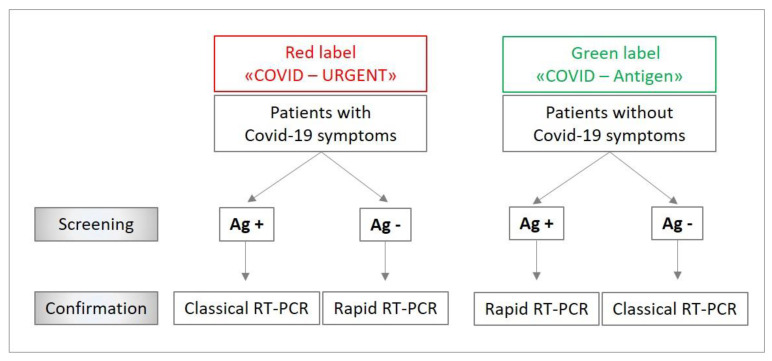
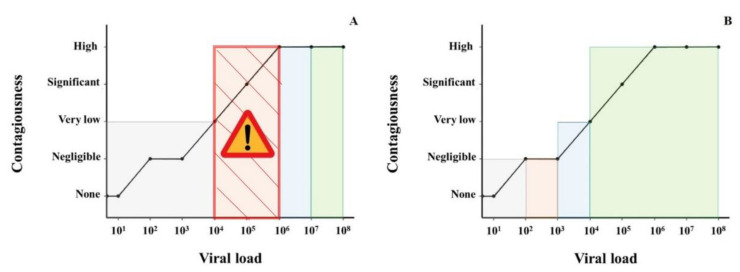
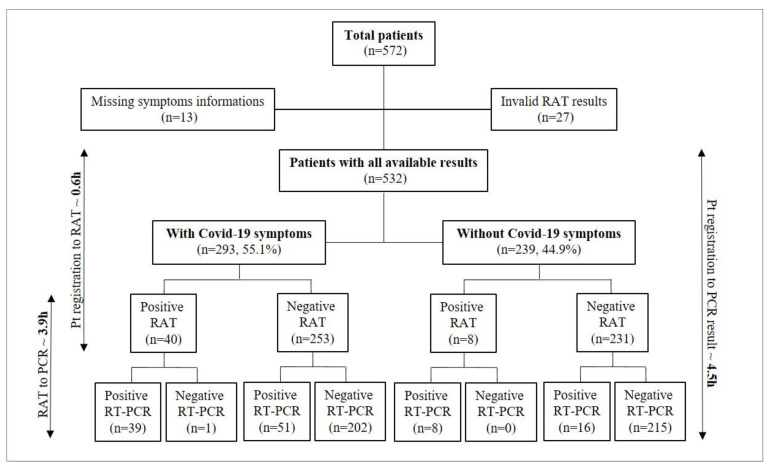
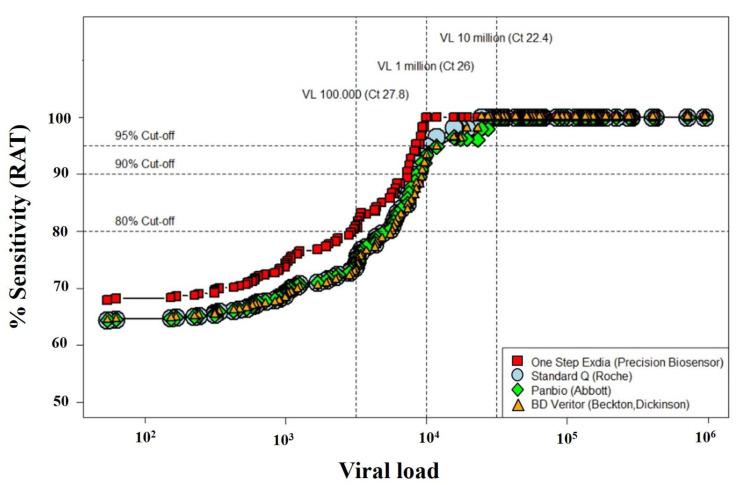
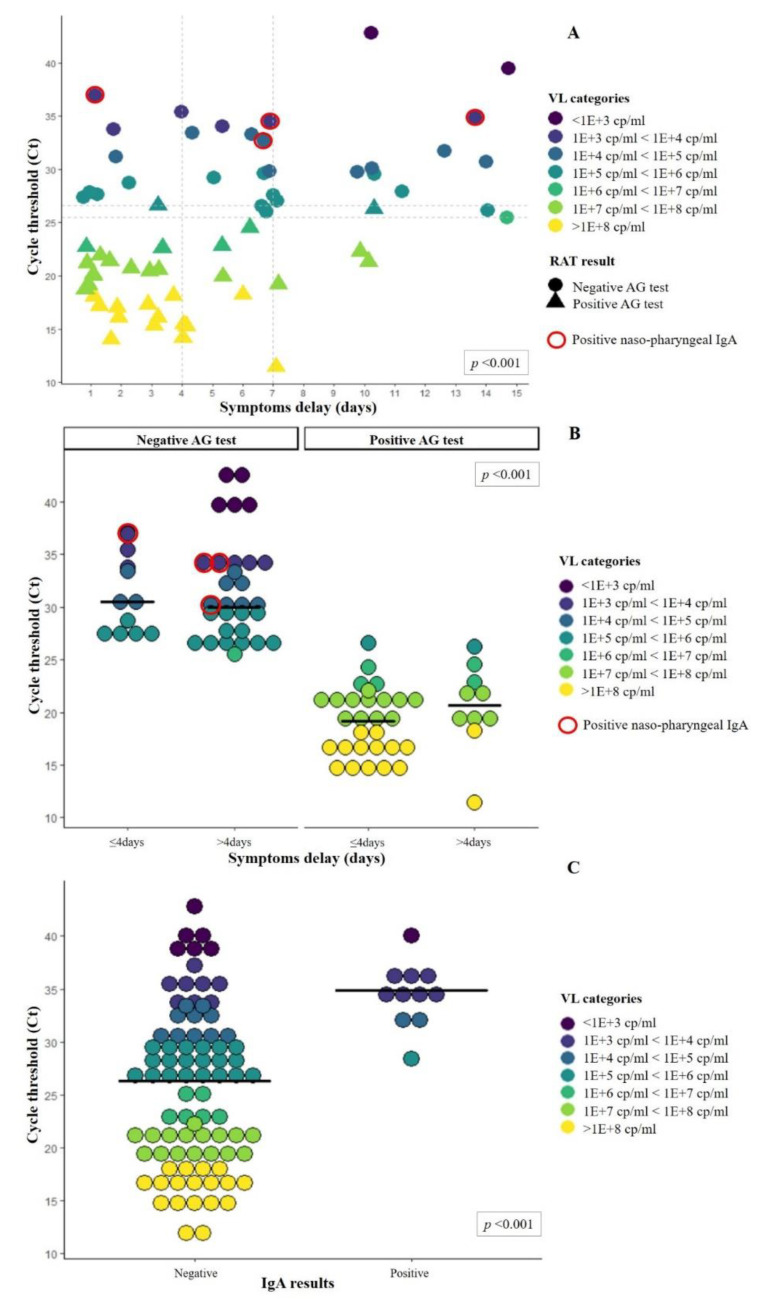
Following the Swiss Federal Office of Public Health (FOPH) authorization of the rapid antigen test (RAT), we implemented the use of the RAT in the emergency ward of our university hospital for patients' cohorting. RAT triaging in association with RT-PCR allowed us to promptly isolate positive patients and save resources. Among 532 patients, overall sensitivities were 48.3% for Exdia and 41.2% for Standard Q, Panbio and BD Veritor™. All RATs exhibited specificity above 99%. Sensitivity increased to 74.6%, 66.2%, 66.2% and 64.8% for Exdia, Standard Q, Panbio and BD Veritor™, respectively, for viral loads above 10 copies/mL, to 100%, 97.8%, 96.6% and 95.6% for viral loads above 10 copies/mL and 100% for viral loads above 10 copies/mL. Sensitivity was significantly higher for patients with symptoms onset within four days (74.3%, 69.2%, 69.2% and 64%, respectively) versus patients with the evolution of symptoms longer than four days (36.8%, 21.1%, 21.1% and 23.7%, respectively). Among COVID-19 asymptomatic patients, sensitivity was 33%. All Immunoglobulin-A-positive patients resulted negative for RAT. The RAT might represent a useful resource in selected clinical settings as a complementary tool in RT-PCR for rapid patient triaging, but the lower sensitivity, especially in late presenters and COVID-19 asymptomatic subjects, must be taken into account.
在瑞士联邦公共卫生办公室(FOPH)批准快速抗原检测(RAT)后,我们在大学医院的急诊病房实施了RAT检测,用于患者分组。RAT分诊与逆转录聚合酶链反应(RT-PCR)相结合,使我们能够迅速隔离阳性患者并节省资源。在532名患者中,Exdia的总体敏感性为48.3%,Standard Q、Panbio和BD Veritor™ 的总体敏感性为41.2%。所有RAT的特异性均高于99%。对于病毒载量高于10拷贝/毫升的情况,Exdia、Standard Q、Panbio和BD Veritor™ 的敏感性分别提高到74.6%、66.2%、66.2%和64.8%;对于病毒载量高于10拷贝/毫升的情况,敏感性分别提高到100%、97.8%、96.6%和95.6%;对于病毒载量高于10拷贝/毫升的情况,敏感性为100%。症状出现后四天内的患者敏感性显著高于症状演变超过四天的患者(分别为74.3%、69.2%、69.2%和64% 与36.8%、21.1%、21.1%和23.7%)。在新冠病毒无症状患者中,敏感性为33%。所有免疫球蛋白A阳性患者的RAT检测结果均为阴性。在特定临床环境中,RAT可能是一种有用的资源,作为RT-PCR的补充工具用于快速患者分诊,但必须考虑到其较低的敏感性,尤其是在就诊较晚的患者和新冠病毒无症状受试者中。