Department of Education, Literatures, Intercultural Studies, Languages and Psychology, University of Florence, 50135 Florence, Italy.
Department of Industrial Engineering, University of Florence, 50121 Florence, Italy.
Int J Environ Res Public Health. 2021 Apr 11;18(8):4006. doi: 10.3390/ijerph18084006.
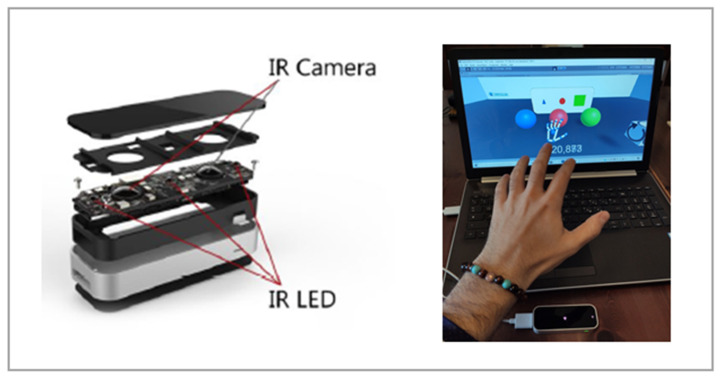
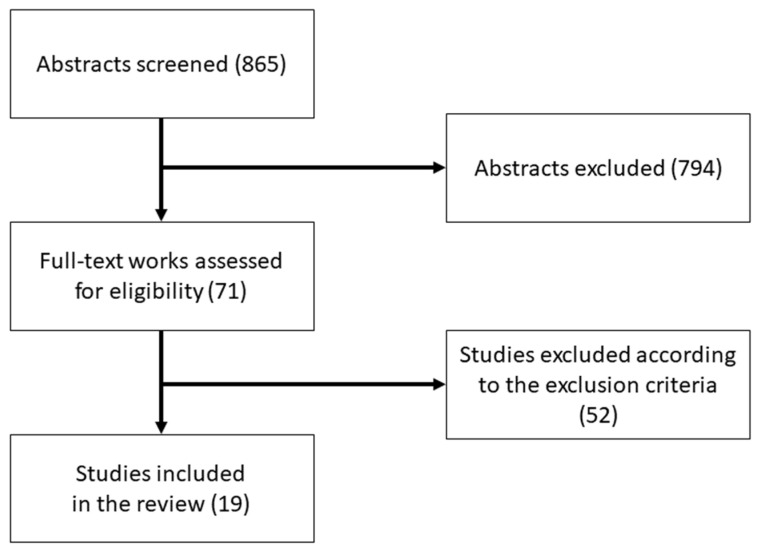
Technological advancement is constantly evolving, and it is also developing in the mental health field. Various applications, often based on virtual reality, have been implemented to carry out psychological assessments and interventions, using innovative human-machine interaction systems. In this context, the LEAP Motion sensing technology has raised interest, since it allows for more natural interactions with digital contents, via an optical tracking of hand and finger movements. Recent research has considered LEAP Motion features in virtual-reality-based systems, to meet specific needs of different clinical populations, varying in age and type of disorder. The present paper carried out a systematic mini-review of the available literature using Preferred Reporting Items for Systematic Reviews and Meta-analysis (PRISMA) guidelines. The inclusion criteria were (i) publication date between 2013 and 2020, (ii) being an empirical study or project report, (iii) written in English or Italian languages, (iv) published in a scholarly peer-reviewed journal and/or conference proceedings, and (v) assessing LEAP Motion intervention for four specific psychological domains (i.e., autism spectrum disorder, attention-deficit/hyperactivity disorder, dementia, and mild cognitive impairment), objectively. Nineteen eligible empirical studies were included. Overall, results show that protocols for attention-deficit hyperactivity disorder and autism spectrum disorder can promote psychomotor and psychosocial rehabilitation in contexts that stimulate learning. Moreover, virtual reality and LEAP Motion seem promising for the assessment and screening of functional abilities in dementia and mild cognitive impairment. As evidence is, however, still limited, deeper investigations are needed to assess the full potential of the LEAP Motion technology, possibly extending its applications. This is relevant, considering the role that virtual reality could have in overcoming barriers to access assessment, therapies, and smart monitoring.
技术进步不断发展,在心理健康领域也在发展。各种应用程序,通常基于虚拟现实,已被实施以进行心理评估和干预,使用创新的人机交互系统。在这种情况下,LEAP 运动感应技术引起了人们的兴趣,因为它允许通过光学跟踪手和手指运动与数字内容进行更自然的交互。最近的研究已经考虑了 LEAP 运动在基于虚拟现实的系统中的特征,以满足不同临床人群的特定需求,这些人群在年龄和障碍类型上有所不同。本文使用系统评价和荟萃分析的首选报告项目 (PRISMA) 指南对现有文献进行了系统的小型综述。纳入标准为:(i) 发表日期在 2013 年至 2020 年之间,(ii) 为实证研究或项目报告,(iii) 用英语或意大利语书写,(iv) 发表在学术同行评议期刊和/或会议论文集中,以及 (v) 客观评估 LEAP 运动干预对四个特定心理领域(即自闭症谱系障碍、注意力缺陷/多动障碍、痴呆和轻度认知障碍)的影响。共有 19 项符合条件的实证研究被纳入。总体而言,结果表明,注意力缺陷多动障碍和自闭症谱系障碍的协议可以在刺激学习的环境中促进精神运动和心理社会康复。此外,虚拟现实和 LEAP 运动似乎很有希望用于评估和筛选痴呆和轻度认知障碍患者的功能能力。然而,由于证据仍然有限,因此需要进行更深入的研究来评估 LEAP 运动技术的全部潜力,可能会扩展其应用。考虑到虚拟现实在克服评估、治疗和智能监测的访问障碍方面可能发挥的作用,这一点很重要。