Chiu Tsu-Man, Hsu Ping-Chun, Khan Mohd Yaqub, Lin Cheng-An J, Lee Chun-Hung, Hsu Tsai-Ching, Chen Min-Hua, Hanagata Nobutaka
Department of Dermatology, Changhua Christian Hospital, Changhua County 50094, Taiwan.
Department of Biomedical Engineering, Chung Yuan Christian University, Taoyuan City 320314, Taiwan.
Pharmaceutics. 2021 Apr 22;13(5):607. doi: 10.3390/pharmaceutics13050607.
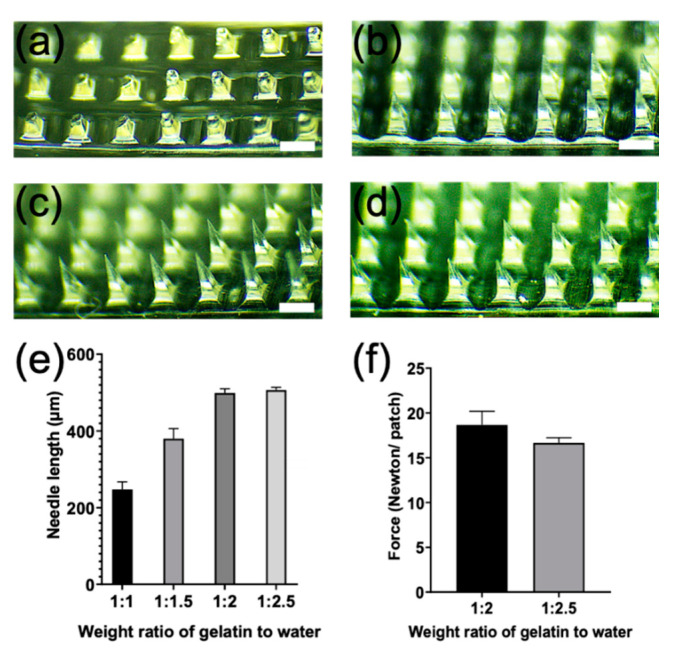
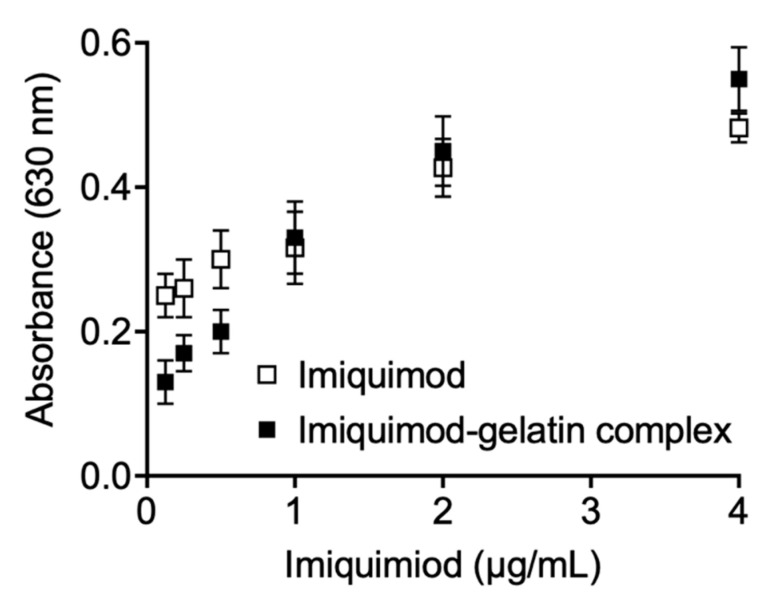
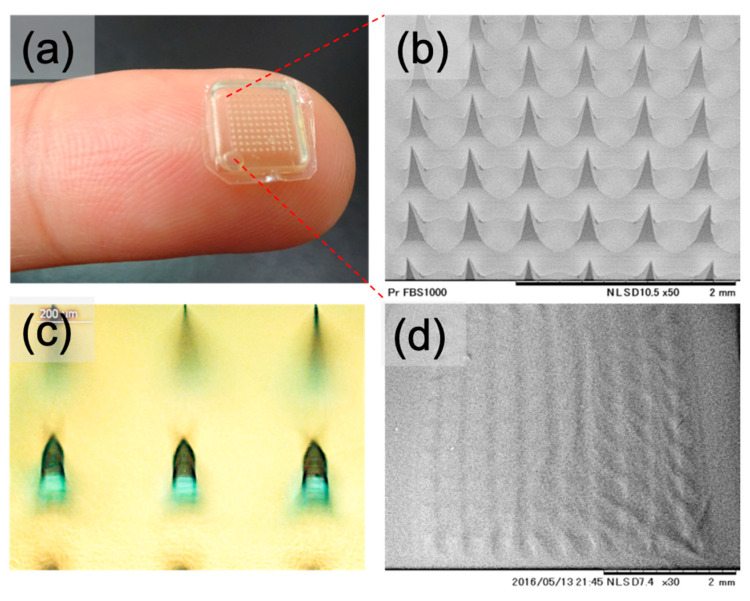
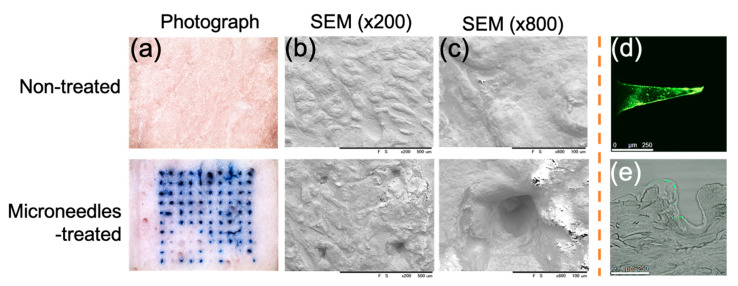
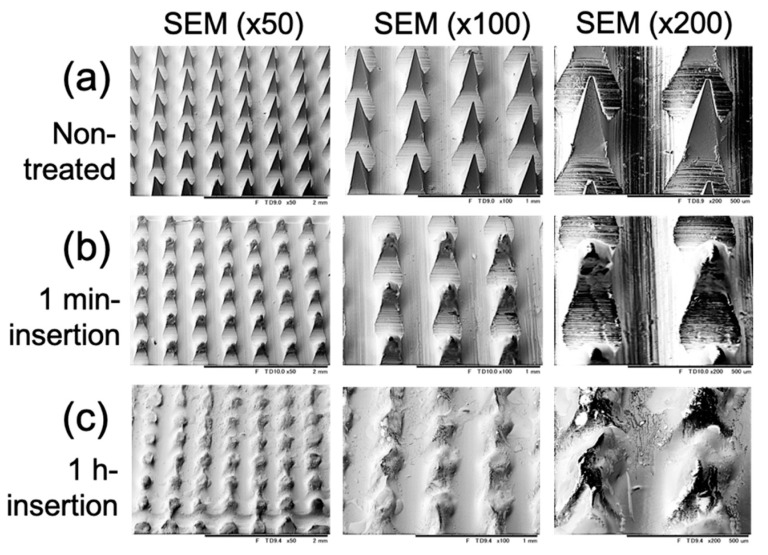
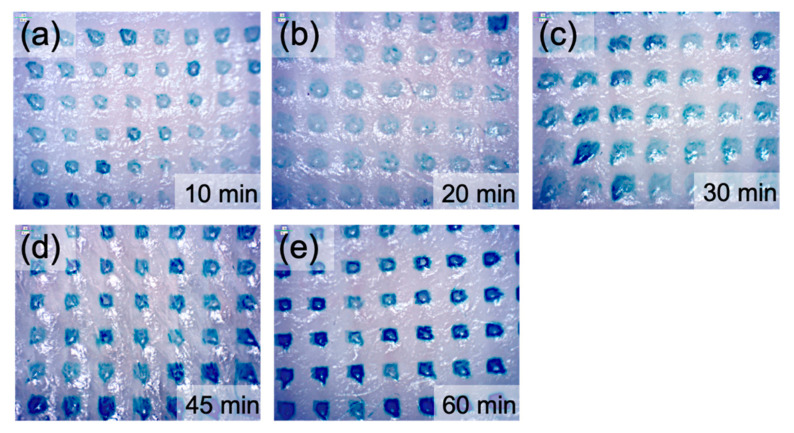
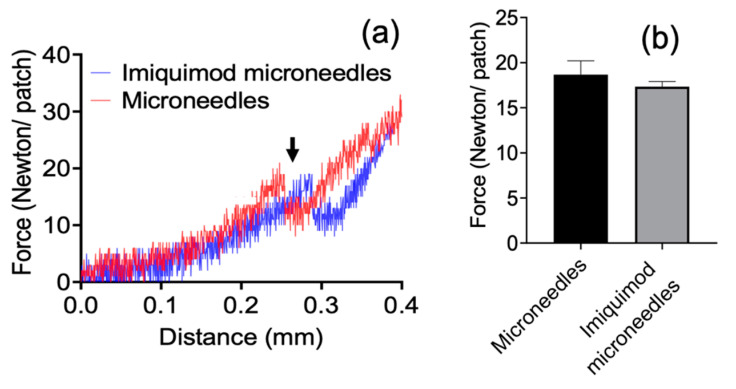
Warts are a common skin problem and are caused by infection with a virus. Warts are currently mainly treated by therapies involving ablating tissue or interrupting cellular division. However, all these existing treatments are either invasive or cause skin pain and tissue destruction. Imiquimod is a synthetic compound that belongs to the imidazoquinolinone family. It has been successfully used as a topical drug to treat external anogenital warts. However, topical imiquimod cream for warts is restricted by low skin permeability, and several side effects such as itching, pain, and erosions occur most frequently following topical treatment. Microneedle technology, a minimally invasive drug delivery system, has the potential to overcome the barrier of the stratum corneum. This technique would also offer a painless treatment choice and provide personalized therapies. In the study, we loaded imiquimod within dissolving microneedles using the molding method. Gelatin was used as a structural material for microneedle formation without adding a crosslinker. To our knowledge, this is the first study of using dissolving microneedles and exploring their utilization with imiquimod for the treatment of warts. First, we added fluorescent dye and trypan blue into the microneedles to evaluate the status of drugs in the microneedles and the degradation property of microneedles made of gelatin, respectively. Here we also prove the strength of the imiquimod microneedles and study their capability to penetrate the skin. The results show no apparent differences in mechanical failure after an additional imiquimod-loaded. Besides, we provide evidence that imiquimod microneedles induce secreted embryonic alkaline phosphatase (SEAP) in the RAW 264.7 macrophages. Gelatin does not affect the imiquimod in microneedles; a similar immune response was affected by the imiquimod alone or imiquimod complexed with gelatin. Our research demonstrates a proof of concept of using imiquimod microneedles for future warts treatment.
疣是一种常见的皮肤问题,由病毒感染引起。目前,疣主要通过消融组织或中断细胞分裂的疗法进行治疗。然而,所有这些现有的治疗方法要么具有侵入性,要么会导致皮肤疼痛和组织破坏。咪喹莫特是一种属于咪唑喹啉酮家族的合成化合物。它已成功用作治疗外生殖器疣的局部用药。然而,用于治疗疣的局部咪喹莫特乳膏受到皮肤渗透性低的限制,并且局部治疗后最常出现瘙痒、疼痛和糜烂等几种副作用。微针技术是一种微创给药系统,有潜力克服角质层的屏障。该技术还将提供无痛治疗选择并提供个性化治疗。在这项研究中,我们使用成型方法将咪喹莫特加载到溶解微针中。明胶用作形成微针的结构材料,无需添加交联剂。据我们所知,这是首次使用溶解微针并探索其与咪喹莫特一起用于治疗疣的研究。首先,我们将荧光染料和台盼蓝添加到微针中,分别评估微针中药物的状态和由明胶制成的微针的降解特性。在这里,我们还证明了咪喹莫特微针的强度并研究了它们穿透皮肤的能力。结果表明,额外加载咪喹莫特后,机械失效没有明显差异。此外,我们提供证据表明咪喹莫特微针可在RAW 264.7巨噬细胞中诱导分泌型胚胎碱性磷酸酶(SEAP)。明胶不影响微针中的咪喹莫特;单独的咪喹莫特或与明胶复合的咪喹莫特会产生类似的免疫反应。我们的研究证明了使用咪喹莫特微针治疗未来疣的概念验证。