Department of Soil Science, Faculty of Agriculture and Environment, The Islamia University of Bahawalpur, Bahawalpur 63100, Pakistan.
College of Life Sciences, Yan'an University, Yan'an 716000, China.
Int J Environ Res Public Health. 2021 Apr 22;18(9):4461. doi: 10.3390/ijerph18094461.
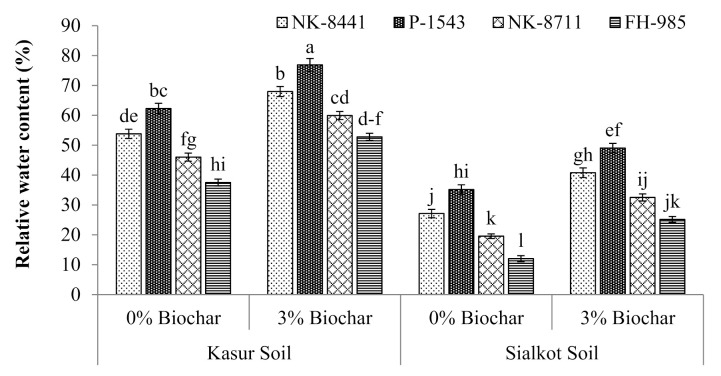
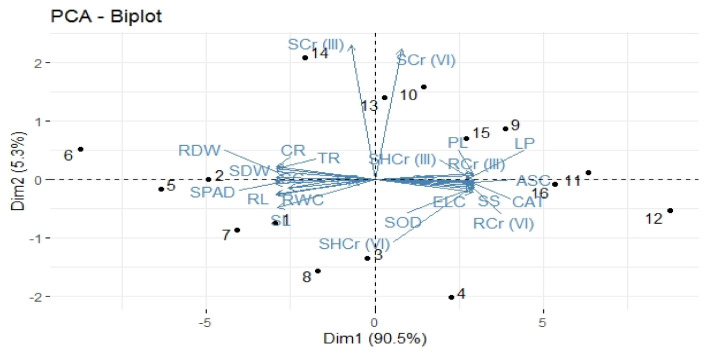
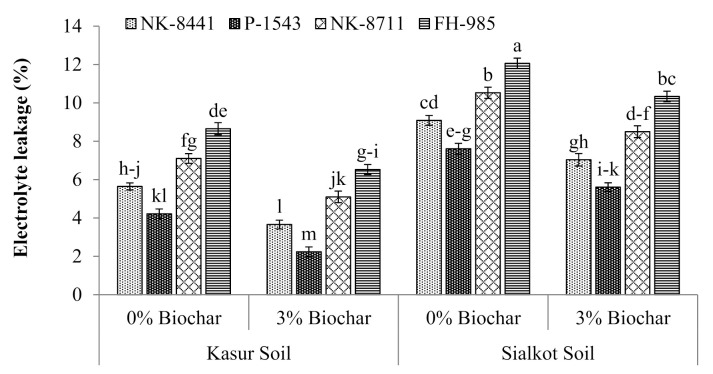
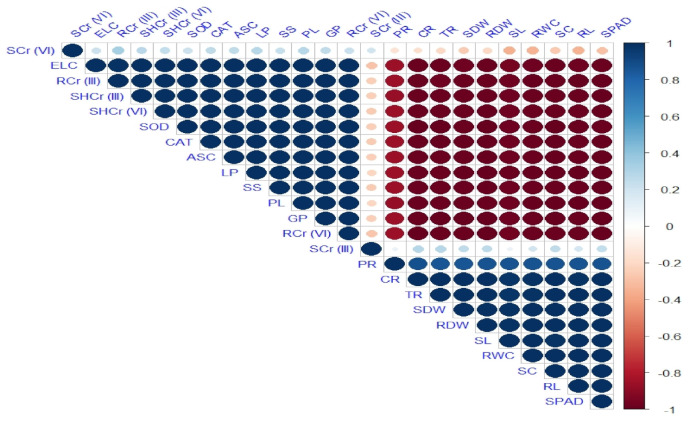
Soil pollution with heavy metal is a serious problem across the globe and is on the rise due to the current intensification of chemical industry. The leather industry is one of them, discharging chromium (Cr) in huge quantities during the process of leather tanning and polluting the nearby land and water resources, resulting in deterioration of plant growth. In this study, the effects of biochar application at the rate of 3% were studied on four maize cultivars, namely NK-8441, P-1543, NK-8711, and FH-985, grown in two different tannery polluted Kasur (K) and Sialkot (S) soils. Maize plants were harvested at vegetative growth and results showed that Cr toxicity adversely not only affected their growth, physiology, and biochemistry, but also accumulated in their tissues. However, the level of Cr toxicity, accumulation, and its influence on maize cultivars varied greatly in both soils. In this pot experiment, biochar application played a crucial role in lessening the Cr toxicity level, resulting in significant increase in plant height, biomass (fresh and dry), leaf area, chlorophyll pigments, photosynthesis, and relative water content (RWC) over treatment set as a control. However, applied biochar significantly decreased the electrolyte leakage (EL), antioxidant enzymes, lipid peroxidation, proline content, soluble sugars, and available fraction of Cr in soil as well as Cr (VI and III) concentration in root and shoot tissues of maize plant. In addition to this, maize cultivar differences were also found in relation to their tolerance to Cr toxicity and cultivar P-1543 performed better over other cultivars in both soils. In conclusion, biochar application in tannery polluted soils could be an efficient ecofriendly approach to reduce the Cr toxicity and to promote plant health and growth.
土壤重金属污染是一个全球性的严重问题,由于当前化学工业的强化,这一问题正在加剧。皮革工业就是其中之一,在皮革鞣制过程中大量排放铬(Cr),污染附近的土地和水资源,导致植物生长恶化。在这项研究中,研究了在 3%的比例下施用生物炭对四个玉米品种(NK-8441、P-1543、NK-8711 和 FH-985)的影响,这些品种种植在两个不同的制革污染的卡苏尔(K)和锡亚尔科特(S)土壤中。在营养生长阶段收获玉米植株,结果表明,Cr 毒性不仅对其生长、生理和生物化学产生不利影响,而且还在其组织中积累。然而,Cr 毒性水平、积累及其对玉米品种的影响在两种土壤中差异很大。在这个盆栽实验中,生物炭的应用在减轻 Cr 毒性水平方面发挥了关键作用,导致植物高度、生物量(新鲜和干燥)、叶面积、叶绿素色素、光合作用和相对水含量(RWC)显著增加,超过了作为对照的处理。然而,施加的生物炭显著降低了土壤中 Cr 毒性水平、电解质渗漏(EL)、抗氧化酶、脂质过氧化、脯氨酸含量、可溶性糖以及可用 Cr 分数,同时还降低了玉米植株根和茎组织中 Cr(VI 和 III)的浓度。除此之外,还发现了玉米品种之间的差异,与它们对 Cr 毒性的耐受性有关,在两种土壤中,品种 P-1543 比其他品种表现更好。总之,在制革污染土壤中应用生物炭可能是一种有效且环保的方法,可以降低 Cr 毒性,促进植物健康和生长。