Monferrer Ezequiel, Vieco-Martí Isaac, López-Carrasco Amparo, Fariñas Fernando, Abanades Sergio, de la Cruz-Merino Luis, Noguera Rosa, Álvaro Naranjo Tomás
Department of Pathology, Medical School, INCLIVA Biomedical Health Research Institute, University of Valencia, 46010 Valencia, Spain.
Low Prevalence Tumors, Centro de Investigación Biomédica en Red de Cáncer (CIBERONC), Instituto de Salud Carlos III, 28029 Madrid, Spain.
Metabolites. 2021 Apr 23;11(5):264. doi: 10.3390/metabo11050264.
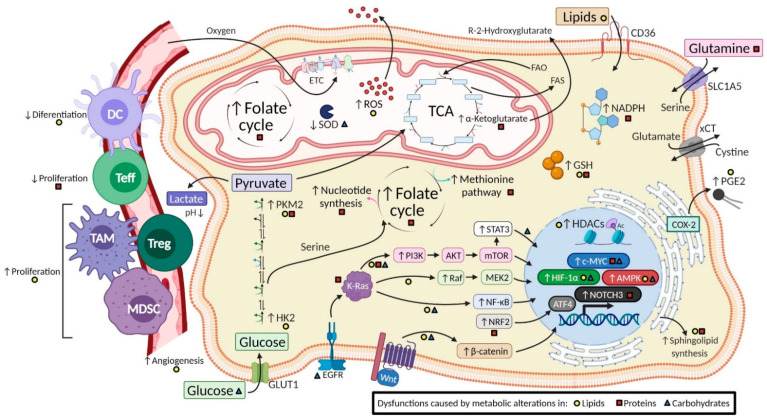
A comprehensive view of cell metabolism provides a new vision of cancer, conceptualized as tissue with cellular-altered metabolism and energetic dysfunction, which can shed light on pathophysiological mechanisms. Cancer is now considered a heterogeneous ecosystem, formed by tumor cells and the microenvironment, which is molecularly, phenotypically, and metabolically reprogrammable. A wealth of evidence confirms metabolic reprogramming activity as the minimum common denominator of cancer, grouping together a wide variety of aberrations that can affect any of the different metabolic pathways involved in cell physiology. This forms the basis for a new proposed classification of cancer according to the altered metabolic pathway(s) and degree of energy dysfunction. Enhanced understanding of the metabolic reprogramming pathways of fatty acids, amino acids, carbohydrates, hypoxia, and acidosis can bring about new therapeutic intervention possibilities from a metabolic perspective of cancer.
对细胞代谢的全面认识为癌症提供了新视角,癌症被概念化为具有细胞代谢改变和能量功能障碍的组织,这有助于阐明病理生理机制。癌症现在被认为是一个异质性生态系统,由肿瘤细胞和微环境组成,其在分子、表型和代谢方面均可重新编程。大量证据证实代谢重编程活动是癌症的最小共同特征,它将各种可能影响细胞生理中任何不同代谢途径的异常情况归为一类。这为根据改变的代谢途径和能量功能障碍程度对癌症进行新的分类提供了基础。对脂肪酸、氨基酸、碳水化合物、缺氧和酸中毒的代谢重编程途径的深入理解可以从癌症的代谢角度带来新的治疗干预可能性。