Department of Molecular Pharmacology, Kitasato University School of Pharmaceutical Sciences, Tokyo 108-8641, Japan.
Center for Pharmaceutical Education, Faculty of Pharmacy, Yokohama University of Pharmacy, Kanagawa 245-0066, Japan.
Int J Mol Sci. 2021 Apr 23;22(9):4439. doi: 10.3390/ijms22094439.
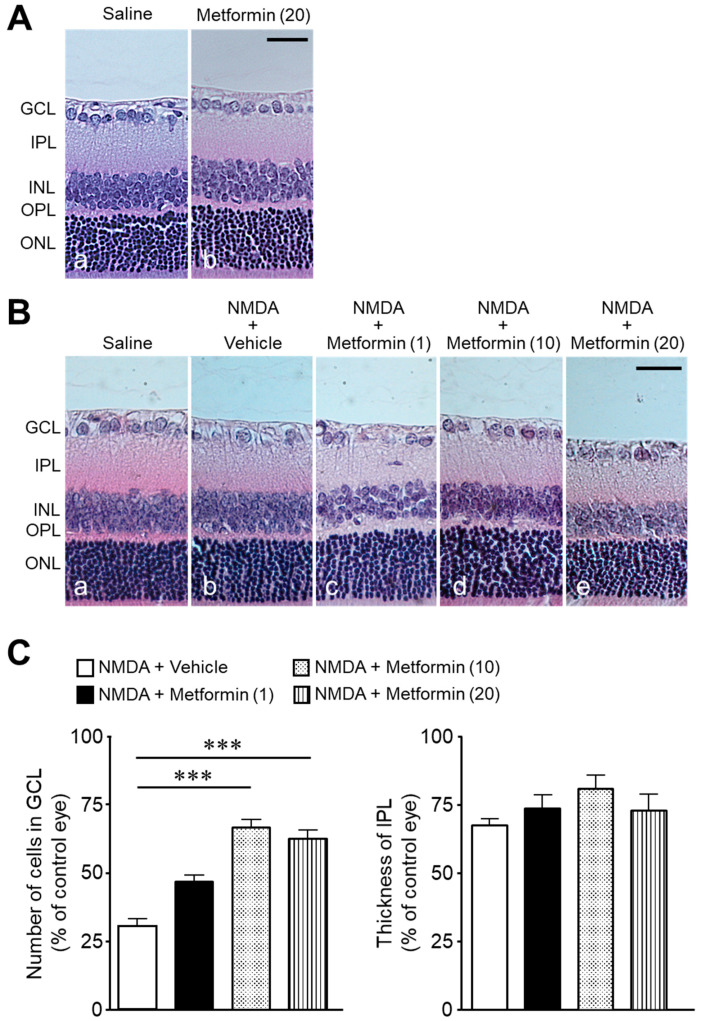
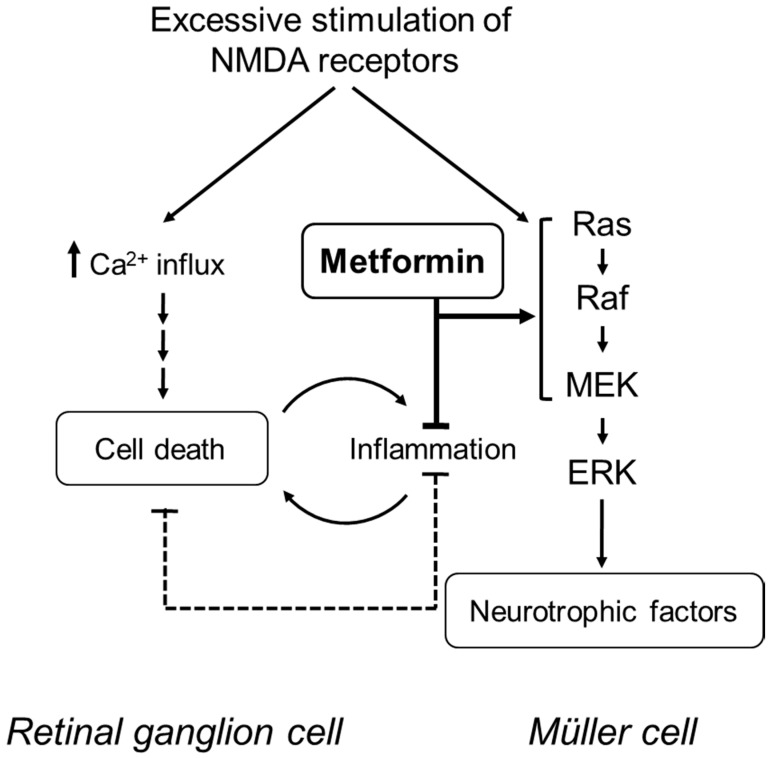
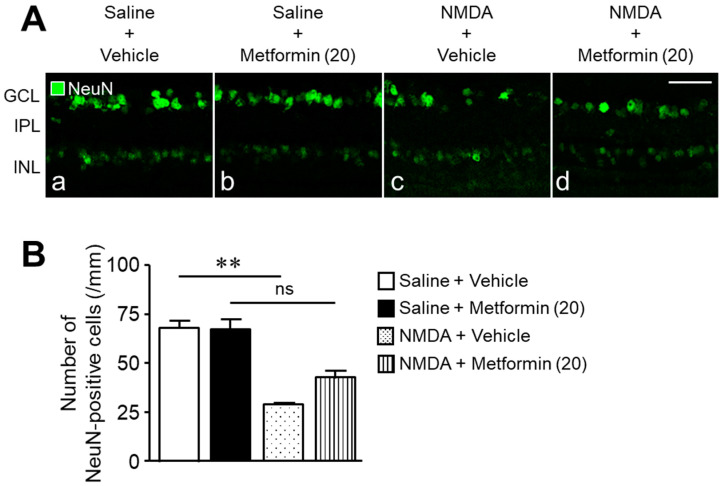
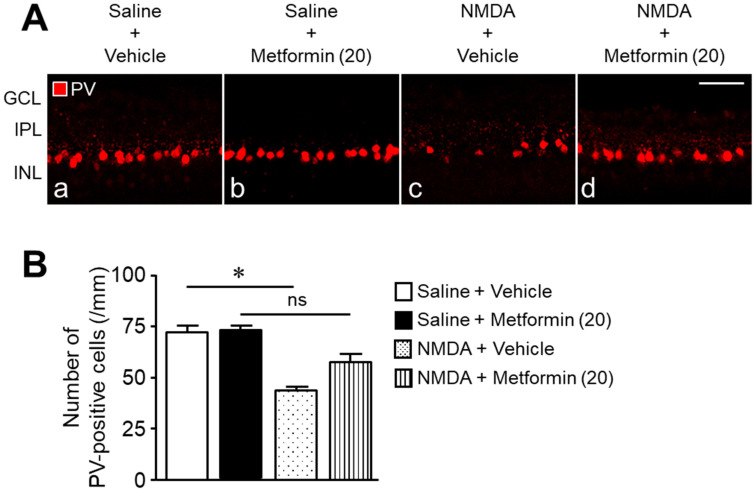
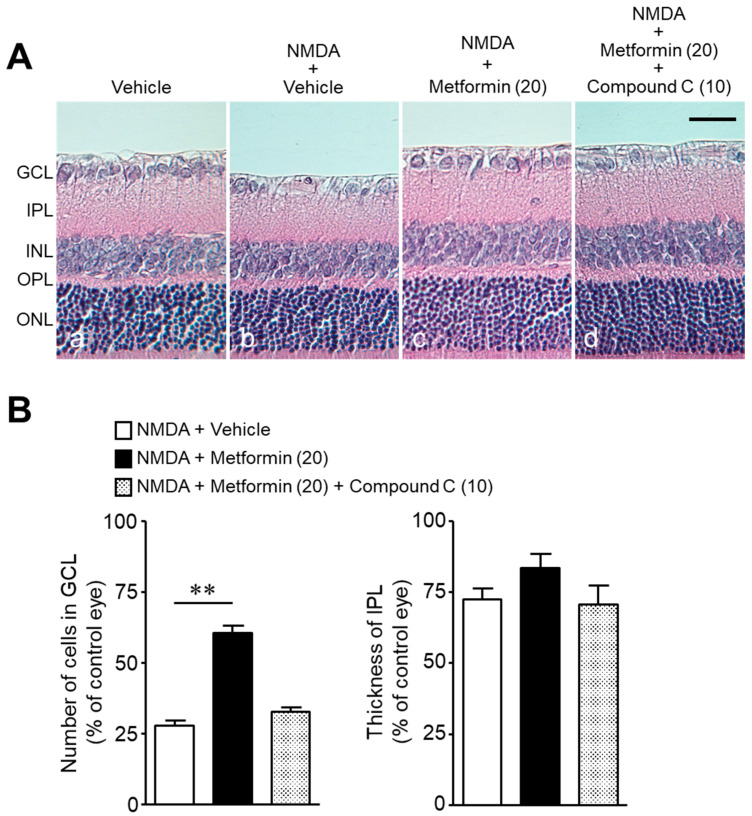
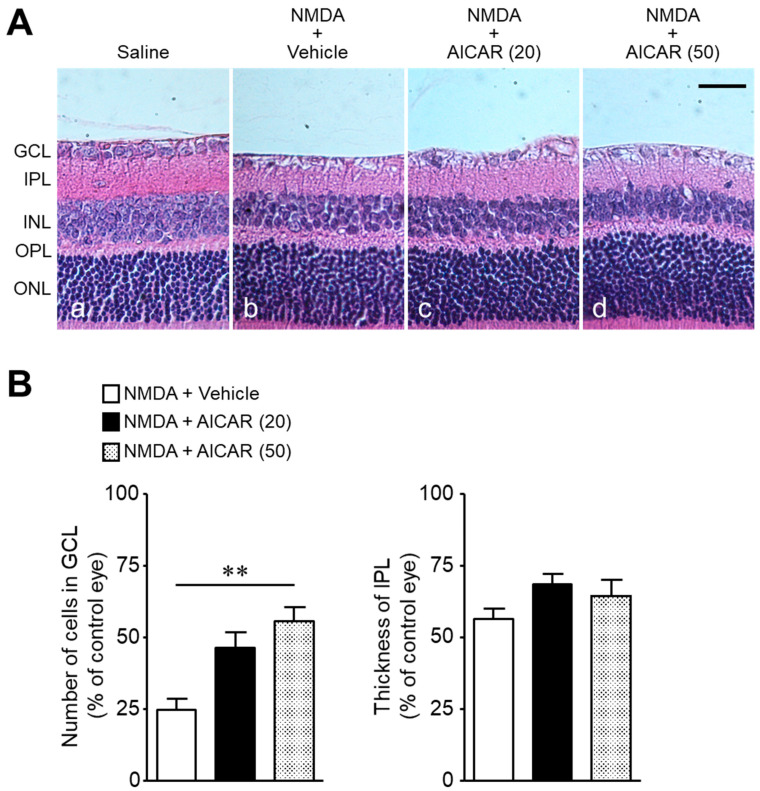
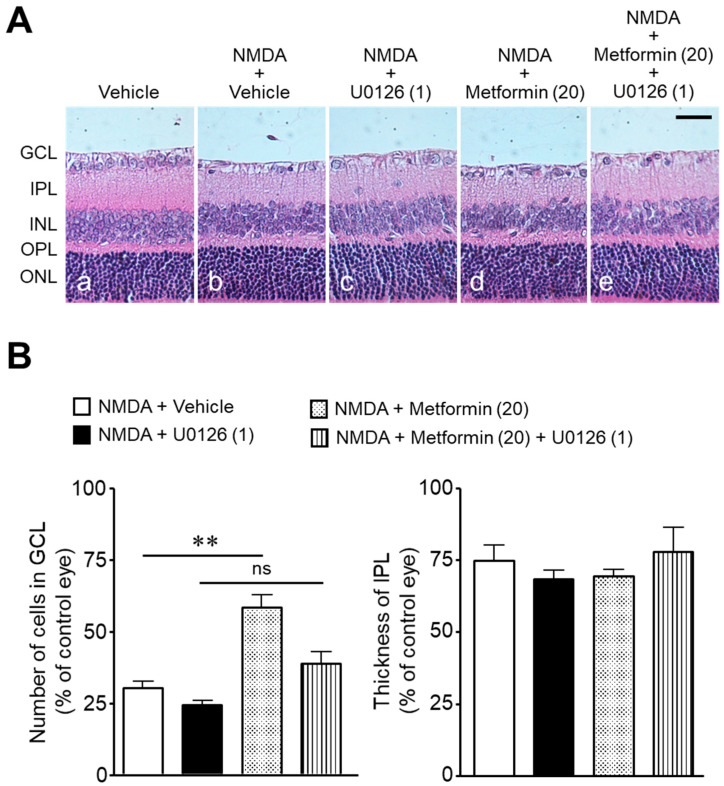
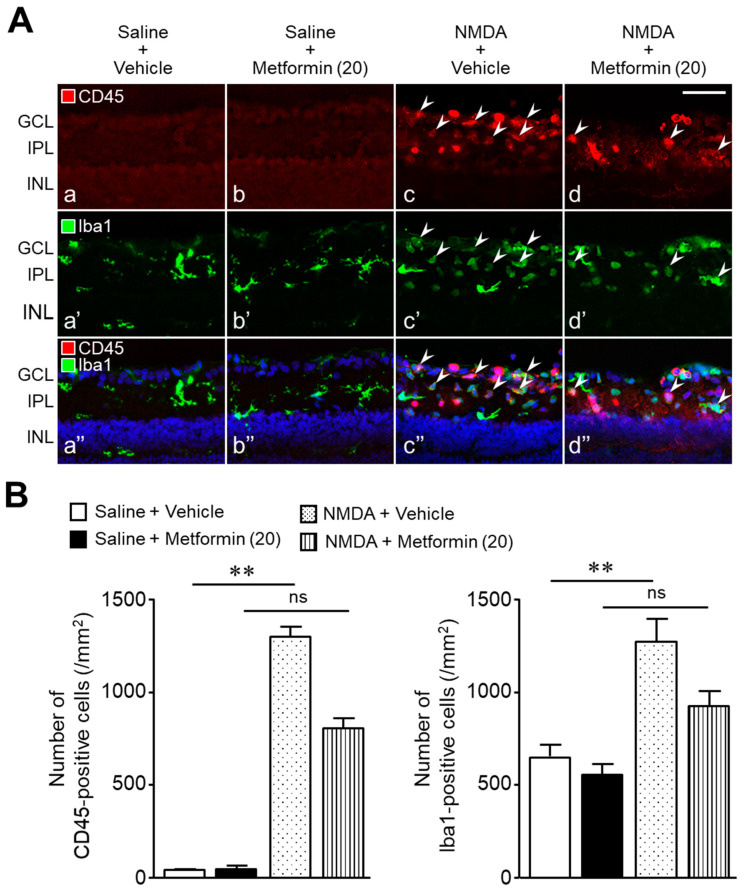
Metformin, an anti-hyperglycemic drug of the biguanide class, exerts positive effects in several non-diabetes-related diseases. In this study, we aimed to examine the protective effects of metformin against -methyl-D-aspartic acid (NMDA)-induced excitotoxic retinal damage in rats and determine the mechanisms of its protective effects. Male Sprague-Dawley rats (7 to 9 weeks old) were used in this study. Following intravitreal injection of NMDA (200 nmol/eye), the number of neuronal cells in the ganglion cell layer and parvalbumin-positive amacrine cells decreased, whereas the number of CD45-positive leukocytes and Iba1-positive microglia increased. Metformin attenuated these NMDA-induced responses. The neuroprotective effect of metformin was abolished by compound C, an inhibitor of AMP-activated protein kinase (AMPK). The AMPK activator, AICAR, exerted a neuroprotective effect in NMDA-induced retinal injury. The MEK1/2 inhibitor, U0126, reduced the neuroprotective effect of metformin. These results suggest that metformin protects against NMDA-induced retinal neurotoxicity through activation of the AMPK and MEK/extracellular signal-regulated kinase (ERK) signaling pathways. This neuroprotective effect could be partially attributable to the inhibitory effects on inflammatory responses.
二甲双胍是一种双胍类抗高血糖药物,在多种非糖尿病相关疾病中发挥积极作用。在这项研究中,我们旨在研究二甲双胍对大鼠 -甲基-D-天冬氨酸(NMDA)诱导的兴奋性视网膜损伤的保护作用,并确定其保护作用的机制。本研究使用雄性 Sprague-Dawley 大鼠(7 至 9 周龄)。在玻璃体内注射 NMDA(200 nmol/眼)后,神经节细胞层和 Parvalbumin 阳性无长突细胞中的神经元细胞数量减少,而 CD45 阳性白细胞和 Iba1 阳性小胶质细胞的数量增加。二甲双胍减轻了这些 NMDA 诱导的反应。AMP 激活蛋白激酶(AMPK)抑制剂 Compound C 可消除二甲双胍的神经保护作用。AMPK 激活剂 AICAR 在 NMDA 诱导的视网膜损伤中发挥神经保护作用。MEK1/2 抑制剂 U0126 降低了二甲双胍的神经保护作用。这些结果表明,二甲双胍通过激活 AMPK 和 MEK/细胞外信号调节激酶(ERK)信号通路来保护 NMDA 诱导的视网膜神经毒性。这种神经保护作用部分归因于对炎症反应的抑制作用。