Department of Cultural Heritage, University of Bologna, via Degli Ariani 1, 48121 Ravenna, Italy.
Department of Neuroscience and Rehabilitation, University of Ferrara, Corso Ercole I D'Este 32, 44121 Ferrara, Italy.
Genes (Basel). 2021 Apr 25;12(5):636. doi: 10.3390/genes12050636.
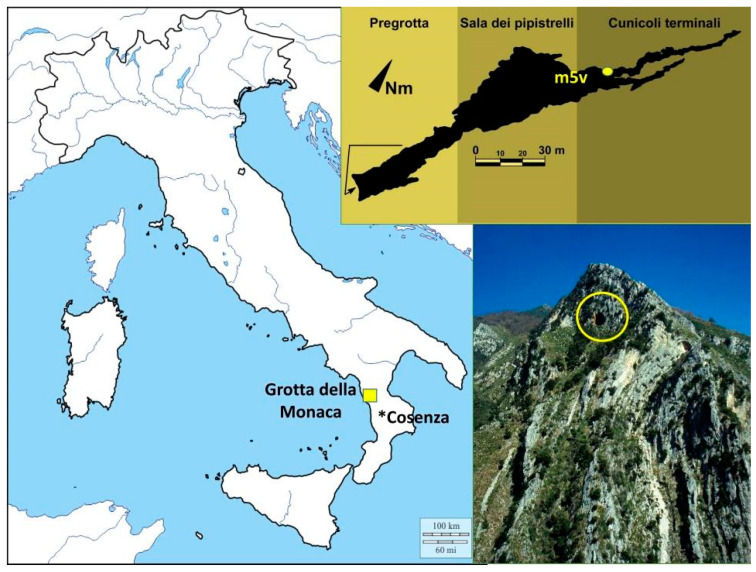
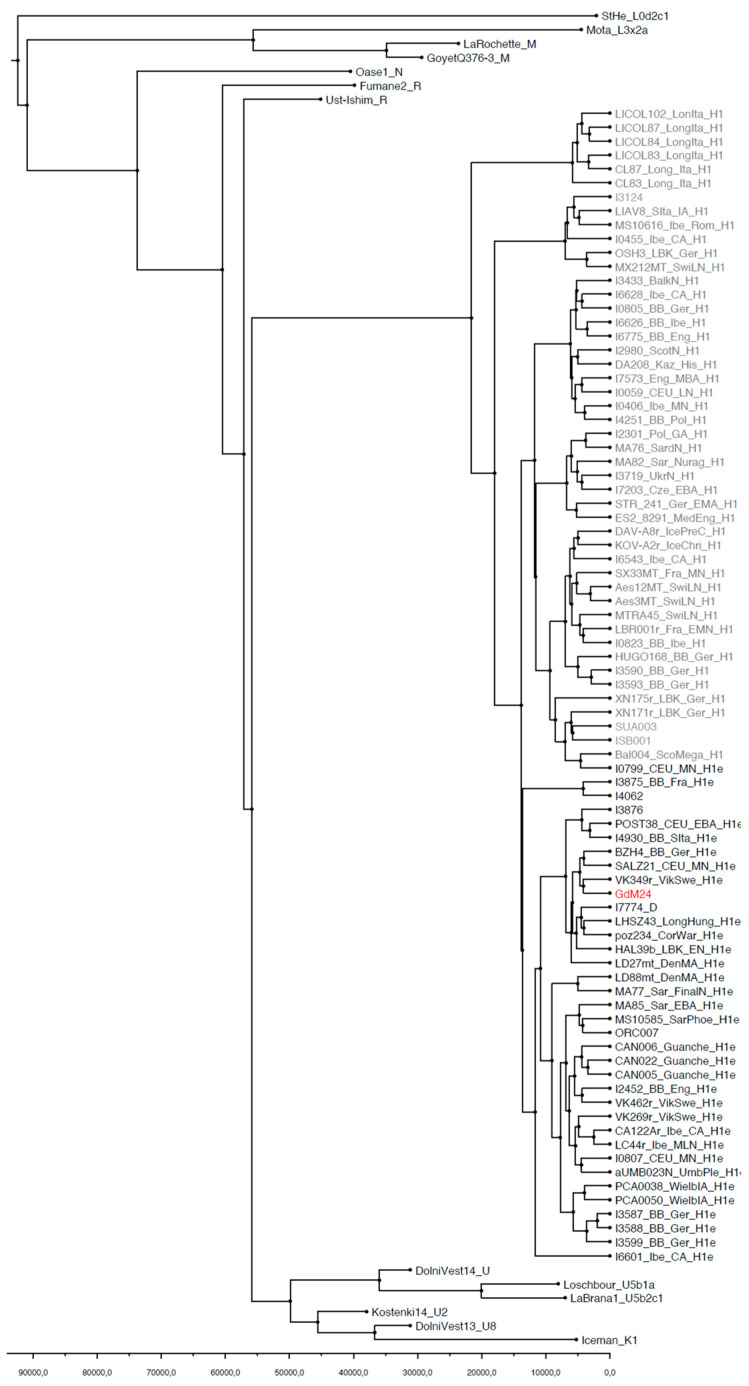
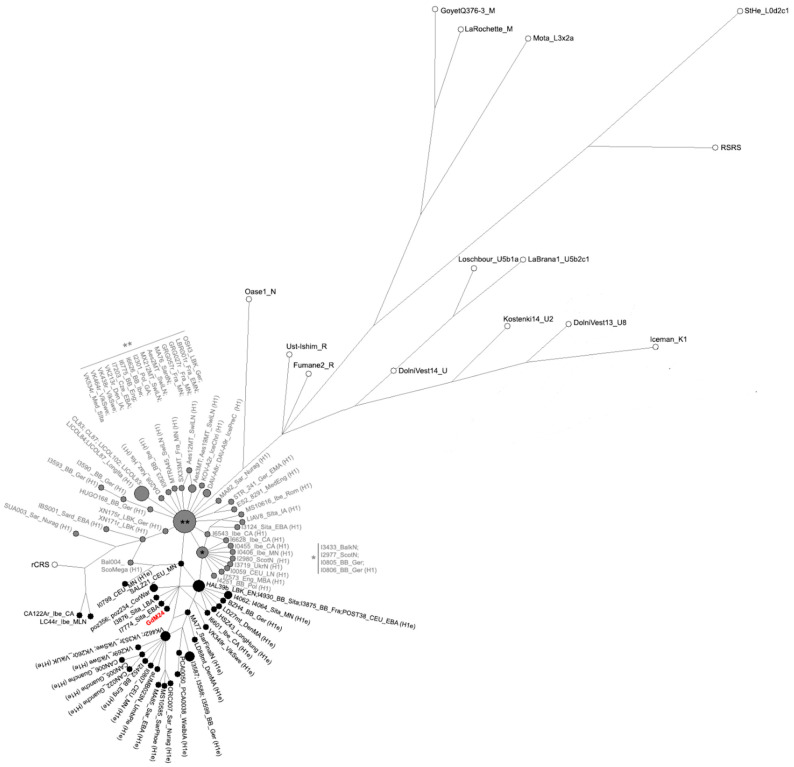
The Italian peninsula was host to a strong history of migration processes that shaped its genomic variability since prehistoric times. During the Metal Age, Sicily and Southern Italy were the protagonists of intense trade networks and settlements along the Mediterranean. Nonetheless, ancient DNA studies in Southern Italy are, at present, still limited to prehistoric and Roman Apulia. Here, we present the first mitogenomes from a Middle Bronze Age cave burial in Calabria to address this knowledge gap. We adopted a hybridization capture approach, which enabled the recovery of one complete and one partial mitochondrial genome. Phylogenetic analysis assigned these two individuals to the H1e and H5 subhaplogroups, respectively. This preliminary phylogenetic analysis supports affinities with coeval Sicilian populations, along with Linearbandkeramik and Bell Beaker cultures maternal lineages from Central Europe and Iberia. Our work represents a starting point which contributes to the comprehension of migrations and population dynamics in Southern Italy, and highlights this knowledge gap yet to be filled by genomic studies.
意大利半岛有着悠久的移民历史,这些历史塑造了其史前以来的基因多样性。在金属时代,西西里岛和意大利南部是地中海地区密集贸易网络和定居点的主角。尽管如此,目前意大利南部的古 DNA 研究仍然局限于史前和罗马时期的普利亚地区。在这里,我们首次从卡拉布里亚的一个中青铜时代洞穴墓葬中获得了线粒体基因组,以填补这一知识空白。我们采用了杂交捕获方法,成功恢复了一个完整的和一个部分的线粒体基因组。系统发育分析将这两个人分别分配到 H1e 和 H5 亚单倍群。这一初步的系统发育分析支持了与同时期西西里岛人群的亲缘关系,以及中欧和伊比利亚地区的线性带陶器和贝尔贝克文化的母系血统。我们的工作是一个起点,有助于理解意大利南部的移民和人口动态,并强调了基因组研究尚未填补的这一知识空白。