• 文献检索
  • 文档翻译
  • 深度研究
  • 学术资讯
  • Suppr Zotero 插件Zotero 插件
  • 邀请有礼
  • 套餐&价格
  • 历史记录
应用&插件
Suppr Zotero 插件Zotero 插件浏览器插件Mac 客户端Windows 客户端微信小程序
定价
高级版会员购买积分包购买API积分包
服务
文献检索文档翻译深度研究API 文档MCP 服务
关于我们
关于 Suppr公司介绍联系我们用户协议隐私条款
关注我们

Suppr 超能文献

核心技术专利:CN118964589B侵权必究
粤ICP备2023148730 号-1Suppr @ 2026

文献检索

告别复杂PubMed语法,用中文像聊天一样搜索,搜遍4000万医学文献。AI智能推荐,让科研检索更轻松。

立即免费搜索

文件翻译

保留排版,准确专业,支持PDF/Word/PPT等文件格式,支持 12+语言互译。

免费翻译文档

深度研究

AI帮你快速写综述,25分钟生成高质量综述,智能提取关键信息,辅助科研写作。

立即免费体验

意大利青铜时代农村和大型中心的锶和氧同位素人口流动。

Flows of people in villages and large centres in Bronze Age Italy through strontium and oxygen isotopes.

机构信息

Durham University, Department of Archaeology, Durham, United Kingdom.

Istituto Centrale per la Demoetnoantropologia, Rome, Italy.

出版信息

PLoS One. 2019 Jan 9;14(1):e0209693. doi: 10.1371/journal.pone.0209693. eCollection 2019.

DOI:10.1371/journal.pone.0209693
PMID:30625174
原文链接:https://pmc.ncbi.nlm.nih.gov/articles/PMC6326466/
Abstract

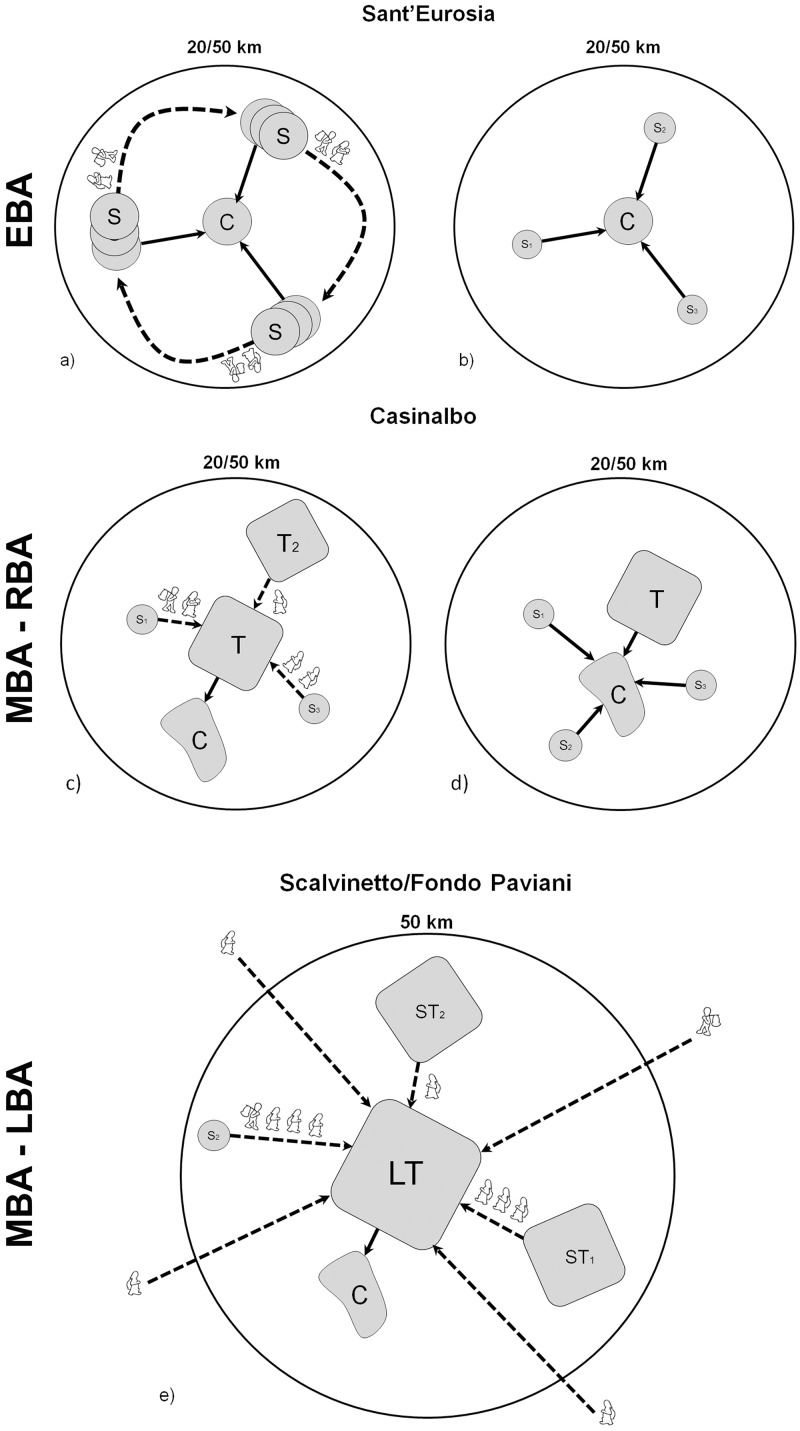
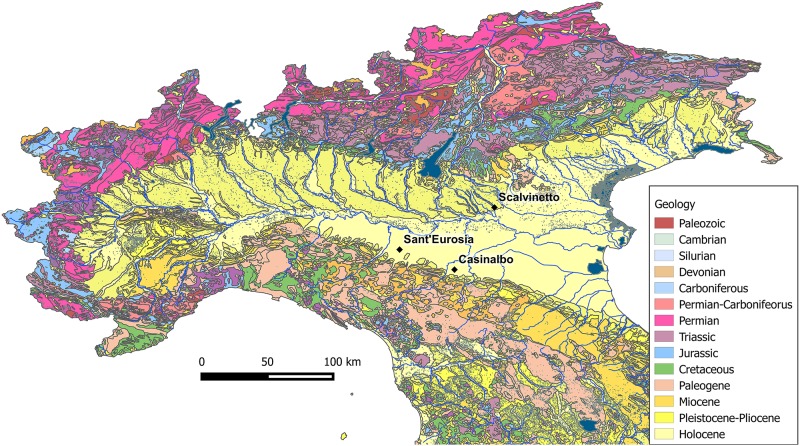
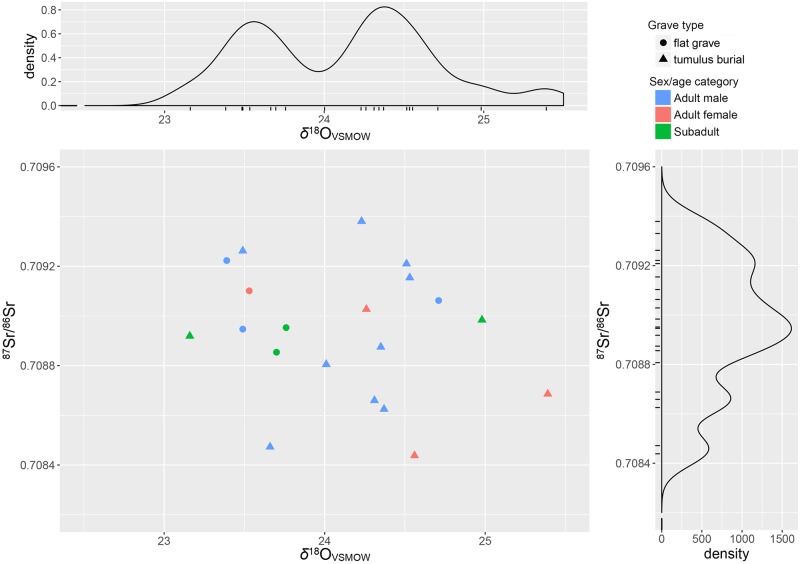
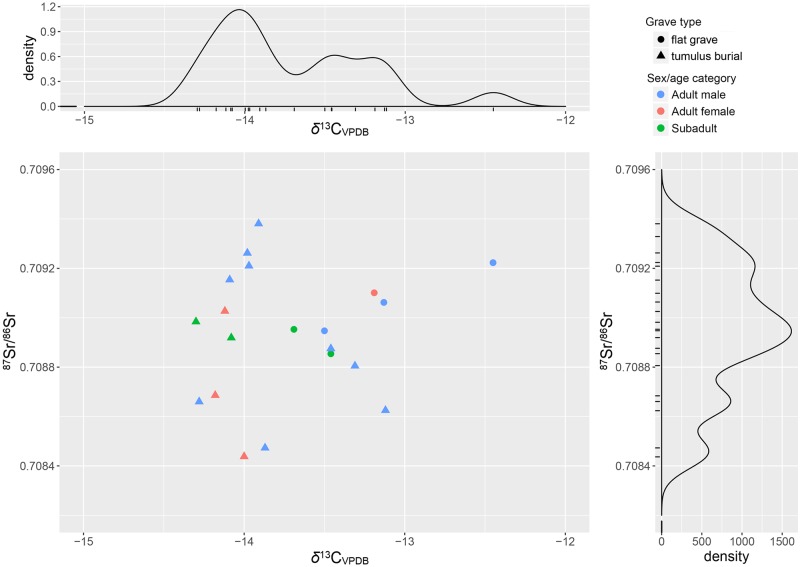
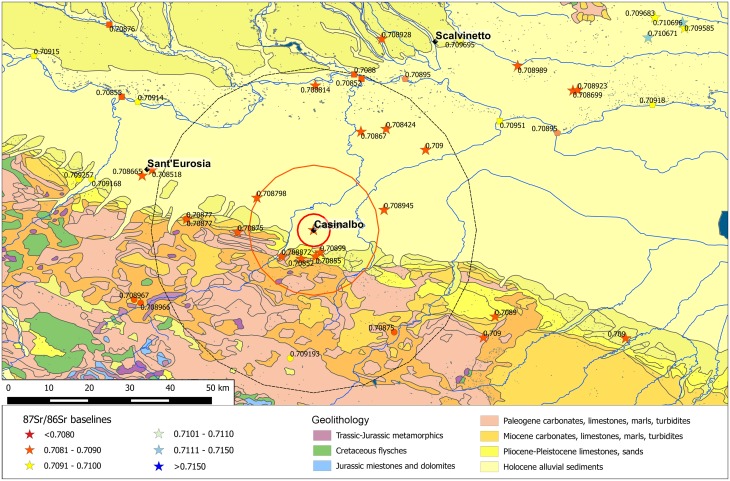
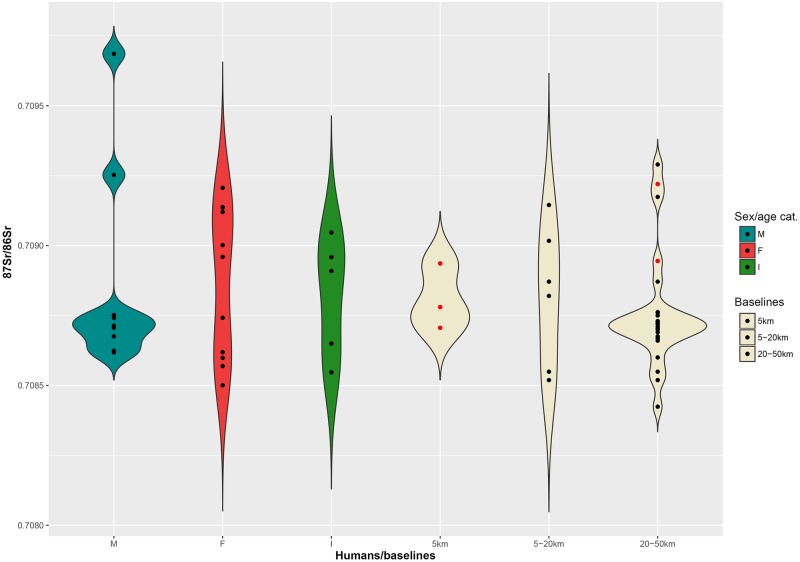
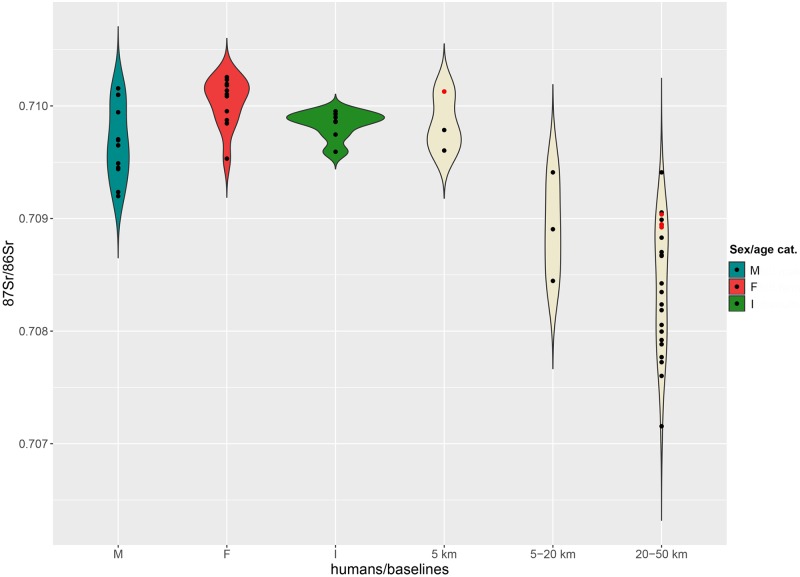
This study investigates to what extent Bronze Age societies in Northern Italy were permeable accepting and integrating non-local individuals, as well as importing a wide range of raw materials, commodities, and ideas from networks spanning continental Europe and the Mediterranean. During the second millennium BC, the communities of Northern Italy engaged in a progressive stabilization of settlements, culminating in the large polities of the end of the Middle/beginning of the Late Bronze Age pivoted around large defended centres (the Terramare). Although a wide range of exotic archaeological materials indicates that the inhabitants of the Po plain increasingly took part in the networks of Continental European and the Eastern Mediterranean, we should not overlook the fact that the dynamics of interaction were also extremely active on local and regional levels. Mobility patterns have been explored for three key-sites, spanning the Early to Late Bronze Age (1900-1100 BC), namely Sant'Eurosia, Casinalbo and Fondo Paviani, through strontium and oxygen isotope analysis on a large sample size (more than 100 individuals). The results, integrated with osteological and archaeological data, document for the first time in this area that movements of people occurred mostly within a territorial radius of 50 km, but also that larger nodes in the settlement system (such as Fondo Paviani) included individuals from more distant areas. This suggests that, from a demographic perspective, the process towards a more complex socio-political system in Bronze Age Northern Italy was triggered by a largely, but not completely, internal process, stemming from the dynamics of intra-polity networks and local/regional power relationships.

摘要

本研究旨在探讨意大利北部青铜时代社会在多大程度上能够接受和融合非本地个体,以及从跨越欧洲大陆和地中海的网络中进口广泛的原材料、商品和思想。在公元前第二个千年,意大利北部的社区经历了定居点的逐步稳定,最终形成了以大型防御中心(Terramare)为中心的大型政治实体。尽管广泛的外来考古材料表明,波河平原的居民越来越多地参与到欧洲大陆和东地中海的网络中,但我们不应忽视这样一个事实,即互动的动态在地方和区域层面上也非常活跃。通过对三个关键遗址(从早期青铜时代到晚期青铜时代,即公元前 1900 年至 1100 年)——Sant'Eurosia、Casinalbo 和 Fondo Paviani——进行锶和氧同位素分析,对 100 多个人的大样本进行了探索。这些结果与骨骼和考古学数据相结合,首次在该地区记录到,人口流动主要发生在 50 公里的地域范围内,但定居系统中的更大节点(如 Fondo Paviani)也包括来自更远地区的个体。这表明,从人口统计学的角度来看,意大利北部青铜时代向更复杂的社会政治体系的发展过程主要是由内部因素引发的,这些内部因素源于城邦内部网络的动态和地方/区域权力关系。
https://cdn.ncbi.nlm.nih.gov/pmc/blobs/569c/6326466/8791f0d285c0/pone.0209693.g014.jpg
https://cdn.ncbi.nlm.nih.gov/pmc/blobs/569c/6326466/4611e5e9b051/pone.0209693.g001.jpg
https://cdn.ncbi.nlm.nih.gov/pmc/blobs/569c/6326466/7bdfbcc838d6/pone.0209693.g002.jpg
https://cdn.ncbi.nlm.nih.gov/pmc/blobs/569c/6326466/bea8bd0f2062/pone.0209693.g003.jpg
https://cdn.ncbi.nlm.nih.gov/pmc/blobs/569c/6326466/b7862e7e3fd1/pone.0209693.g004.jpg
https://cdn.ncbi.nlm.nih.gov/pmc/blobs/569c/6326466/b2a3d03829c8/pone.0209693.g005.jpg
https://cdn.ncbi.nlm.nih.gov/pmc/blobs/569c/6326466/d01eefc53a12/pone.0209693.g006.jpg
https://cdn.ncbi.nlm.nih.gov/pmc/blobs/569c/6326466/909aab273360/pone.0209693.g007.jpg
https://cdn.ncbi.nlm.nih.gov/pmc/blobs/569c/6326466/3a3bbbf56ed7/pone.0209693.g008.jpg
https://cdn.ncbi.nlm.nih.gov/pmc/blobs/569c/6326466/e9589c70087a/pone.0209693.g009.jpg
https://cdn.ncbi.nlm.nih.gov/pmc/blobs/569c/6326466/0aec8885268a/pone.0209693.g010.jpg
https://cdn.ncbi.nlm.nih.gov/pmc/blobs/569c/6326466/fc30caf3355b/pone.0209693.g011.jpg
https://cdn.ncbi.nlm.nih.gov/pmc/blobs/569c/6326466/167985f8efd5/pone.0209693.g012.jpg
https://cdn.ncbi.nlm.nih.gov/pmc/blobs/569c/6326466/d8e2d9c9afb4/pone.0209693.g013.jpg
https://cdn.ncbi.nlm.nih.gov/pmc/blobs/569c/6326466/8791f0d285c0/pone.0209693.g014.jpg
https://cdn.ncbi.nlm.nih.gov/pmc/blobs/569c/6326466/4611e5e9b051/pone.0209693.g001.jpg
https://cdn.ncbi.nlm.nih.gov/pmc/blobs/569c/6326466/7bdfbcc838d6/pone.0209693.g002.jpg
https://cdn.ncbi.nlm.nih.gov/pmc/blobs/569c/6326466/bea8bd0f2062/pone.0209693.g003.jpg
https://cdn.ncbi.nlm.nih.gov/pmc/blobs/569c/6326466/b7862e7e3fd1/pone.0209693.g004.jpg
https://cdn.ncbi.nlm.nih.gov/pmc/blobs/569c/6326466/b2a3d03829c8/pone.0209693.g005.jpg
https://cdn.ncbi.nlm.nih.gov/pmc/blobs/569c/6326466/d01eefc53a12/pone.0209693.g006.jpg
https://cdn.ncbi.nlm.nih.gov/pmc/blobs/569c/6326466/909aab273360/pone.0209693.g007.jpg
https://cdn.ncbi.nlm.nih.gov/pmc/blobs/569c/6326466/3a3bbbf56ed7/pone.0209693.g008.jpg
https://cdn.ncbi.nlm.nih.gov/pmc/blobs/569c/6326466/e9589c70087a/pone.0209693.g009.jpg
https://cdn.ncbi.nlm.nih.gov/pmc/blobs/569c/6326466/0aec8885268a/pone.0209693.g010.jpg
https://cdn.ncbi.nlm.nih.gov/pmc/blobs/569c/6326466/fc30caf3355b/pone.0209693.g011.jpg
https://cdn.ncbi.nlm.nih.gov/pmc/blobs/569c/6326466/167985f8efd5/pone.0209693.g012.jpg
https://cdn.ncbi.nlm.nih.gov/pmc/blobs/569c/6326466/d8e2d9c9afb4/pone.0209693.g013.jpg
https://cdn.ncbi.nlm.nih.gov/pmc/blobs/569c/6326466/8791f0d285c0/pone.0209693.g014.jpg

相似文献

1
Flows of people in villages and large centres in Bronze Age Italy through strontium and oxygen isotopes.意大利青铜时代农村和大型中心的锶和氧同位素人口流动。
PLoS One. 2019 Jan 9;14(1):e0209693. doi: 10.1371/journal.pone.0209693. eCollection 2019.
2
Assessing the mobility of Bronze Age societies in East-Central Europe. A strontium and oxygen isotope perspective on two archaeological sites.评估东欧青铜时代社会的流动性。两个考古遗址的锶和氧同位素视角。
PLoS One. 2023 Mar 17;18(3):e0282472. doi: 10.1371/journal.pone.0282472. eCollection 2023.
3
Human mobility at Tell Atchana (Alalakh), Hatay, Turkey during the 2nd millennium BC: Integration of isotopic and genomic evidence.人类在土耳其哈塔伊的Tell Atchana(阿拉拉赫)的公元前 2 千年的迁移:同位素和基因组证据的综合。
PLoS One. 2021 Jun 30;16(6):e0241883. doi: 10.1371/journal.pone.0241883. eCollection 2021.
4
La Sassa cave: Isotopic evidence for Copper Age and Bronze Age population dynamics in Central Italy.拉萨萨洞穴:意大利中部铜器时代和青铜时代人口动态的同位素证据。
PLoS One. 2023 Jul 26;18(7):e0288637. doi: 10.1371/journal.pone.0288637. eCollection 2023.
5
Status, kinship, and place of burial at Early Bronze Age Bab adh-Dhra': A biogeochemical comparison of charnel house human remains.早期青铜时代巴卜阿德尔墓地的身份、亲缘关系和埋葬地点:人骨坑遗骸的生物地球化学比较。
Am J Phys Anthropol. 2020 Feb;171(2):319-335. doi: 10.1002/ajpa.23982. Epub 2019 Dec 6.
6
Testing Late Bronze Age mobility in southern Sweden in the light of a new multi-proxy strontium isotope baseline of Scania.根据斯科讷全新的多指标锶同位素基线研究,检测瑞典南部晚青铜时代的迁移活动。
PLoS One. 2021 Apr 21;16(4):e0250279. doi: 10.1371/journal.pone.0250279. eCollection 2021.
7
Finding Mycenaeans in Minoan Crete? Isotope and DNA analysis of human mobility in Bronze Age Crete.在克里特岛的米诺斯文明中找到迈锡尼人?青铜时代克里特岛人类流动的同位素和 DNA 分析。
PLoS One. 2022 Aug 10;17(8):e0272144. doi: 10.1371/journal.pone.0272144. eCollection 2022.
8
Mapping the origins of Imperial Roman workers (1st-4th century CE) at Vagnari, Southern Italy, using Sr/ Sr and δ O variability.利用锶同位素比值(Sr/Sr)和氧同位素变化(δO)绘制意大利南部瓦尼亚里地区罗马帝国工人(公元1至4世纪)的来源地分布图。
Am J Phys Anthropol. 2018 Aug;166(4):837-850. doi: 10.1002/ajpa.23473. Epub 2018 Apr 18.
9
Transhumance pastoralism of Roccapelago (Modena, Italy) early-modern individuals: Inferences from Sr isotopes of hair strands.罗卡佩拉戈(意大利摩德纳)近代个体的迁徙畜牧业:毛发中 Sr 同位素的推断。
Am J Phys Anthropol. 2018 Nov;167(3):470-483. doi: 10.1002/ajpa.23643. Epub 2018 Aug 29.
10
Unravelling biocultural population structure in 4th/3rd century BC Monterenzio Vecchio (Bologna, Italy) through a comparative analysis of strontium isotopes, non-metric dental evidence, and funerary practices.通过对锶同位素、非度量性牙齿证据和丧葬习俗的比较分析,揭示公元前 4 世纪/3 世纪意大利博洛尼亚蒙特雷齐奥·韦基奥(Monterenzio Vecchio)的生物文化人口结构。
PLoS One. 2018 Mar 28;13(3):e0193796. doi: 10.1371/journal.pone.0193796. eCollection 2018.

引用本文的文献

1
A Late Bronze Age foreign elite? Investigating mobility patterns at Seddin, Germany.一个青铜时代晚期的外来精英群体?对德国塞丁的人口流动模式进行调查。
PLoS One. 2025 Sep 10;20(9):e0330390. doi: 10.1371/journal.pone.0330390. eCollection 2025.
2
Isotope and archaeobotanical analysis reveal radical changes in mobility, diet and inequalities around 1500 BCE at the core of Europe.同位素和考古植物学分析揭示了公元前1500年左右欧洲核心地区在流动性、饮食和不平等方面的巨大变化。
Sci Rep. 2025 May 20;15(1):17494. doi: 10.1038/s41598-025-01113-z.
3
A multi-proxy approach to reconstruct chronology, human mobility, and funerary practices at the Late Bronze-Early Iron Age urnfield of San Valentino (San Vito al Tagliamento, Italy).

本文引用的文献

1
Mapping the origins of Imperial Roman workers (1st-4th century CE) at Vagnari, Southern Italy, using Sr/ Sr and δ O variability.利用锶同位素比值(Sr/Sr)和氧同位素变化(δO)绘制意大利南部瓦尼亚里地区罗马帝国工人(公元1至4世纪)的来源地分布图。
Am J Phys Anthropol. 2018 Aug;166(4):837-850. doi: 10.1002/ajpa.23473. Epub 2018 Apr 18.
2
The Beaker phenomenon and the genomic transformation of northwest Europe.大杯型陶器文化现象与西北欧的基因组变革。
Nature. 2018 Mar 8;555(7695):190-196. doi: 10.1038/nature25738. Epub 2018 Feb 21.
3
Female exogamy and gene pool diversification at the transition from the Final Neolithic to the Early Bronze Age in central Europe.
采用多指标方法对意大利圣维托阿尔塔利亚门托(San Vito al Tagliamento)晚青铜时代-早铁器时代瓮棺葬遗址进行年代重建、人类流动性和丧葬习俗研究。
PLoS One. 2024 Nov 7;19(11):e0309649. doi: 10.1371/journal.pone.0309649. eCollection 2024.
4
Local circulation of elites punctuated by transregional mobility enabled steppe political consolidation in the Xiongnu nomadic state.地方精英的局部流动被跨区域流动所打断,这使得匈奴游牧国家的草原政治得以巩固。
PLoS One. 2024 Apr 1;19(4):e0298593. doi: 10.1371/journal.pone.0298593. eCollection 2024.
5
New insights on Celtic migration in Hungary and Italy through the analysis of non-metric dental traits.通过分析非测量性牙齿特征,深入了解匈牙利和意大利的凯尔特人迁徙情况。
PLoS One. 2023 Oct 18;18(10):e0293090. doi: 10.1371/journal.pone.0293090. eCollection 2023.
6
La Sassa cave: Isotopic evidence for Copper Age and Bronze Age population dynamics in Central Italy.拉萨萨洞穴:意大利中部铜器时代和青铜时代人口动态的同位素证据。
PLoS One. 2023 Jul 26;18(7):e0288637. doi: 10.1371/journal.pone.0288637. eCollection 2023.
7
Assessing the mobility of Bronze Age societies in East-Central Europe. A strontium and oxygen isotope perspective on two archaeological sites.评估东欧青铜时代社会的流动性。两个考古遗址的锶和氧同位素视角。
PLoS One. 2023 Mar 17;18(3):e0282472. doi: 10.1371/journal.pone.0282472. eCollection 2023.
8
A multi-proxy bioarchaeological approach reveals new trends in Bronze Age diet in Italy.多指标生物考古学方法揭示了意大利青铜时代饮食的新趋势。
Sci Rep. 2022 Jul 16;12(1):12203. doi: 10.1038/s41598-022-15581-0.
9
Salorno-Dos de la Forca (Adige Valley, Northern Italy): A unique cremation site of the Late Bronze Age.萨尔诺-多斯·德·拉·福尔卡(意大利北部阿迪杰河谷):一个独特的青铜时代晚期火葬遗址。
PLoS One. 2022 May 18;17(5):e0267532. doi: 10.1371/journal.pone.0267532. eCollection 2022.
10
Strontium isotope analyses of archaeological cremated remains - new data and perspectives.考古火化遗骸的锶同位素分析——新数据与新视角
Data Brief. 2022 Apr 2;42:108115. doi: 10.1016/j.dib.2022.108115. eCollection 2022 Jun.
从中欧末次新石器时代向青铜时代早期过渡时期的女性外婚制与基因库多样化。
Proc Natl Acad Sci U S A. 2017 Sep 19;114(38):10083-10088. doi: 10.1073/pnas.1706355114. Epub 2017 Sep 5.
4
Investigating human geographic origins using dual-isotope (87Sr/86Sr, δ18O) assignment approaches.使用双同位素(87Sr/86Sr,δ18O)赋值方法研究人类地理起源。
PLoS One. 2017 Feb 21;12(2):e0172562. doi: 10.1371/journal.pone.0172562. eCollection 2017.
5
Tooth enamel oxygen "isoscapes" show a high degree of human mobility in prehistoric Britain.牙釉质氧“同位素景观”显示了史前英国人类的高度流动性。
Sci Rep. 2016 Oct 7;6:34986. doi: 10.1038/srep34986.
6
Diet and Mobility in the Corded Ware of Central Europe.中欧绳纹陶文化中的饮食与迁徙
PLoS One. 2016 May 25;11(5):e0155083. doi: 10.1371/journal.pone.0155083. eCollection 2016.
7
From soil to grape and wine: Variation of light and heavy elements isotope ratios.从土壤到葡萄和葡萄酒:轻、重元素同位素比值的变化。
Food Chem. 2016 Nov 1;210:648-59. doi: 10.1016/j.foodchem.2016.04.108. Epub 2016 Apr 23.
8
On the Use of Biomineral Oxygen Isotope Data to Identify Human Migrants in the Archaeological Record: Intra-Sample Variation, Statistical Methods and Geographical Considerations.论利用生物矿物氧同位素数据识别考古记录中的人类迁徙者:样本内变异、统计方法及地理因素
PLoS One. 2016 Apr 28;11(4):e0153850. doi: 10.1371/journal.pone.0153850. eCollection 2016.
9
Mobility during the neolithic and bronze age in northern ireland explored using strontium isotope analysis of cremated human bone.利用对火葬人类骨骼的锶同位素分析探索新石器时代和青铜时代北爱尔兰的人口迁移情况。
Am J Phys Anthropol. 2016 Jul;160(3):397-413. doi: 10.1002/ajpa.22977. Epub 2016 Apr 9.
10
Geochemistry of the Adige River water from the Eastern Alps to the Adriatic Sea (Italy): evidences for distinct hydrological components and water-rock interactions.从东阿尔卑斯山到亚得里亚海(意大利)阿迪杰河水的地球化学:不同水文组分和水岩相互作用的证据
Environ Sci Pollut Res Int. 2016 Jun;23(12):11677-94. doi: 10.1007/s11356-016-6356-3. Epub 2016 Mar 4.