The Biodesign Center for Fundamental and Applied Microbiomics, Arizona State University, Tempe, AZ 85287, USA.
School of Life Sciences, Arizona State University, Tempe, AZ 85287, USA.
Viruses. 2021 Apr 16;13(4):694. doi: 10.3390/v13040694.
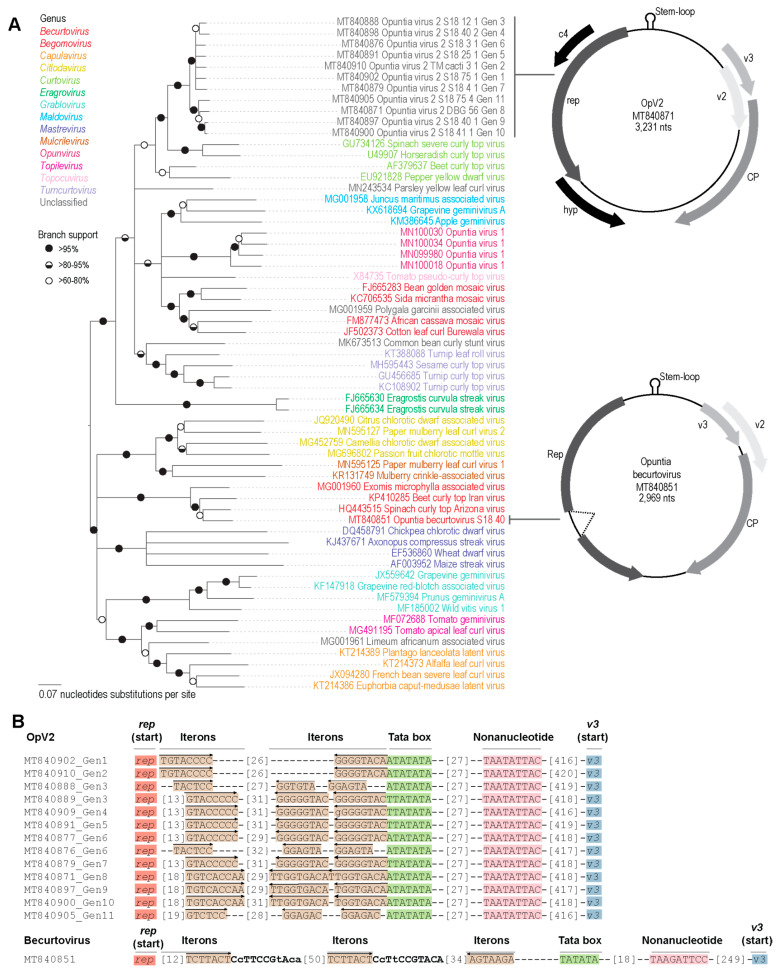
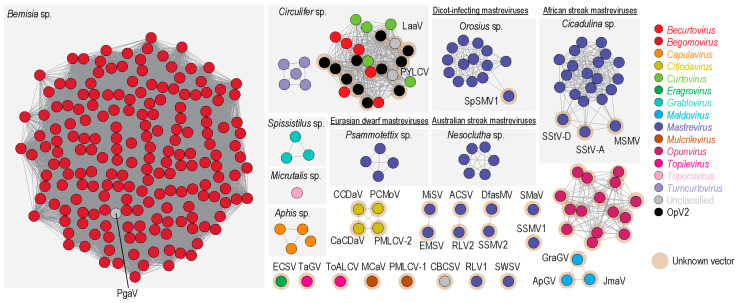
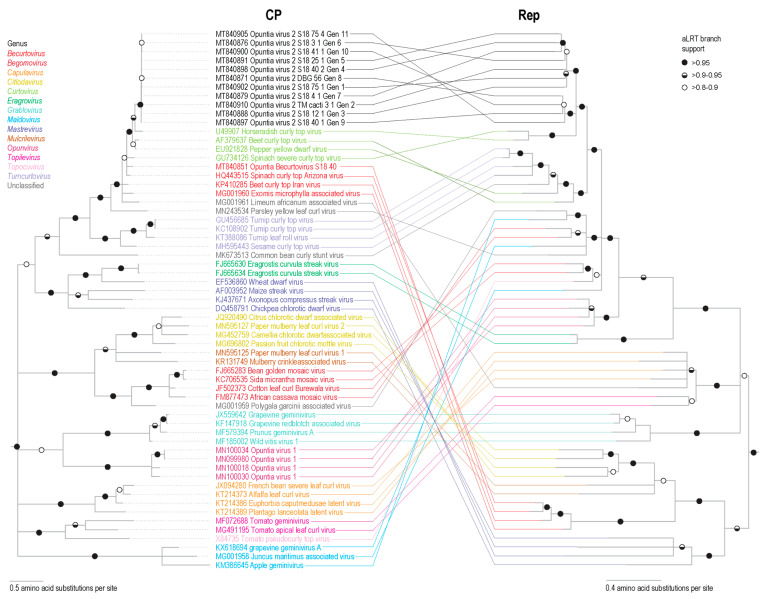
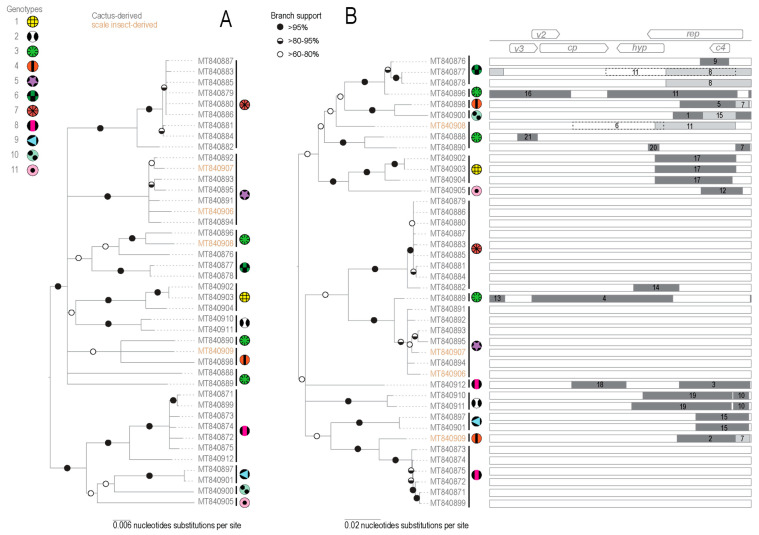
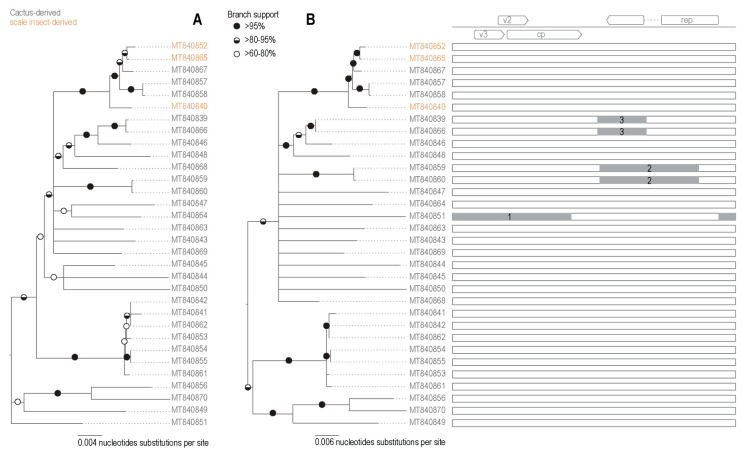
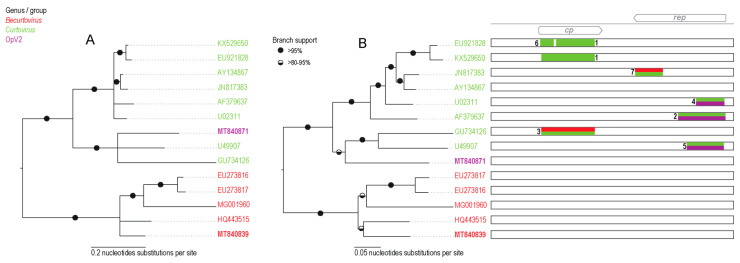
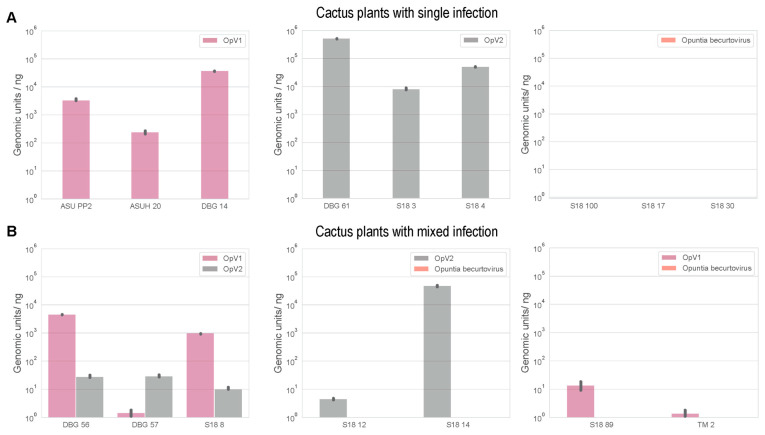
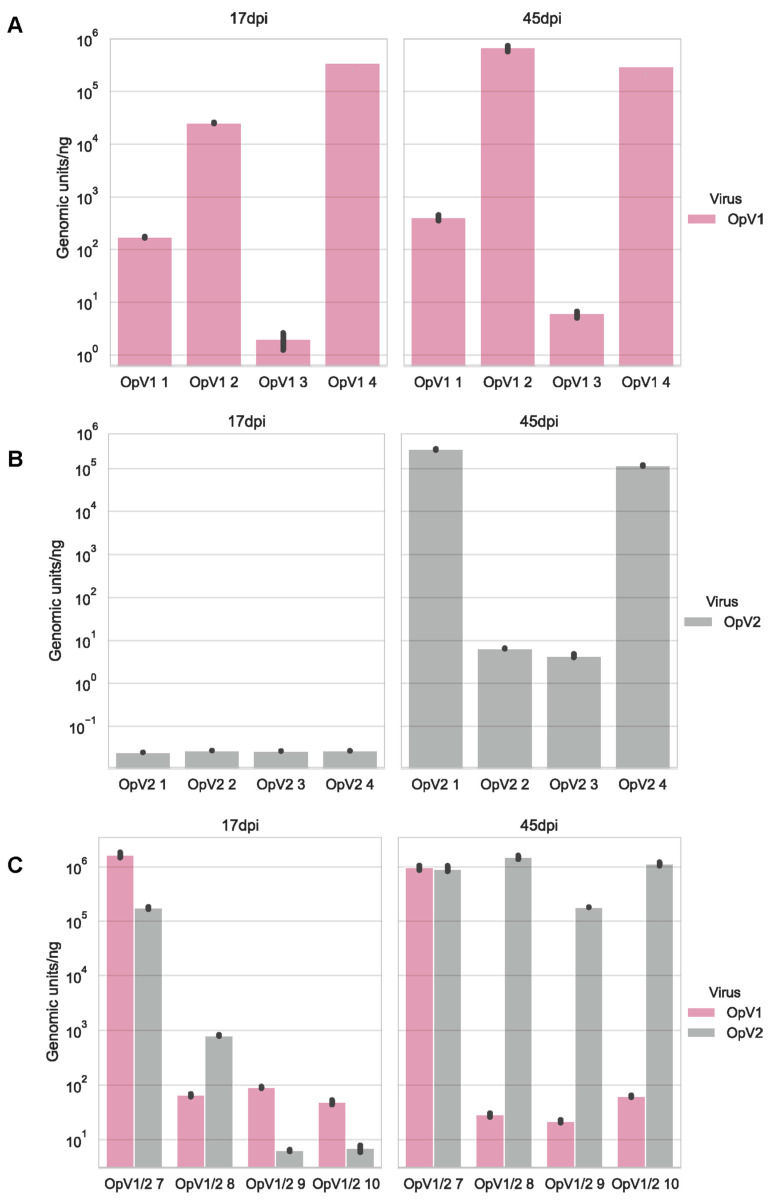
The family Cactaceae comprises a diverse group of typically succulent plants that are native to the American continent but have been introduced to nearly all other continents, predominantly for ornamental purposes. Despite their economic, cultural, and ecological importance, very little research has been conducted on the viral community that infects them. We previously identified a highly divergent geminivirus that is the first known to infect cacti. Recent research efforts in non-cultivated and asymptomatic plants have shown that the diversity of this viral family has been under-sampled. As a consequence, little is known about the effects and interactions of geminiviruses in many plants, such as cacti. With the objective to expand knowledge on the diversity of geminiviruses infecting cacti, we used previously acquired high-throughput sequencing results to search for viral sequences using BLASTx against a viral RefSeq protein database. We identified two additional sequences with similarity to geminiviruses, for which we designed abutting primers and recovered full-length genomes. From 42 cacti and five scale insects, we derived 42 complete genome sequences of a novel geminivirus species that we have tentatively named Opuntia virus 2 (OpV2) and 32 genomes of an Opuntia-infecting becurtovirus (which is a new strain of the spinach curly top Arizona virus species). Interspecies recombination analysis of the OpV2 group revealed several recombinant regions, in some cases spanning half of the genome. Phylogenetic analysis demonstrated that OpV2 is a novel geminivirus more closely related to viruses of the genus , which was further supported by the detection of three recombination events between curtoviruses and OpV2. Both OpV2 and Opuntia becurtoviruses were identified in mixed infections, which also included the previously characterized Opuntia virus 1. Viral quantification of the co-infected cactus plants compared with single infections did not show any clear trend in viral dynamics that might be associated with the mixed infections. Using experimental -mediated inoculations, we found that the initial accumulation of OpV2 is facilitated by co-infection with OpV1. This study shows that the diversity of geminiviruses that infect cacti is under-sampled and that cacti harbor diverse geminiviruses. The detection of the Opuntia becurtoviruses suggests spill-over events between viruses of cultivated species and native vegetation. The threat this poses to cacti needs to be further investigated.
仙人掌科植物包括一组多样化的肉质植物,原产于美洲大陆,但已被引入几乎所有其他大陆,主要用于观赏目的。尽管它们具有经济、文化和生态重要性,但对感染它们的病毒群落的研究却很少。我们之前鉴定了一种高度分化的双生病毒,这是已知的第一种感染仙人掌的病毒。最近在非栽培和无症状植物中的研究表明,这种病毒家族的多样性被低估了。因此,人们对许多植物(如仙人掌)中双生病毒的作用和相互作用知之甚少。为了扩大对感染仙人掌的双生病毒多样性的了解,我们使用先前获得的高通量测序结果,使用 BLASTx 对病毒 RefSeq 蛋白数据库进行搜索,以寻找病毒序列。我们发现了另外两个与双生病毒相似的序列,并为此设计了毗邻引物,以获得全长基因组。从 42 株仙人掌和 5 种介壳虫中,我们从 42 株新的双生病毒物种中获得了全长基因组序列,我们暂定将其命名为 Opuntia 病毒 2(OpV2),并从 32 株感染 Opuntia 的 becurtovirus 中获得了全长基因组序列(这是 spinach curly top Arizona 病毒物种的一个新菌株)。OpV2 组的种间重组分析显示了几个重组区域,在某些情况下跨越了基因组的一半。系统发育分析表明,OpV2 是一种新的双生病毒,与 属的病毒关系更为密切,这进一步得到了在 curtoviruses 和 OpV2 之间检测到三个重组事件的支持。OpV2 和 Opuntia becurtoviruses 均在混合感染中被鉴定出来,其中还包括先前表征的 Opuntia 病毒 1。与单一感染相比,对共感染仙人掌植物的病毒定量分析并未显示出任何可能与混合感染相关的病毒动力学的明显趋势。通过实验介导的接种,我们发现 OpV2 的初始积累是由与 OpV1 的共感染促进的。本研究表明,感染仙人掌的双生病毒多样性被低估了,仙人掌还携带多种双生病毒。Opuntia becurtoviruses 的检测表明,栽培种和本地植被之间的病毒发生了溢出事件。这对仙人掌构成的威胁需要进一步调查。