Liebl Magdalena C, Hofmann Thomas G
Institute of Toxicology, University Medical Center Mainz, Johannes Gutenberg University, 55131 Mainz, Germany.
Cancers (Basel). 2021 Apr 28;13(9):2125. doi: 10.3390/cancers13092125.
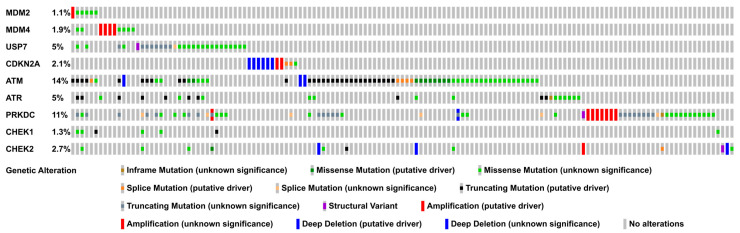
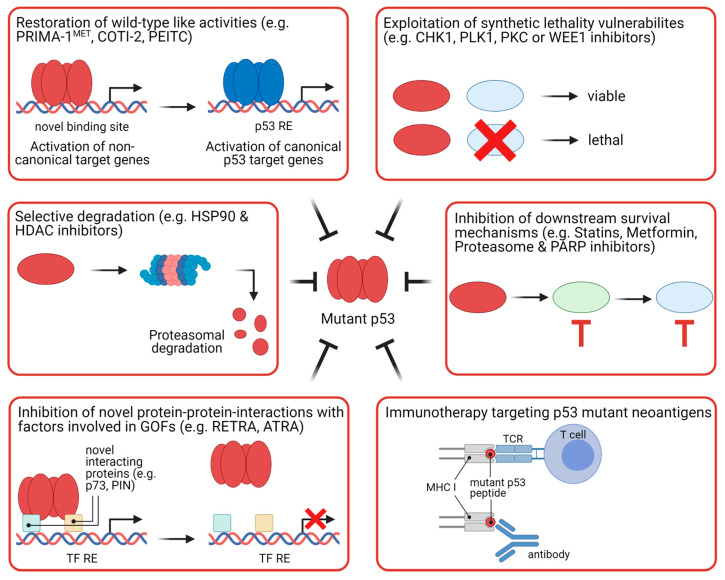
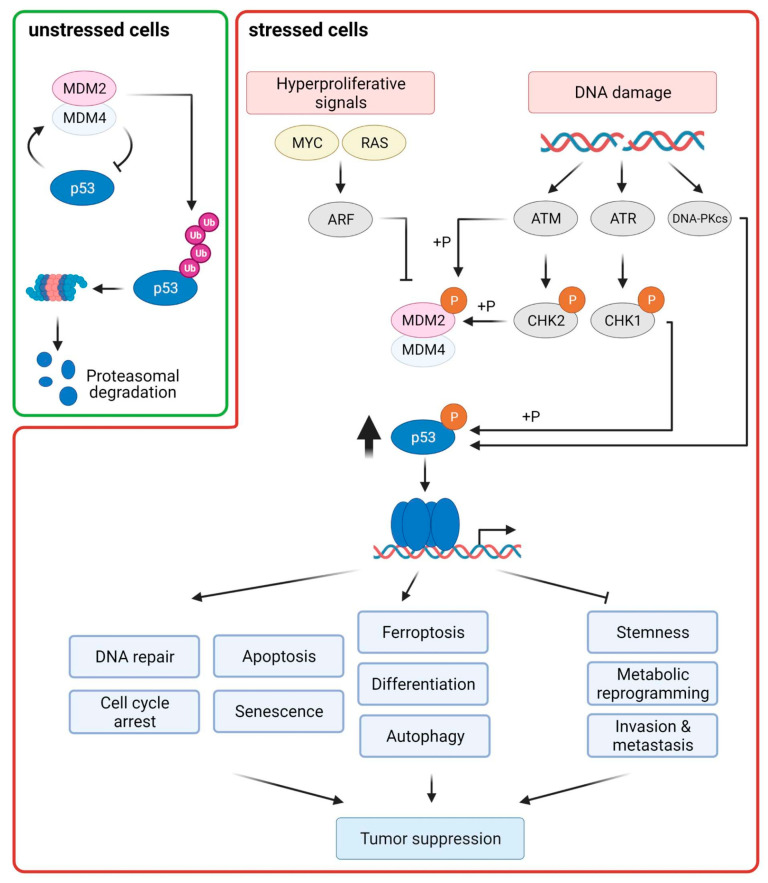
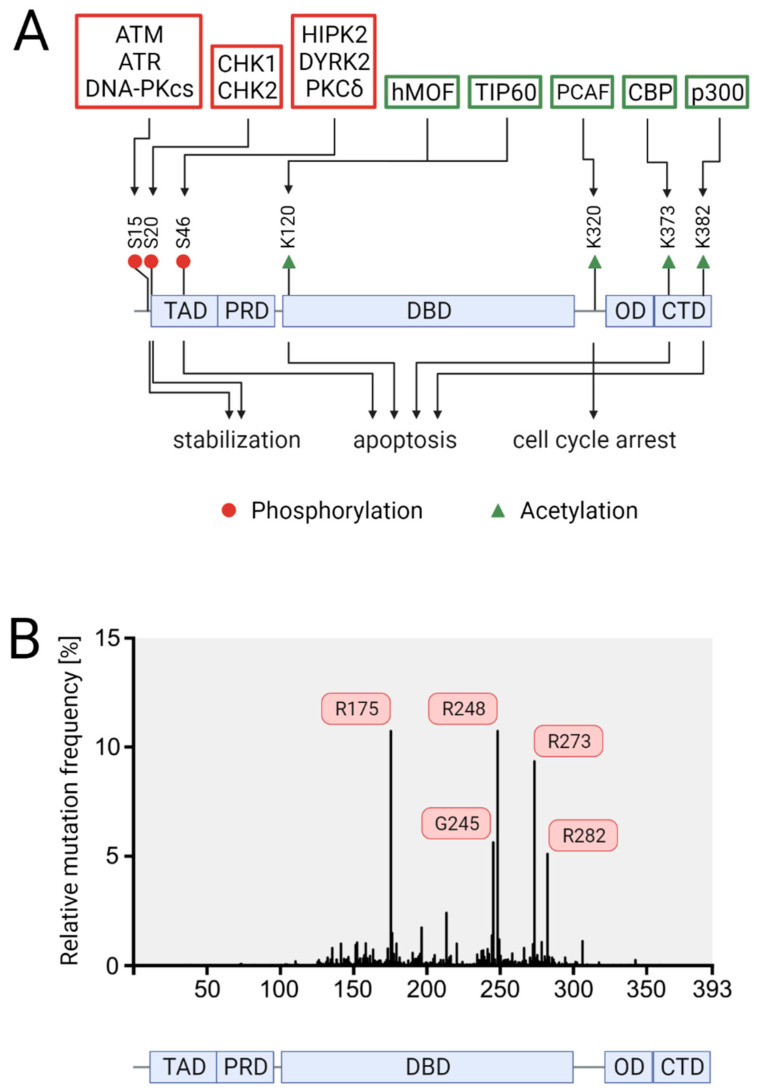
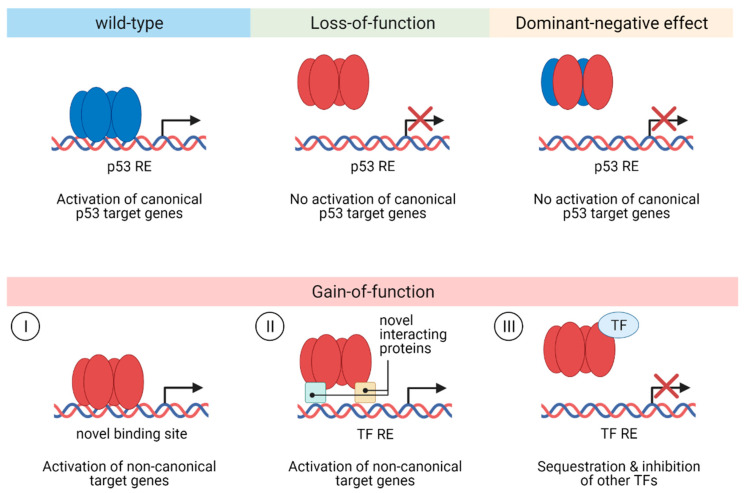
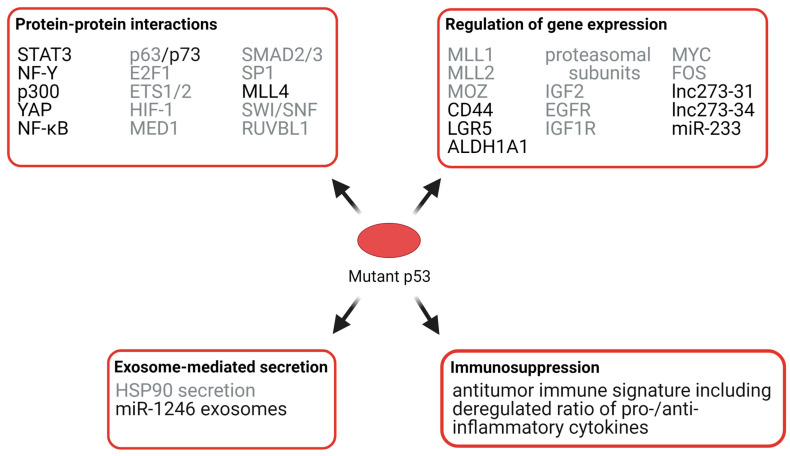
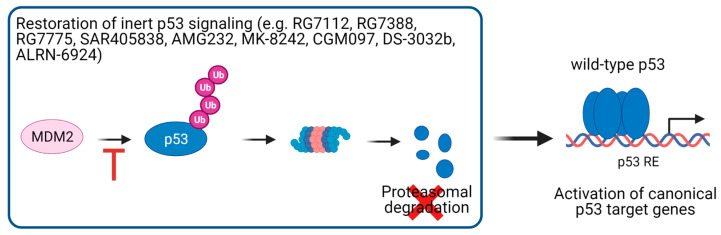
The transcription factor p53 functions as a critical tumor suppressor by orchestrating a plethora of cellular responses such as DNA repair, cell cycle arrest, cellular senescence, cell death, cell differentiation, and metabolism. In unstressed cells, p53 levels are kept low due to its polyubiquitination by the E3 ubiquitin ligase MDM2. In response to various stress signals, including DNA damage and aberrant growth signals, the interaction between p53 and MDM2 is blocked and p53 becomes stabilized, allowing p53 to regulate a diverse set of cellular responses mainly through the transactivation of its target genes. The outcome of p53 activation is controlled by its dynamics, its interactions with other proteins, and post-translational modifications. Due to its involvement in several tumor-suppressing pathways, p53 function is frequently impaired in human cancers. In colorectal cancer (CRC), the TP53 gene is mutated in 43% of tumors, and the remaining tumors often have compromised p53 functioning because of alterations in the genes encoding proteins involved in p53 regulation, such as ATM (13%) or DNA-PKcs (11%). TP53 mutations in CRC are usually missense mutations that impair wild-type p53 function (loss-of-function) and that even might provide neo-morphic (gain-of-function) activities such as promoting cancer cell stemness, cell proliferation, invasion, and metastasis, thereby promoting cancer progression. Although the first compounds targeting p53 are in clinical trials, a better understanding of wild-type and mutant p53 functions will likely pave the way for novel CRC therapies.
转录因子p53通过协调大量细胞反应,如DNA修复、细胞周期停滞、细胞衰老、细胞死亡、细胞分化和代谢,发挥关键的肿瘤抑制作用。在未受应激的细胞中,由于E3泛素连接酶MDM2对其进行多聚泛素化,p53水平保持较低。响应各种应激信号,包括DNA损伤和异常生长信号,p53与MDM2之间的相互作用被阻断,p53变得稳定,从而使p53主要通过其靶基因的反式激活来调节多种细胞反应。p53激活的结果受其动力学、与其他蛋白质的相互作用以及翻译后修饰的控制。由于其参与多种肿瘤抑制途径,p53功能在人类癌症中经常受损。在结直肠癌(CRC)中,43%的肿瘤中TP53基因发生突变,其余肿瘤的p53功能通常因参与p53调节的蛋白质编码基因的改变而受损,如ATM(13%)或DNA-PKcs(11%)。CRC中的TP53突变通常是错义突变,会损害野生型p53功能(功能丧失),甚至可能提供新的形态(功能获得)活性,如促进癌细胞干性、细胞增殖、侵袭和转移,从而促进癌症进展。尽管首批靶向p53的化合物正在进行临床试验,但更好地了解野生型和突变型p53的功能可能会为新型CRC治疗方法铺平道路。