CRIdee, Psychology Department, Università Cattolica, del Sacro Cuore, 20123 Milan, Italy.
Int J Environ Res Public Health. 2021 Apr 28;18(9):4695. doi: 10.3390/ijerph18094695.
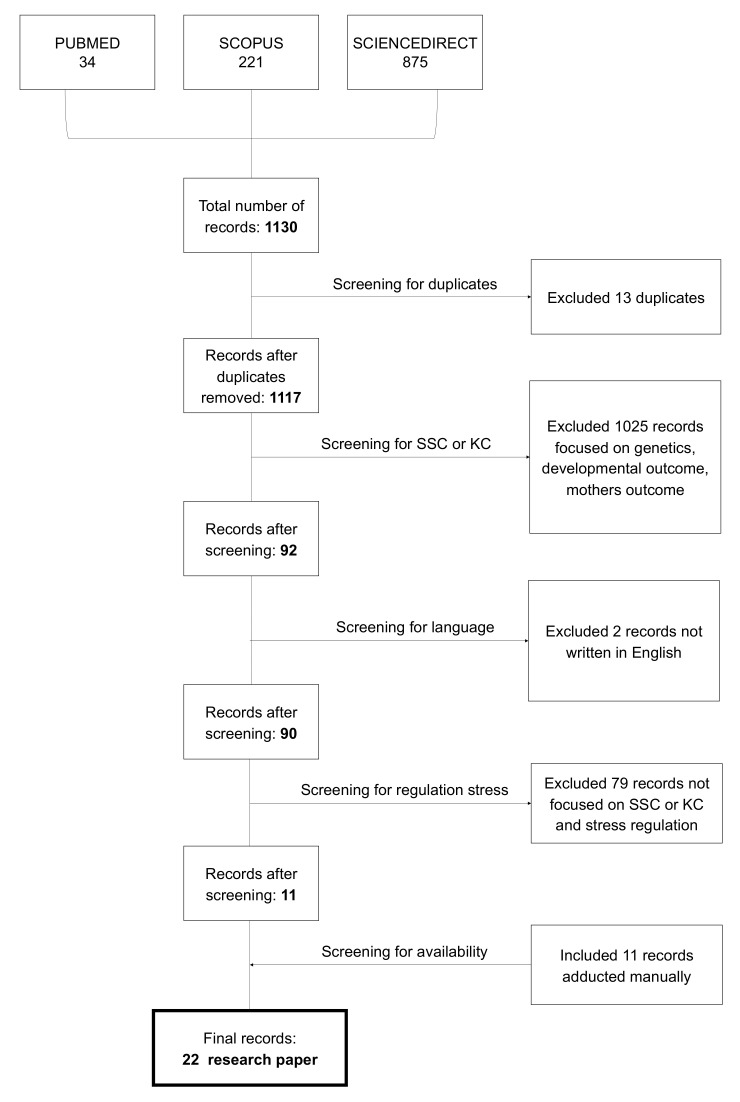
Several studies have focused on neonatal maternal separation (MS) to investigate behavioural and neuroendocrine reactions to lack of contact, but only a few have focused on early separation in the first days or weeks after birth. This literature review investigates the vital importance of contact and touch by exploring how skin-to-skin contact (SSC) regulates stress in the mother-infant relationship. Various databases such as PubMed, Scopus, and ScienceDirect were searched for literature published between 2015 and 2020. From 1141 articles, 22 were declared eligible. The reviewed articles showed how SSC regulates child stress by biological indicators such as the autonomic nervous system (ANS), heart rate variability (HRV), cortisol, and oxytocin. This research concludes the importance of SSC for stress regulation, especially during the COVID-19 pandemic. With no research to date indicating a possible risk of neonatal COVID-19 transmission following SSC, SSC should continue to be practiced for all women, as recommended by the WHO.
已有多项研究聚焦于新生儿母婴分离(MS),以调查缺乏接触时的行为和神经内分泌反应,但仅有少数研究关注于出生后最初几天或几周的早期分离。本文献综述通过探索皮肤接触(SSC)如何调节母婴关系中的压力,研究了接触和触摸的重要性。使用 PubMed、Scopus 和 ScienceDirect 等多个数据库,检索了 2015 年至 2020 年期间发表的文献。从 1141 篇文章中,有 22 篇被认为符合条件。综述文章表明,SSC 如何通过自主神经系统(ANS)、心率变异性(HRV)、皮质醇和催产素等生物指标来调节儿童的压力。这项研究得出了 SSC 对压力调节的重要性的结论,尤其是在 COVID-19 大流行期间。迄今为止,尚无研究表明 SSC 后新生儿 COVID-19 传播存在可能风险,因此,世卫组织建议继续对所有女性实施 SSC。