Department of Medicine and Surgery, University of Perugia, 06132 Perugia, Italy.
Int J Mol Sci. 2021 Apr 28;22(9):4644. doi: 10.3390/ijms22094644.
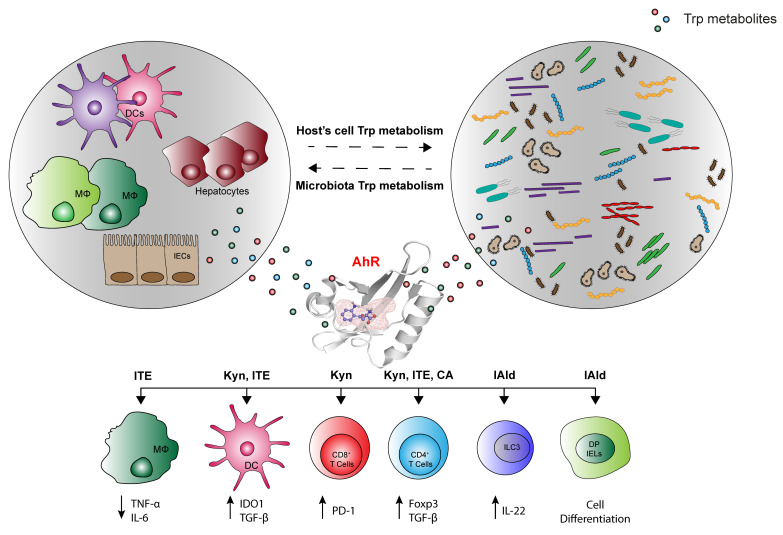
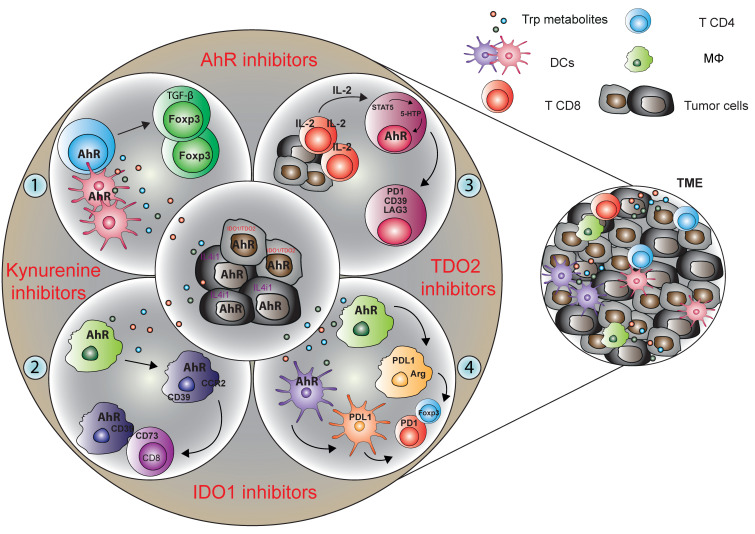
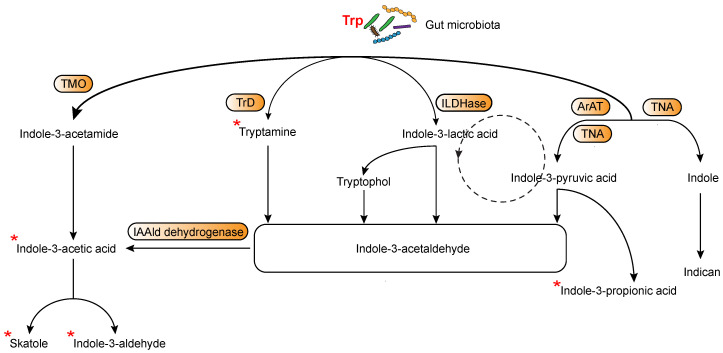
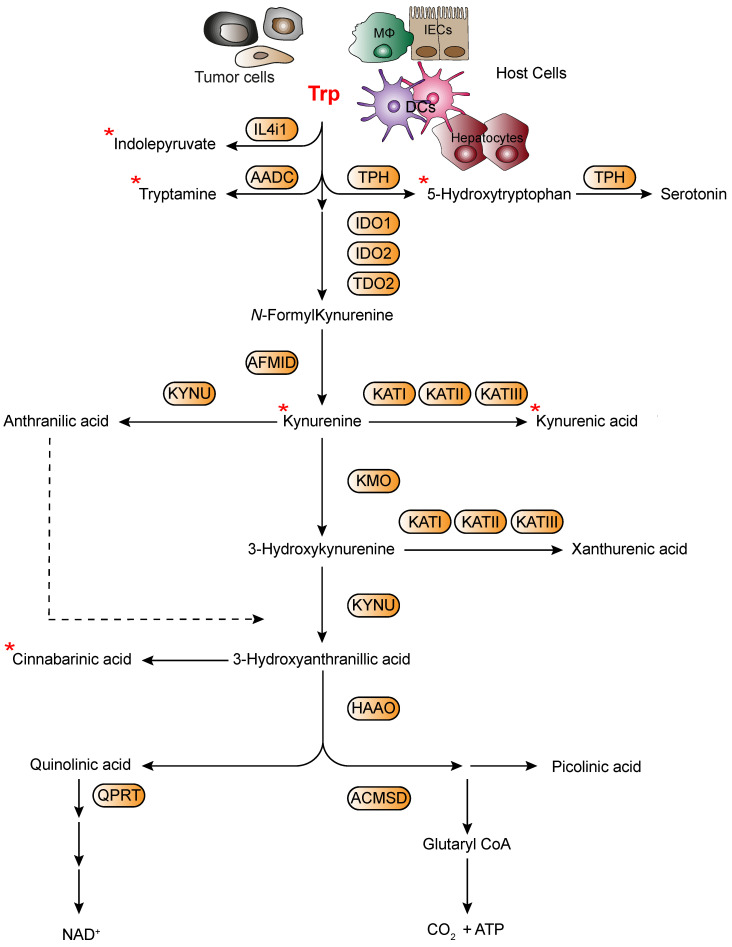
The Aryl hydrocarbon receptor (AhR) is a critical regulator of both innate and adaptive immune responses, with potent immunomodulatory effects that makes this receptor an attractive molecular target for novel therapeutics. Accumulating evidence indicates that diverse-both host's and microbial-tryptophan metabolites profoundly regulate the immune system in the host via AhR, promoting either tolerance or immunity, largely as a function of the qualitative and quantitative nature of the metabolites being contributed by either source. Additional findings indicate that host and microbiota-derived tryptophan metabolic pathways can influence the outcome of immune responses to tumors. Here, we review recent studies on the role and modalities of AhR activation by various ligands, derived from either host-cell or microbial-cell tryptophan metabolic pathways, in the regulation of immune responses. Moreover, we highlight potential implications of those ligands and pathways in tumor immunotherapy, with particular relevance to checkpoint-blockade immune intervention strategies.
芳香烃受体 (AhR) 是先天和适应性免疫反应的关键调节剂,具有强大的免疫调节作用,使该受体成为新型治疗药物的有吸引力的分子靶点。越来越多的证据表明,不同的——宿主和微生物——色氨酸代谢物通过 AhR 深刻地调节宿主的免疫系统,促进耐受或免疫,这在很大程度上取决于代谢物的定性和定量性质是由任何来源贡献的。其他研究结果表明,宿主和微生物衍生的色氨酸代谢途径可以影响对肿瘤的免疫反应的结果。在这里,我们回顾了最近的研究,研究了各种配体通过 AhR 的作用和模式,这些配体来自宿主细胞或微生物细胞的色氨酸代谢途径,在调节免疫反应中的作用。此外,我们强调了这些配体和途径在肿瘤免疫治疗中的潜在意义,特别是与检查点阻断免疫干预策略有关。