Microbiome Study Group, School of Health Sciences Dr. Paulo Prata, Barretos 14785-002, Brazil.
Microbiology Program, Institute of Biosciences, Humanities and Exact Sciences, São Paulo State University, Sao Jose do Rio Preto 15054-000, Brazil.
Int J Environ Res Public Health. 2021 Apr 27;18(9):4621. doi: 10.3390/ijerph18094621.
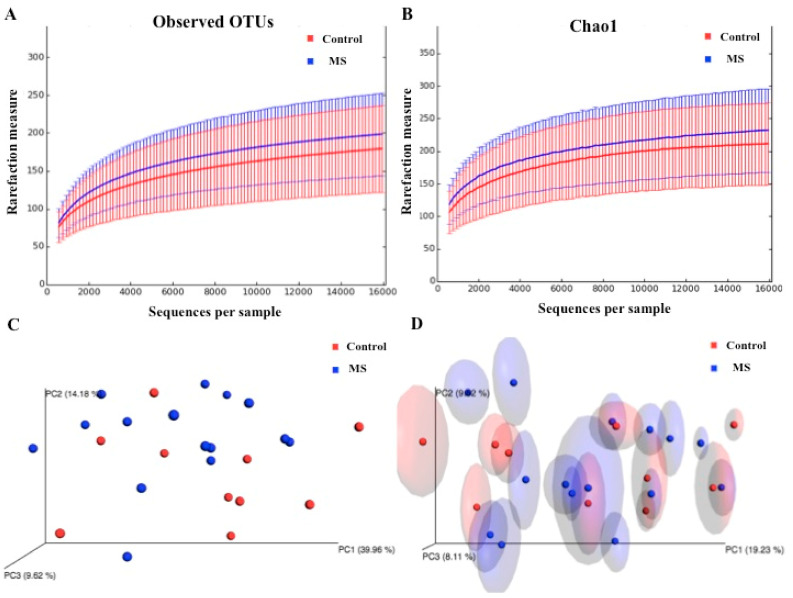
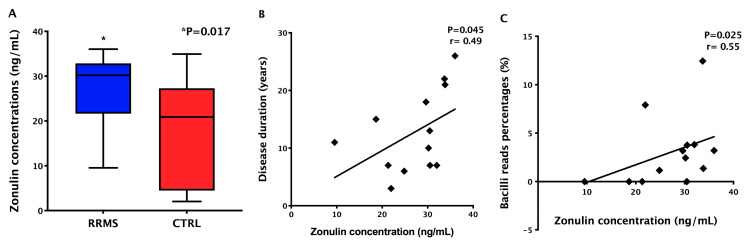
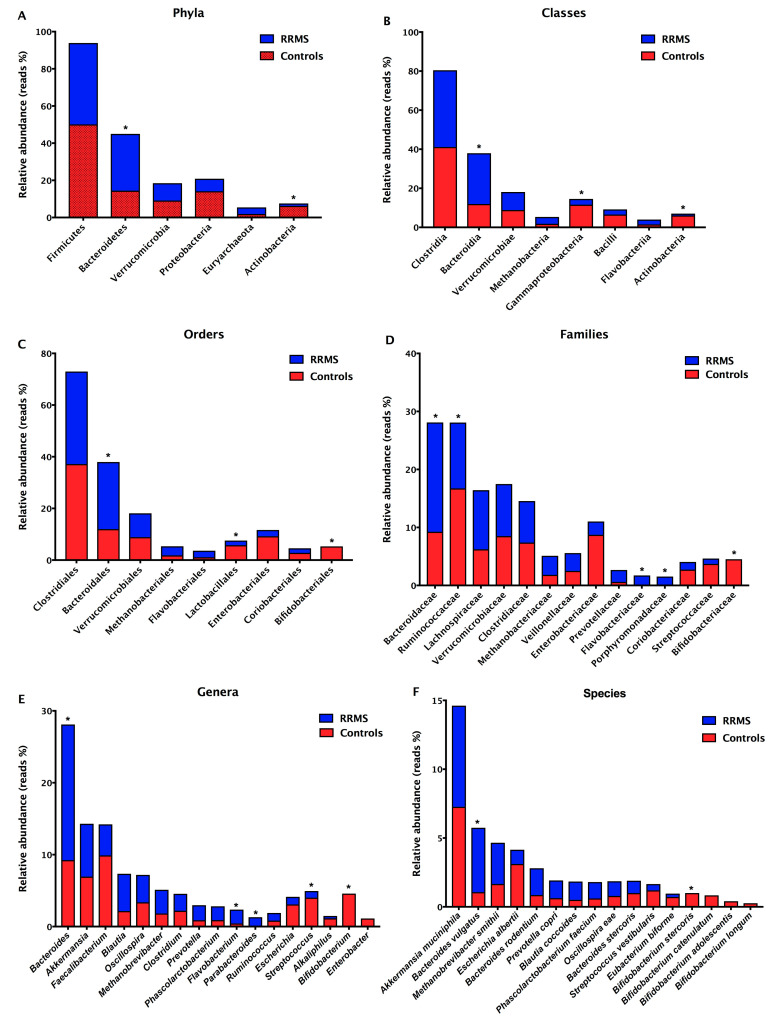
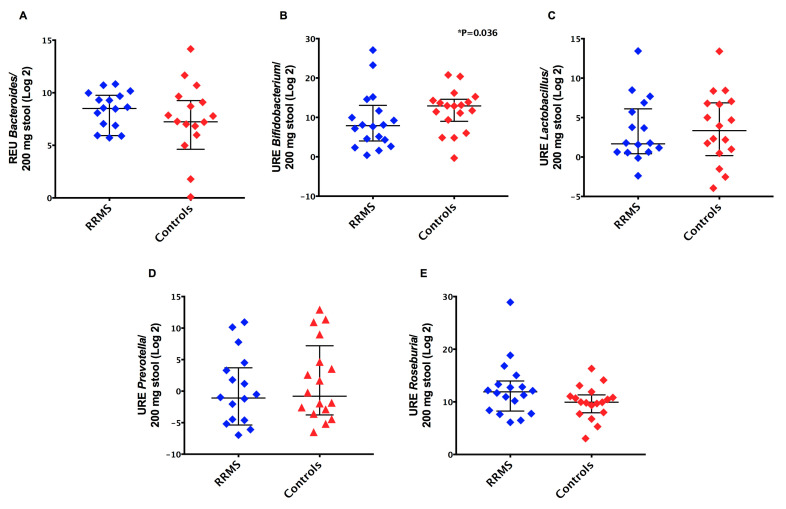
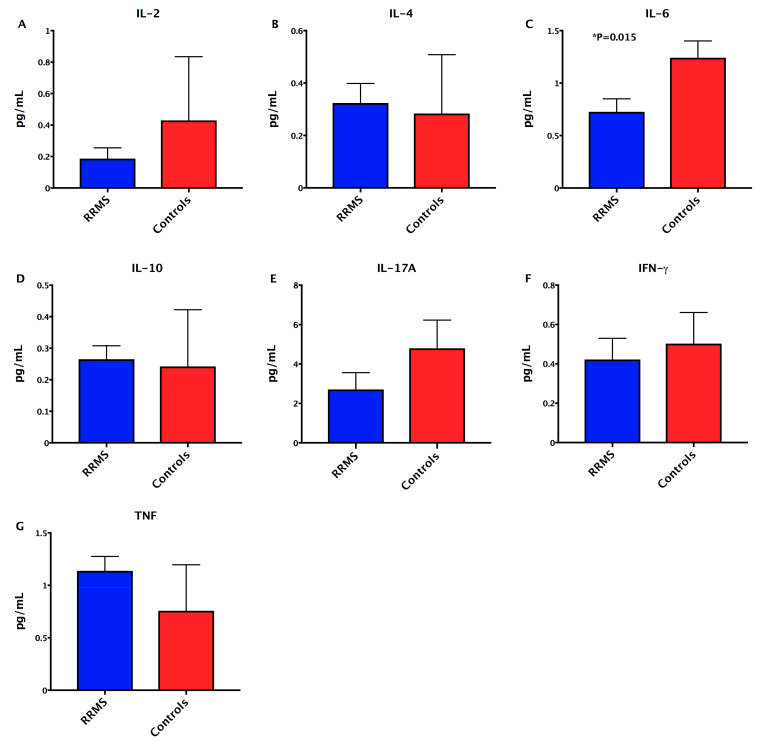
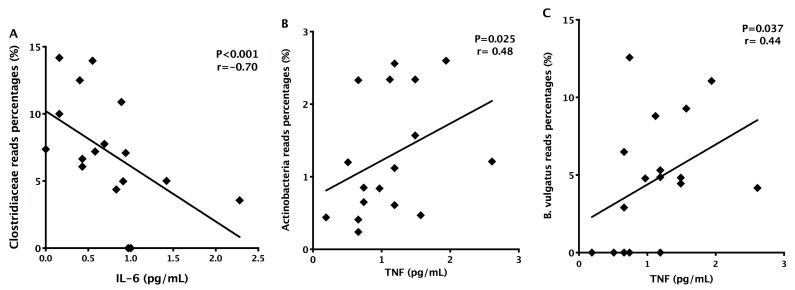
Dysbiosis, associated with barrier disruption and altered gut-brain communications, has been associated with multiple sclerosis (MS). In this study, we evaluated the gut microbiota in relapsing-remitting patients (RRMS) receiving disease-modifying therapies (DMTs) and correlated these data with diet, cytokines levels, and zonulin concentrations. Stool samples were used for 16S sequencing and real-time PCR. Serum was used for cytokine determination by flow cytometry, and zonulin quantification by ELISA. Pearson's chi-square, Mann-Whitney, and Spearman's correlation were used for statistical analyses. We detected differences in dietary habits, as well as in the gut microbiota in RRMS patients, with predominance of and and decreased . Interleukin-6 concentrations were decreased in treated patients, and we detected an increased intestinal permeability in RRMS patients when compared with controls. We conclude that diet plays an important role in the composition of the gut microbiota, and intestinal dysbiosis, detected in RRMS patients could be involved in increased intestinal permeability and affect the clinical response to DTMs. The future goal is to predict therapeutic responses based on individual microbiome analyses (personalized medicine) and propose dietary interventions and the use of probiotics or other microbiota modulators as adjuvant therapy to enhance the therapeutic efficacy of DMTs.
肠道菌群失调与屏障破坏和肠道-大脑通讯改变有关,与多发性硬化症(MS)有关。在这项研究中,我们评估了接受疾病修正治疗(DMT)的复发缓解型多发性硬化症(RRMS)患者的肠道微生物群,并将这些数据与饮食、细胞因子水平和紧密连接蛋白浓度相关联。使用粪便样本进行 16S 测序和实时 PCR。使用流式细胞术测定血清细胞因子,ELISA 法测定紧密连接蛋白浓度。采用 Pearson 卡方检验、Mann-Whitney 检验和 Spearman 相关分析进行统计学分析。我们检测到 RRMS 患者的饮食习惯和肠道微生物群存在差异,表现为 和 的优势增加, 和 的减少。治疗组患者的白细胞介素 6 浓度降低,与对照组相比,RRMS 患者的肠道通透性增加。我们得出结论,饮食在肠道微生物群的组成中起着重要作用,RRMS 患者肠道菌群失调可能与肠道通透性增加有关,并影响对 DTM 的临床反应。未来的目标是基于个体微生物组分析(个性化医学)预测治疗反应,并提出饮食干预和使用益生菌或其他微生物群调节剂作为辅助治疗,以增强 DMT 的治疗效果。