Department of Endocrinology and Metabolism, Kanazawa University Hospital, Kanazawa 920-8641, Japan.
Department of Hygiene, Graduate School of Medical Science, Kanazawa University, Kanazawa 920-8641, Japan.
Int J Mol Sci. 2021 Apr 27;22(9):4587. doi: 10.3390/ijms22094587.
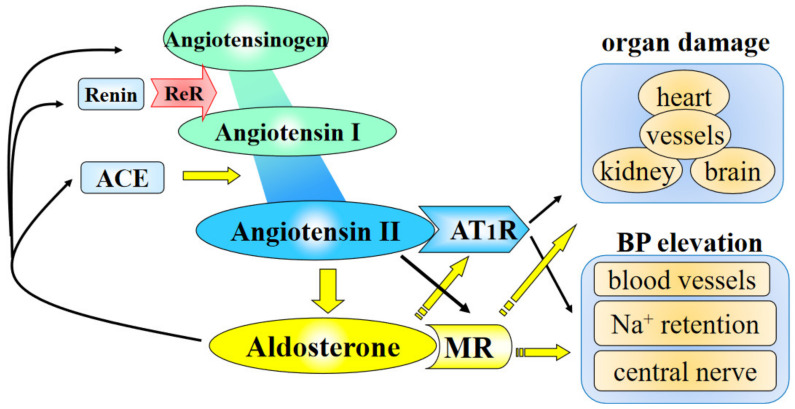
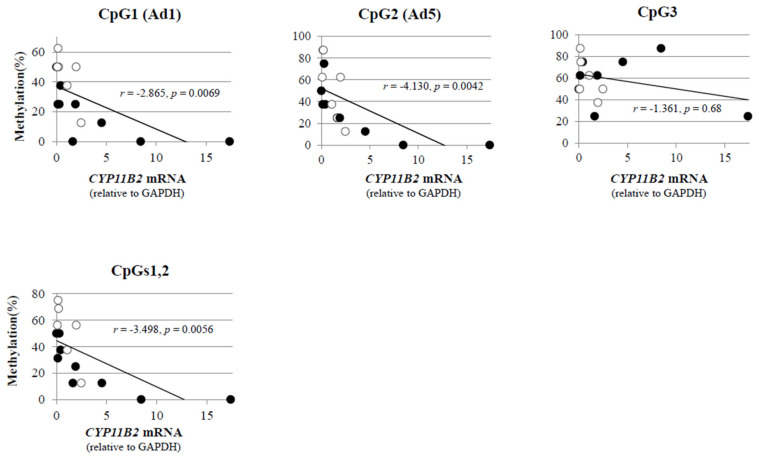
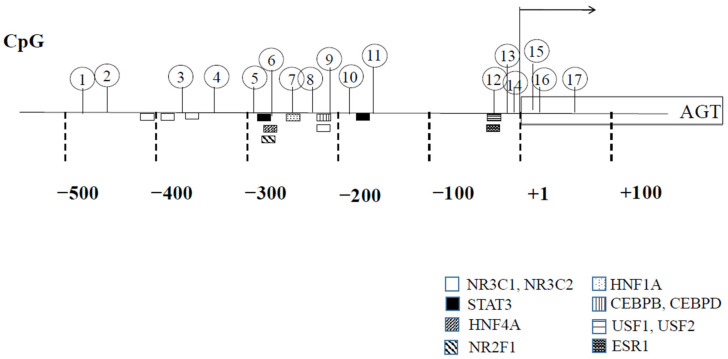
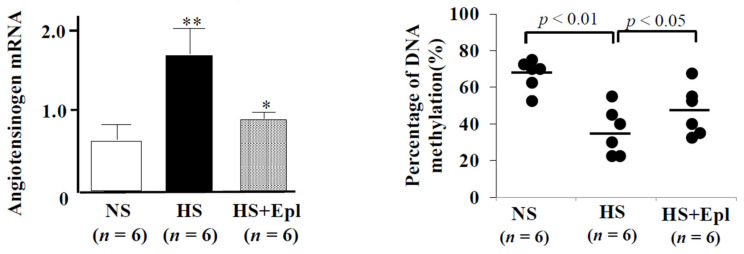
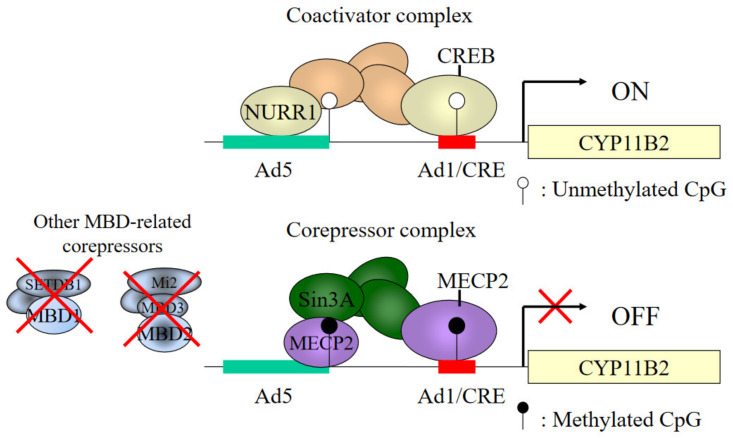
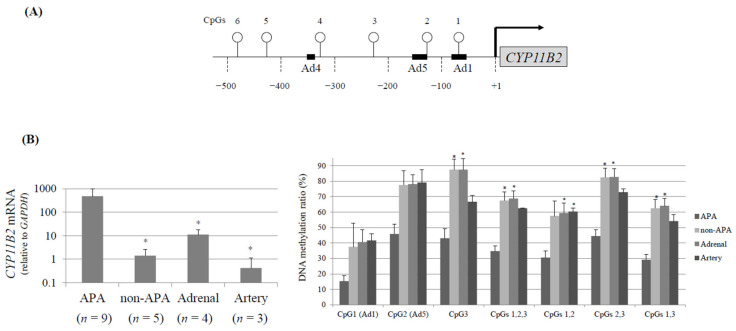
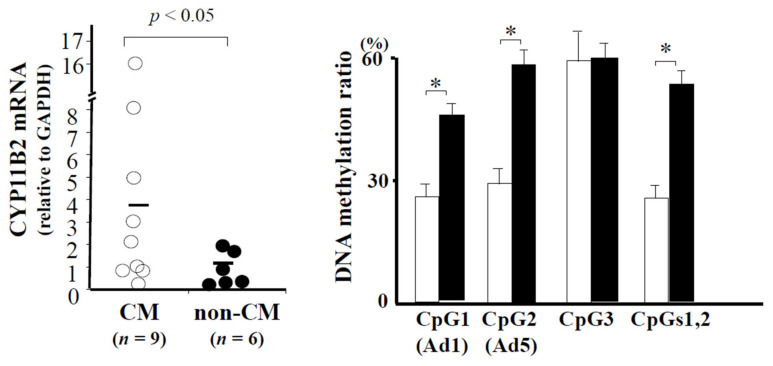
Angiotensinogen (AGT) and aldosterone play key roles in the regulation of blood pressure and are implicated in the pathogenesis of cardiovascular diseases. DNA methylation typically acts to repress gene transcription. The aldosterone synthase gene is regulated by angiotensin II and potassium. DNA methylation negatively regulates and expression and dynamically changes in response to continuous promoter stimulation of each gene. High salt intake and excess circulating aldosterone cause DNA demethylation around the CCAAT-enhancer-binding-protein (CEBP) sites of the promoter region, thereby converting the phenotype of expression from an inactive to an active state in visceral adipose tissue and heart. A close association exists between low DNA methylation at CEBP-binding sites and increased expression in salt-sensitive hypertensive rats. Salt-dependent hypertension may be partially affected by increased cardiac expression. CpG dinucleotides in the promoter are hypomethylated in aldosterone-producing adenomas. Methylation of recognition sequences of transcription factors, including CREB1, NGFIB (NR4A1), and NURR1 (NR4A2) diminish their DNA-binding activity. The methylated CpG-binding protein MECP2 interacts directly with the methylated promoter. Low salt intake and angiotensin II infusion lead to upregulation of expression and DNA hypomethylation in the adrenal gland. Treatment with the angiotensin II type 1 receptor antagonist decreases expression and leads to DNA hypermethylation. A close association between low DNA methylation and increased expression are seen in the hearts of patients with hypertrophic cardiomyopathy. These results indicate that epigenetic regulation of both and contribute to the pathogenesis of cardiovascular diseases.
血管紧张素原(AGT)和醛固酮在血压调节中发挥关键作用,并与心血管疾病的发病机制有关。DNA 甲基化通常起抑制基因转录的作用。醛固酮合酶基因受血管紧张素 II 和钾的调节。DNA 甲基化负调控和的表达,并对每个基因的启动子持续刺激做出动态变化。高盐摄入和循环醛固酮过多会导致启动子区域的 CCAAT 增强子结合蛋白(CEBP)位点周围的 DNA 去甲基化,从而使内脏脂肪组织和心脏中表达的表型从非活性状态转变为活性状态。在盐敏感型高血压大鼠中,CEBP 结合位点的低 DNA 甲基化与表达的增加密切相关。盐依赖性高血压可能部分受到心脏表达增加的影响。醛固酮瘤中启动子的 CpG 二核苷酸低甲基化。包括 CREB1、NGFIB(NR4A1)和 NURR1(NR4A2)在内的转录因子识别序列的甲基化降低了它们的 DNA 结合活性。甲基化的 CpG 结合蛋白 MECP2 与甲基化的启动子直接相互作用。低盐摄入和血管紧张素 II 输注导致肾上腺中表达的上调和 DNA 低甲基化。血管紧张素 II 型 1 受体拮抗剂的治疗降低了表达并导致 DNA 超甲基化。肥厚型心肌病患者心脏中观察到低 DNA 甲基化与表达增加之间的密切关联。这些结果表明,和的表观遗传调控都有助于心血管疾病的发病机制。