Center of Excellence in Genomics & Systems Biology (CEGSB), International Crops Research Institute for the Semi-Arid Tropics (ICRISAT), Hyderabad 502324, India.
Department of Genetics, Osmania University, Hyderabad 500007, India.
Int J Mol Sci. 2021 Apr 26;22(9):4491. doi: 10.3390/ijms22094491.
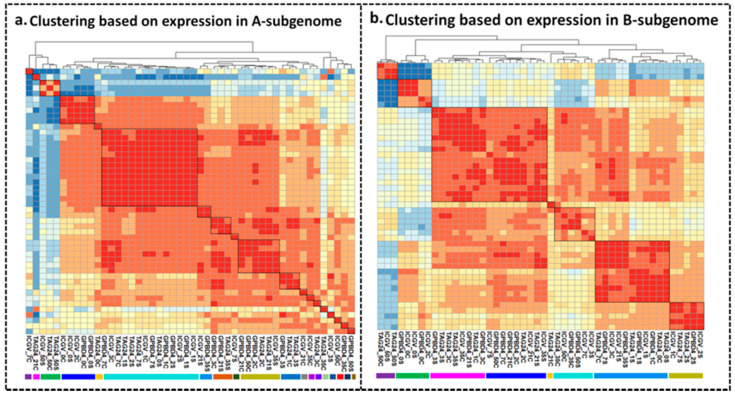
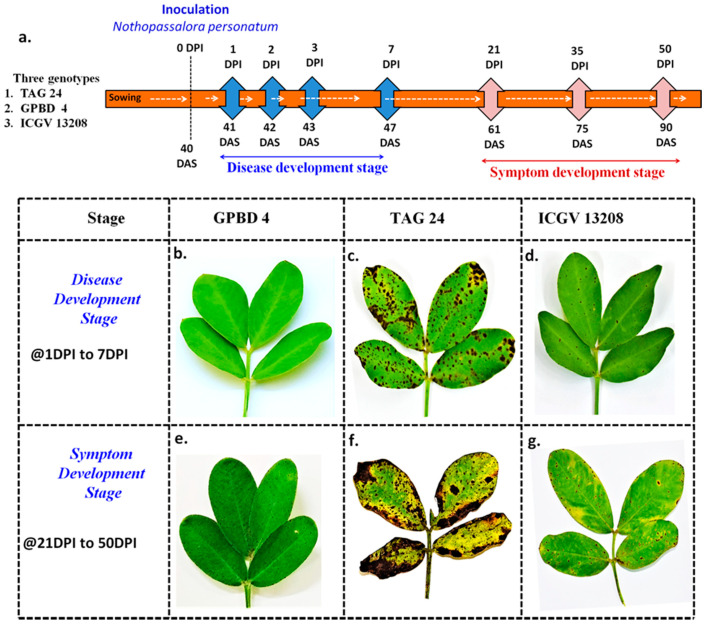
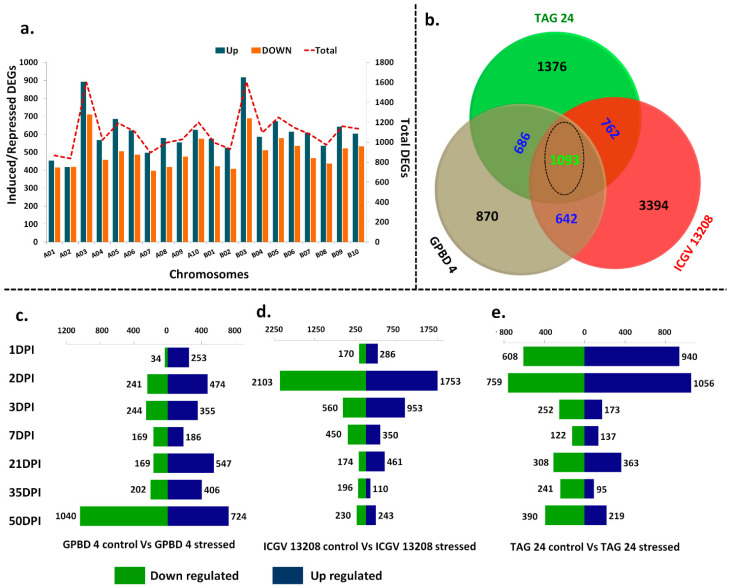
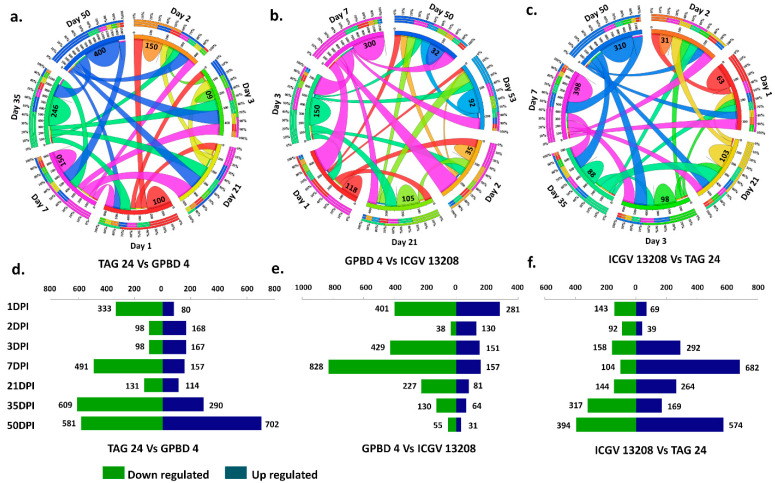
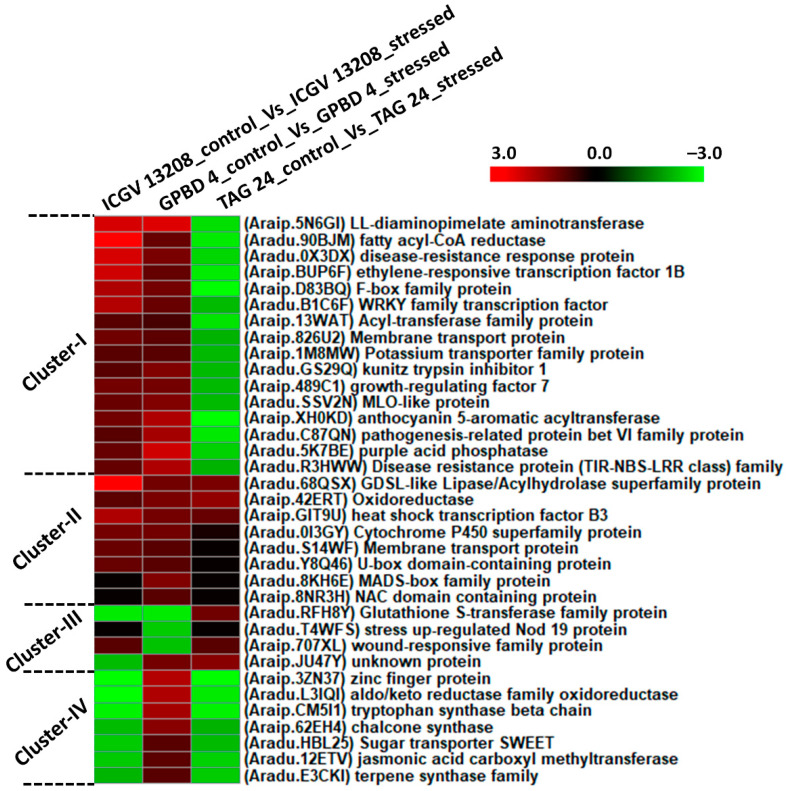
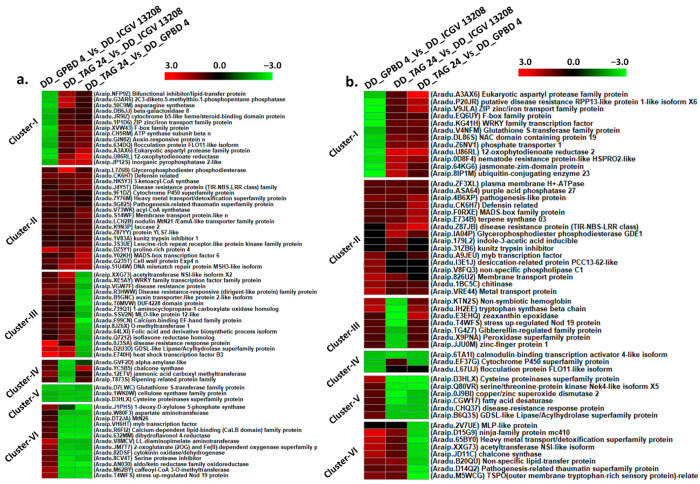
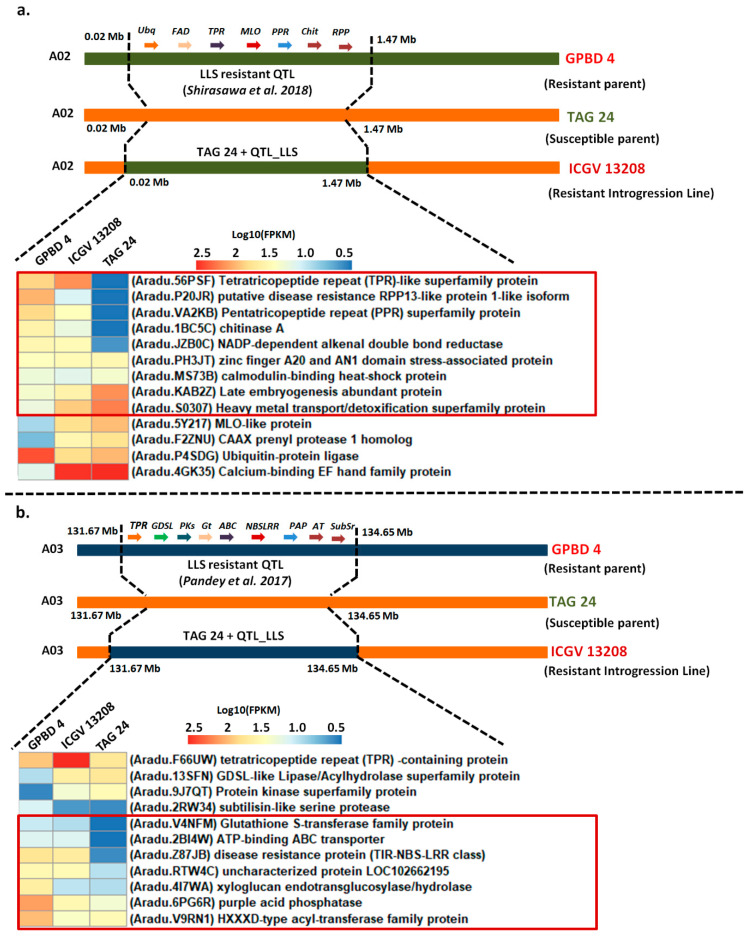
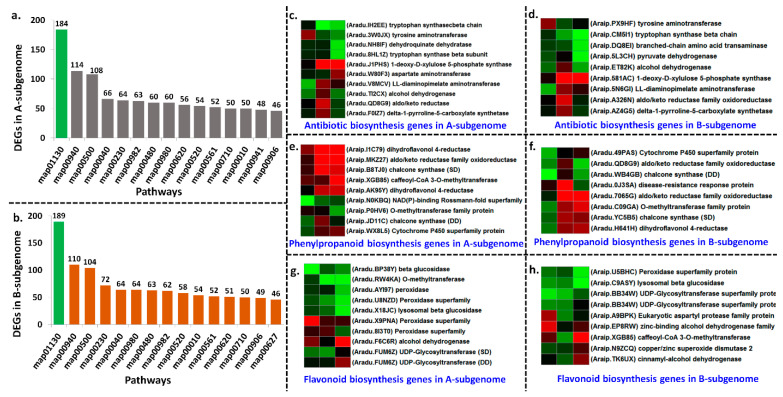
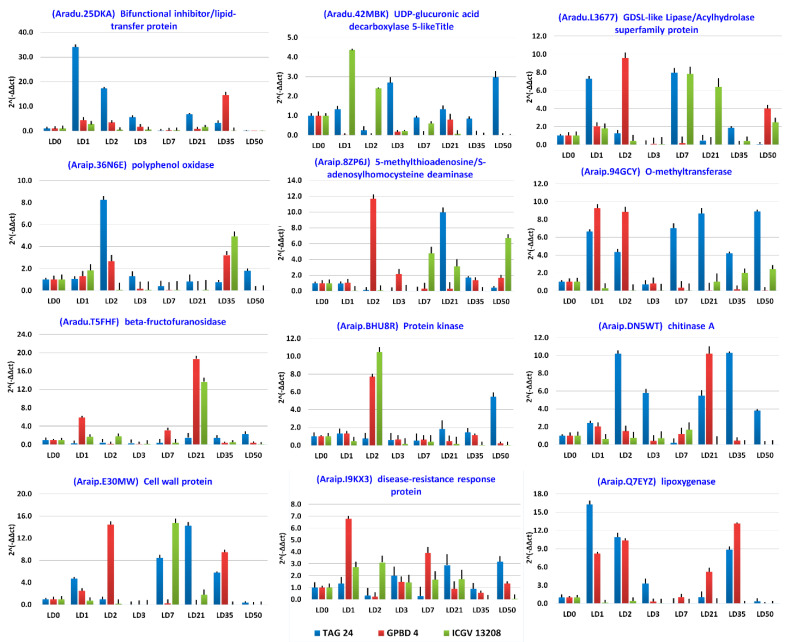
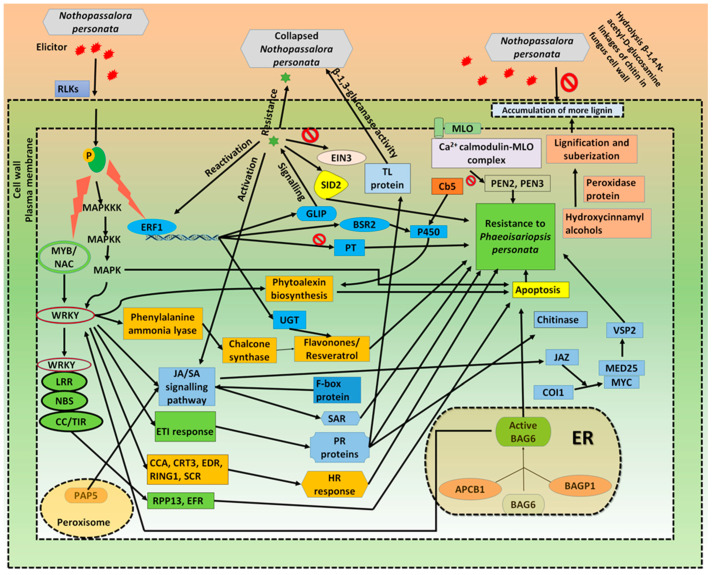
Late leaf spot (LLS) caused by fungus in groundnut is responsible for up to 50% yield loss. To dissect the complex nature of LLS resistance, comparative transcriptome analysis was performed using resistant (GPBD 4), susceptible (TAG 24) and a resistant introgression line (ICGV 13208) and identified a total of 12,164 and 9954 DEGs (differentially expressed genes) respectively in A- and B-subgenomes of tetraploid groundnut. There were 135 and 136 unique pathways triggered in A- and B-subgenomes, respectively, upon infection. Highly upregulated putative disease resistance genes, an RPP-13 like () and a NBS-LRR () were identified on chromosome A02 and A03, respectively, for LLS resistance. Mildew resistance Locus (MLOs)-like proteins, heavy metal transport proteins, and ubiquitin protein ligase showed trend of upregulation in susceptible genotypes, while tetratricopeptide repeats (TPR), pentatricopeptide repeat (PPR), chitinases, glutathione S-transferases, purple acid phosphatases showed upregulation in resistant genotypes. However, the highly expressed ethylene responsive factor (ERF) and ethylene responsive nuclear protein (ERF2), and early responsive dehydration gene (ERD) might be related to the possible causes of defoliation in susceptible genotypes. The identified disease resistance genes can be deployed in genomics-assisted breeding for development of LLS resistant cultivars to reduce the yield loss in groundnut.
花生晚斑病(LLS)由真菌引起,可导致高达 50%的产量损失。为了剖析 LLS 抗性的复杂性质,使用抗性(GPBD 4)、感病(TAG 24)和一个抗性渐渗系(ICGV 13208)进行了比较转录组分析,分别在四倍体花生的 A-和 B-亚基因组中鉴定出总共 12164 和 9954 个 DEGs(差异表达基因)。在 A-和 B-亚基因组中,分别有 135 和 136 个独特的途径在 感染后被触发。在 A02 和 A03 染色体上分别鉴定出高度上调的假定抗病基因,一个 RPP-13 样基因()和一个 NBS-LRR 基因(),用于 LLS 抗性。在感病基因型中,白粉病抗性基因(MLOs)样蛋白、重金属转运蛋白和泛素蛋白连接酶表现出上调的趋势,而在抗性基因型中,四肽重复(TPR)、五肽重复(PPR)、几丁质酶、谷胱甘肽 S-转移酶、酸性磷酸酶表现出上调的趋势。然而,高度表达的乙烯响应因子(ERF)和乙烯响应核蛋白(ERF2)和早期响应脱水基因(ERD)可能与感病基因型中可能的落叶原因有关。鉴定出的抗病基因可用于基因组辅助育种,以开发抗 LLS 的品种,从而减少花生的产量损失。