Department of Chemistry, University of Oxford, Oxford OX1 3QR, UK.
Department of Biochemistry, University of Oxford, Oxford OX1 3QU, UK.
Biomolecules. 2021 Apr 26;11(5):642. doi: 10.3390/biom11050642.
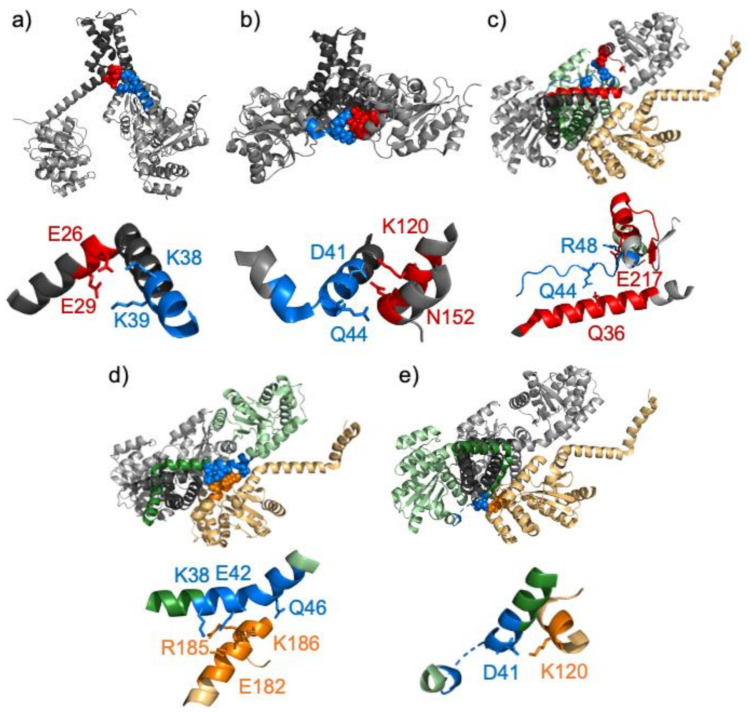
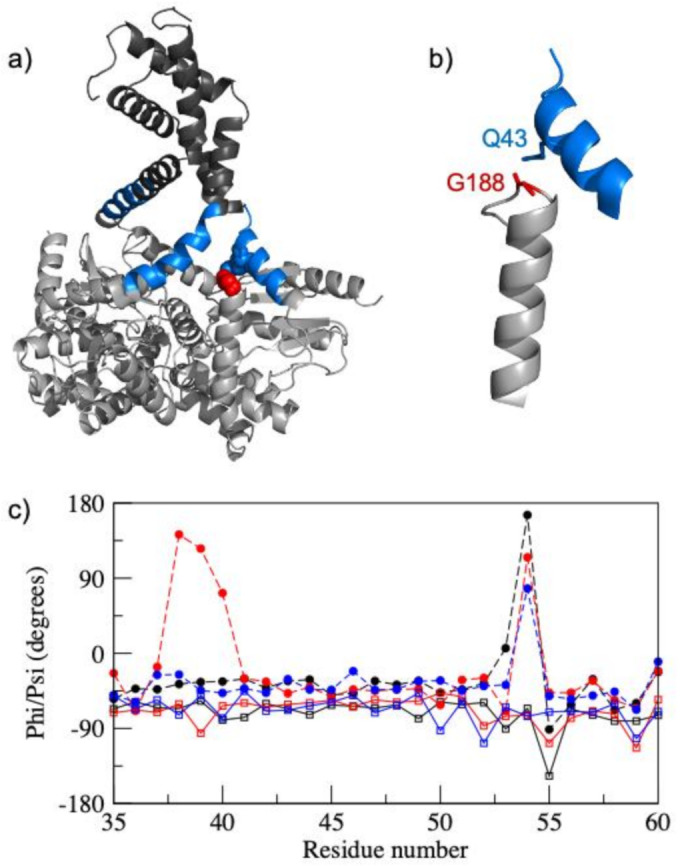
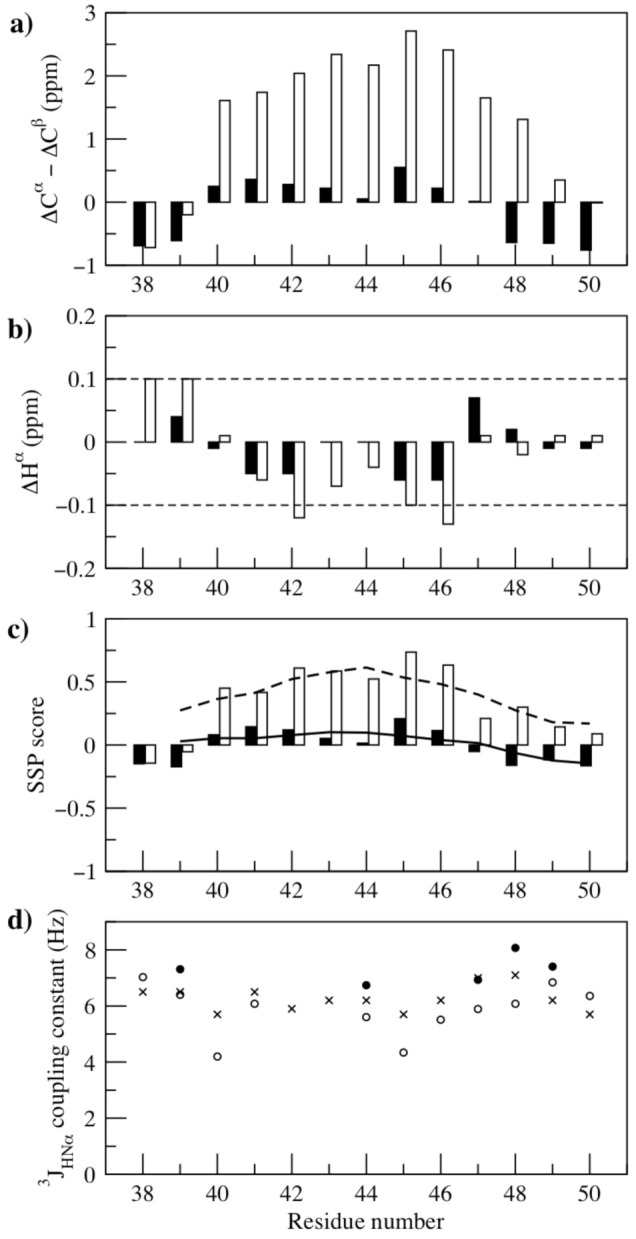
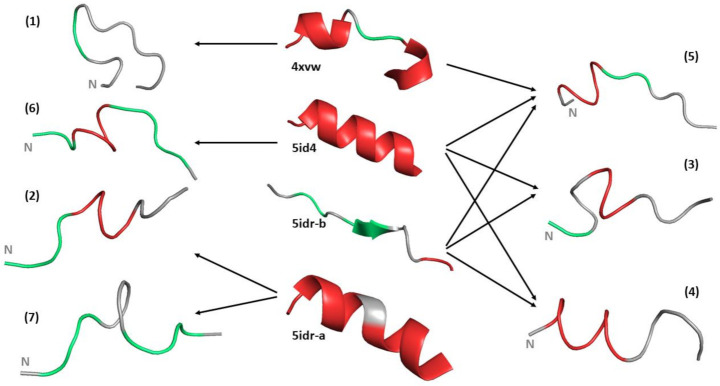
Multiple crystal structures of the homo-trimeric protein disulphide isomerase PmScsC reveal that the peptide which links the trimerization stalk and catalytic domain can adopt helical, β-strand and loop conformations. This region has been called a 'shape-shifter' peptide. Characterisation of this peptide using NMR experiments and MD simulations has shown that it is essentially disordered in solution. Analysis of the PmScsC crystal structures identifies the role of intermolecular contacts, within an assembly of protein molecules, in stabilising the different linker peptide conformations. These context-dependent conformational properties may be important functionally, allowing for the binding and disulphide shuffling of a variety of protein substrates to PmScsC. They also have a relevance for our understanding of protein aggregation and misfolding showing how intermolecular quaternary interactions can lead to β-sheet formation by a sequence that in other contexts adopts a helical structure. This 'shape-shifting' peptide region within PmScsC is reminiscent of one-to-many molecular recognition features (MoRFs) found in intrinsically disordered proteins which are able to adopt different conformations when they fold upon binding to their protein partners.
多晶结构的同三聚体蛋白二硫键异构酶 PmScsC 揭示肽连接三聚体茎和催化结构域可以采用螺旋、β-链和环构象。这个区域被称为“形状转换”肽。使用 NMR 实验和 MD 模拟对该肽的特性进行了表征,结果表明它在溶液中基本上是无定形的。对 PmScsC 晶体结构的分析确定了分子间接触在蛋白质分子组装中的作用,这些接触稳定了不同的连接肽构象。这些依赖于上下文的构象特性可能在功能上很重要,允许各种蛋白质底物与 PmScsC 结合和二硫键重排。它们也与我们对蛋白质聚集和错误折叠的理解有关,表明分子间四级相互作用如何导致序列形成β-折叠结构,而在其他情况下,该序列采用螺旋结构。PmScsC 中的这种“形状转换”肽区域让人联想到在固有无序蛋白中发现的一种到多种分子识别特征 (MoRFs),这些特征在与蛋白质伴侣结合时折叠时能够采用不同的构象。