Department of Translational Psychiatry, Max Planck Institute of Psychiatry, München, Germany.
International Max Planck Research School for Translational Psychiatry, München, Germany.
Clin Epigenetics. 2021 Apr 29;13(1):97. doi: 10.1186/s13148-021-01080-y.
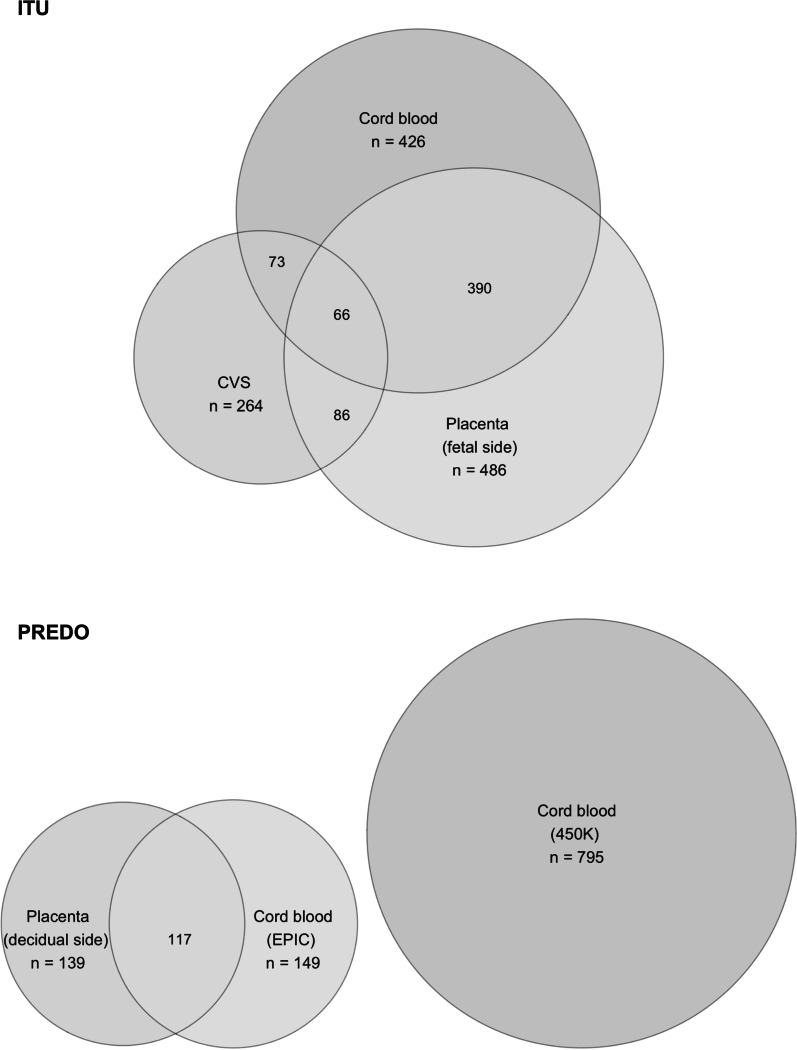
Epigenetic clocks have been used to indicate differences in biological states between individuals of same chronological age. However, so far, only few studies have examined epigenetic aging in newborns-especially regarding different gestational or perinatal tissues. In this study, we investigated which birth- and pregnancy-related variables are most important in predicting gestational epigenetic age acceleration or deceleration (i.e., the deviation between gestational epigenetic age estimated from the DNA methylome and chronological gestational age) in chorionic villus, placenta and cord blood tissues from two independent study cohorts (ITU, n = 639 and PREDO, n = 966). We further characterized the correspondence of epigenetic age deviations between these tissues.
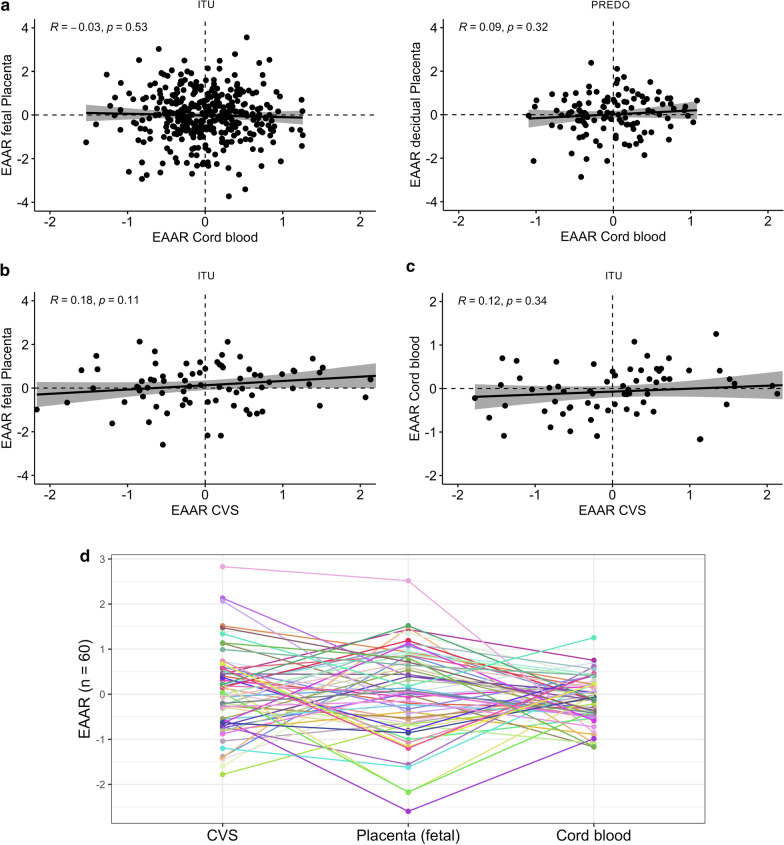
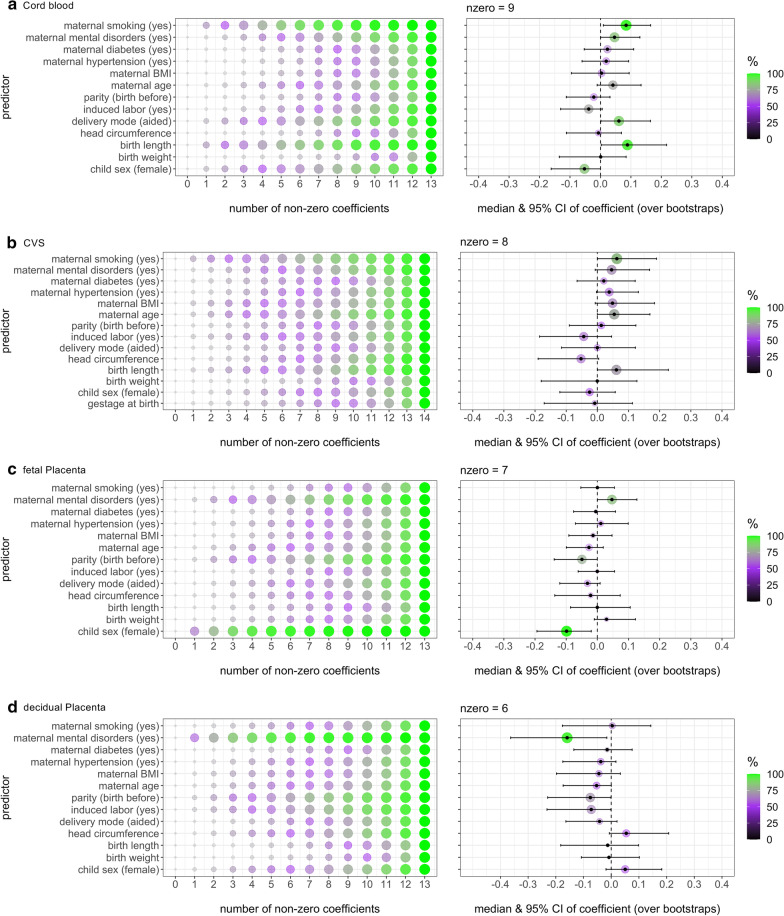
Among the most predictive factors of epigenetic age deviations in single tissues were child sex, birth length, maternal smoking during pregnancy, maternal mental disorders until childbirth, delivery mode and parity. However, the specific factors related to epigenetic age deviation and the direction of association differed across tissues. In individuals with samples available from more than one tissue, relative epigenetic age deviations were not correlated across tissues.
Gestational epigenetic age acceleration or deceleration was not related to more favorable or unfavorable factors in one direction in the investigated tissues, and the relative epigenetic age differed between tissues of the same person. This indicates that epigenetic age deviations associate with distinct, tissue specific, factors during the gestational and perinatal period. Our findings suggest that the epigenetic age of the newborn should be seen as a characteristic of a specific tissue, and less as a general characteristic of the child itself.
表观遗传时钟被用于指示同一年龄段个体之间的生物学状态差异。然而,迄今为止,只有少数研究检查了新生儿的表观遗传衰老——特别是关于不同的妊娠或围产期组织。在这项研究中,我们调查了哪些出生和妊娠相关变量对预测绒毛膜绒毛、胎盘和脐带血组织的妊娠表观遗传年龄加速或减速(即从 DNA 甲基组估计的妊娠表观遗传年龄与实际妊娠年龄之间的偏差)最重要,这是两个独立的研究队列(ITU,n=639 和 PREDO,n=966)。我们进一步描述了这些组织之间的表观遗传年龄偏差的对应关系。
在单个组织中,对表观遗传年龄偏差最具预测性的因素包括儿童性别、出生长度、母亲在怀孕期间吸烟、母亲在分娩前的精神障碍、分娩方式和产次。然而,与表观遗传年龄偏差相关的特定因素以及关联的方向在不同组织中有所不同。在有多个组织样本的个体中,相对表观遗传年龄偏差在组织之间没有相关性。
妊娠表观遗传年龄的加速或减速与所研究组织中一个方向的更有利或不利因素无关,并且同一人不同组织之间的相对表观遗传年龄存在差异。这表明,在妊娠和围产期,表观遗传年龄的偏差与特定的、组织特异性的因素有关。我们的研究结果表明,新生儿的表观遗传年龄应该被视为特定组织的特征,而不是儿童本身的一般特征。