Department of Veterinary Microbiology and Pathology, Washington State University, P.O. Box 647040, Pullman, WA, 99164, USA.
Animal Disease Research Unit, Agricultural Research Service, US Department of Agriculture, P.O. Box 646630, Pullman, WA, 99164, USA.
Sci Rep. 2021 Apr 29;11(1):9301. doi: 10.1038/s41598-021-88902-4.
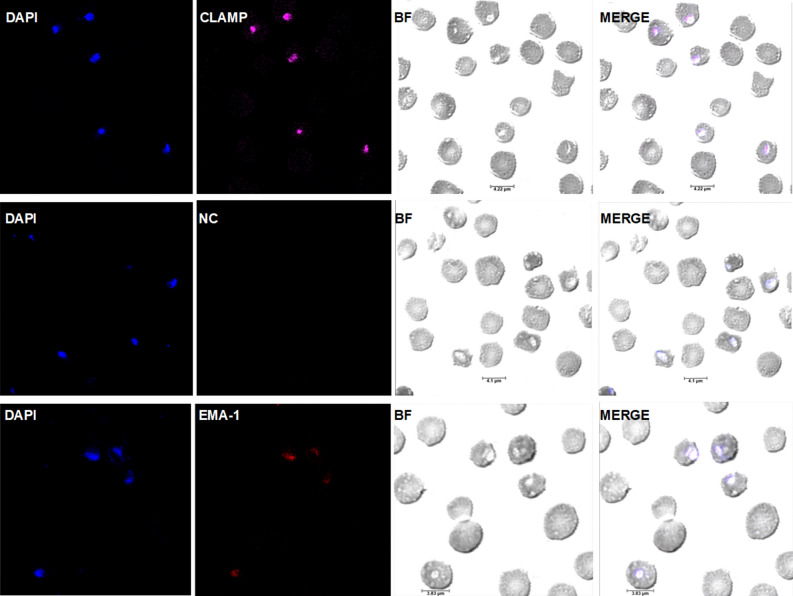
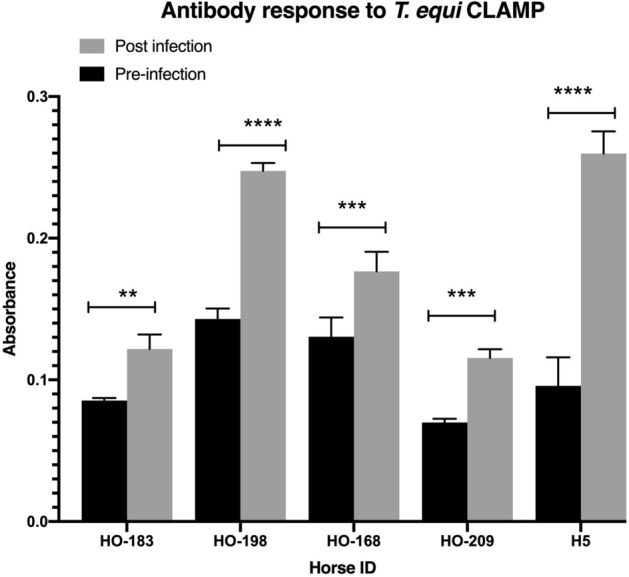
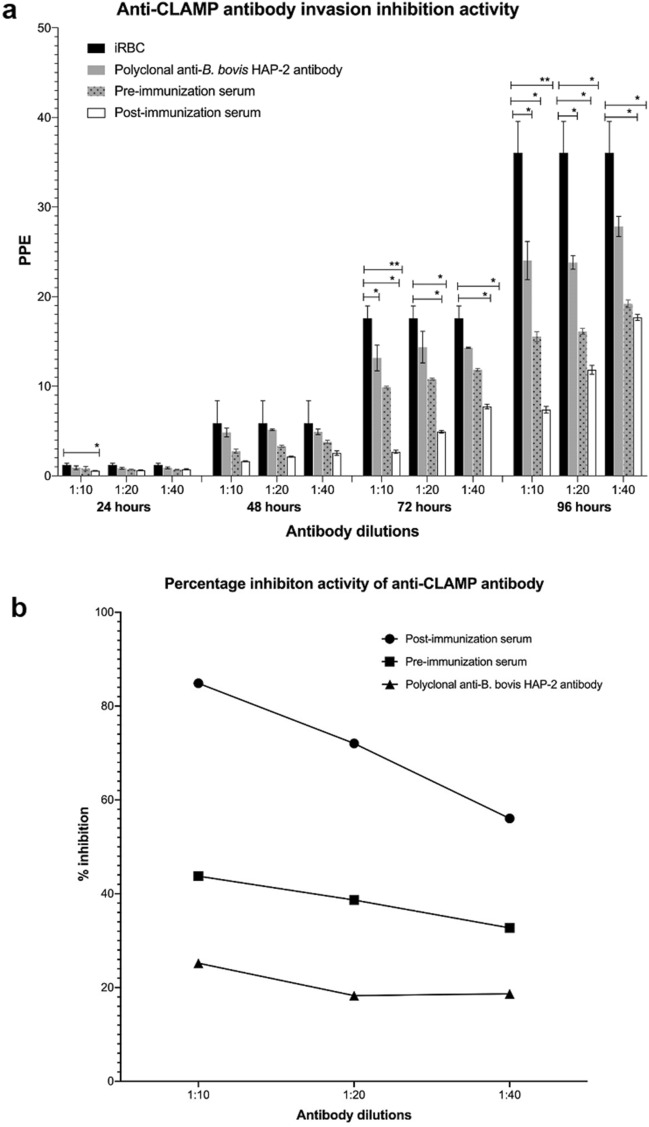
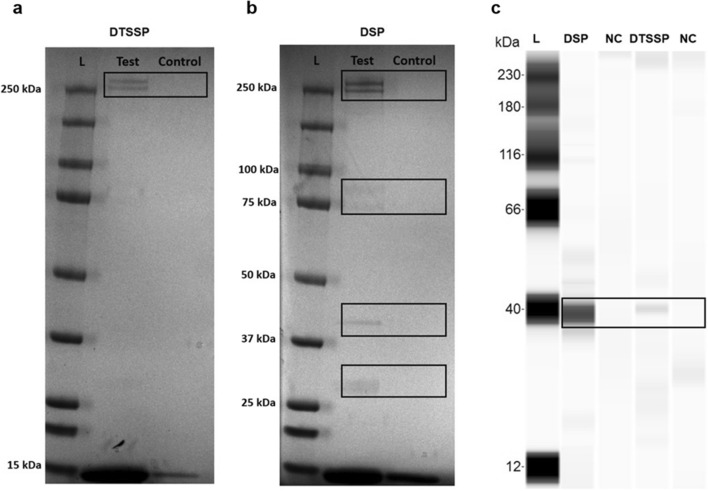
Theileria equi is a widely distributed apicomplexan parasite that causes severe hemolytic anemia in equid species. There is currently no effective vaccine for control of the parasite and understanding the mechanism that T. equi utilizes to invade host cells may be crucial for vaccine development. Unlike most apicomplexan species studied to date, the role of micronemes in T. equi invasion of host cells is unknown. We therefore assessed the role of the T. equi claudin-like apicomplexan microneme protein (CLAMP) in the invasion of equine erythrocytes as a first step towards understanding the role of this organelle in the parasite. Our findings show that CLAMP is expressed in the merozoite and intra-erythrocytic developmental stages of T. equi and in vitro neutralization experiments suggest that the protein is involved in erythrocyte invasion. Proteomic analyses indicate that CLAMP interacts with the equine erythrocyte α-and β- spectrin chains in the initial stages of T. equi invasion and maintains these interactions while also associating with the anion-exchange protein, tropomyosin 3, band 4.1 and cytoplasmic actin 1 after invasion. Additionally, serological analyses show that T. equi-infected horses mount robust antibody responses against CLAMP indicating that the protein is immunogenic and therefore represents a potential vaccine candidate.
马媾疫锥虫是一种广泛分布的顶复门寄生虫,可导致马属动物严重溶血性贫血。目前尚无有效的寄生虫控制疫苗,了解马媾疫锥虫利用何种机制入侵宿主细胞可能对疫苗的开发至关重要。与迄今为止研究的大多数顶复门物种不同,微线体在马媾疫锥虫入侵宿主细胞中的作用尚不清楚。因此,我们评估了马媾疫锥虫克劳丁样顶复门微线体蛋白(CLAMP)在马红细胞入侵中的作用,这是了解该细胞器在寄生虫中的作用的第一步。我们的研究结果表明,CLAMP 在马媾疫锥虫的裂殖子和红细胞内发育阶段表达,体外中和实验表明该蛋白参与了红细胞入侵。蛋白质组学分析表明,CLAMP 在马媾疫锥虫入侵的初始阶段与马红细胞的α-和β-血影蛋白链相互作用,并在入侵后与阴离子交换蛋白、原肌球蛋白 3、带 4.1 和细胞质肌动蛋白 1 保持相互作用。此外,血清学分析表明,感染马媾疫锥虫的马对 CLAMP 产生强烈的抗体反应,表明该蛋白具有免疫原性,因此代表了一种潜在的疫苗候选物。