Ohnishi Yuichiro, Yamamoto Masamichi, Sugiura Yuki, Setoyama Daiki, Kishima Haruhiko
Department of Neurosurgery, Osaka University Medical School, Osaka, Japan.
Department of Research Promotion and Management, National Cerebral and Cardiovascular Center, Osaka, Japan.
Brain Commun. 2021 Mar 28;3(2):fcab058. doi: 10.1093/braincomms/fcab058. eCollection 2021.
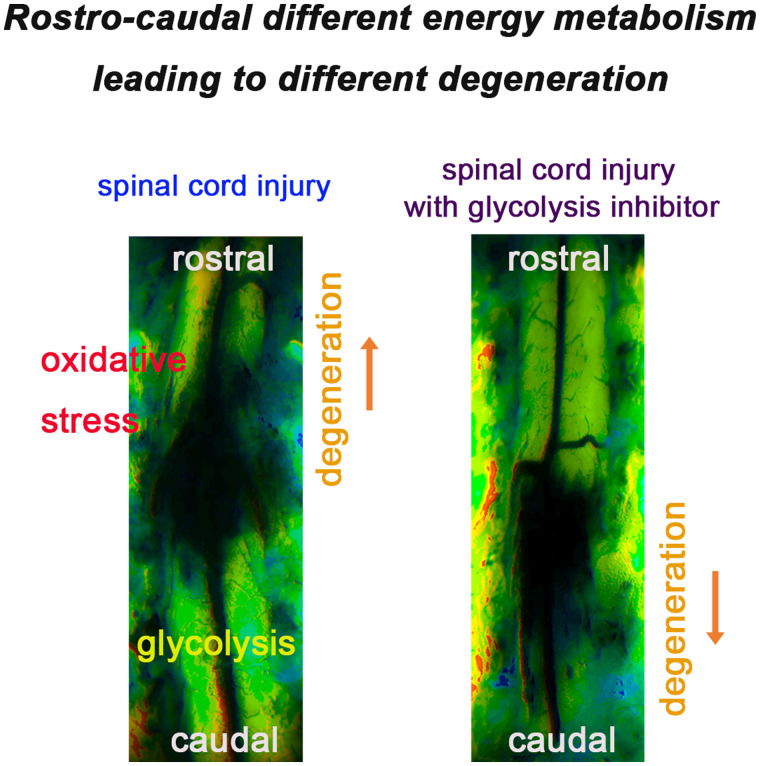
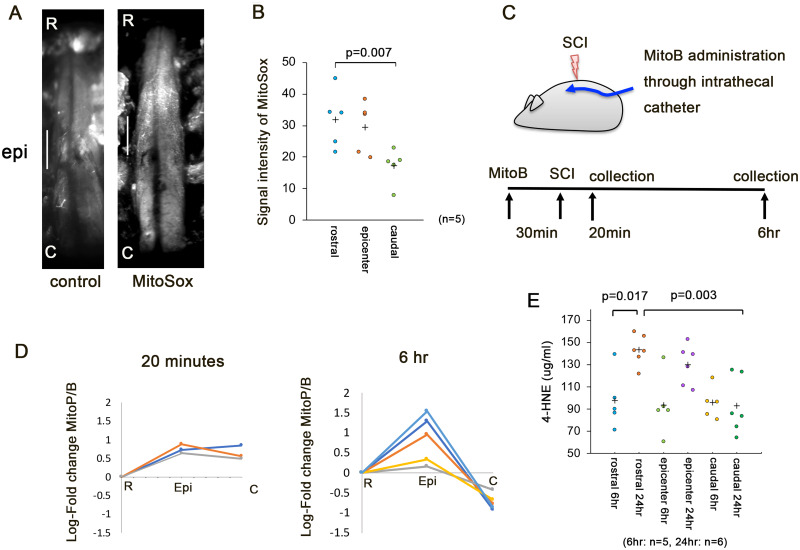
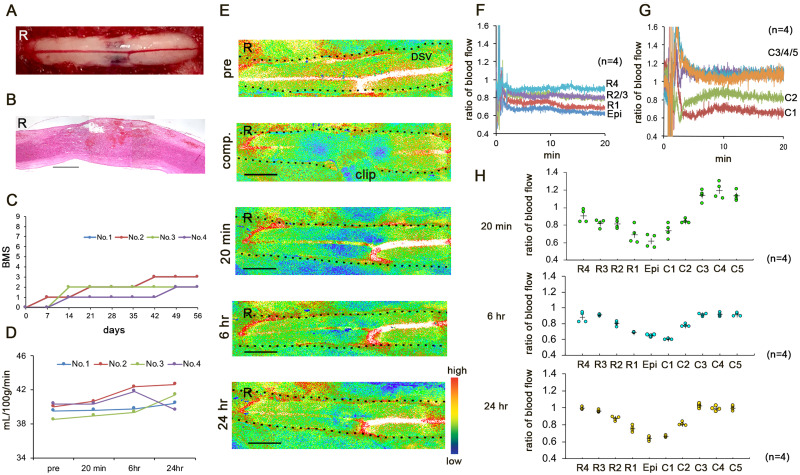
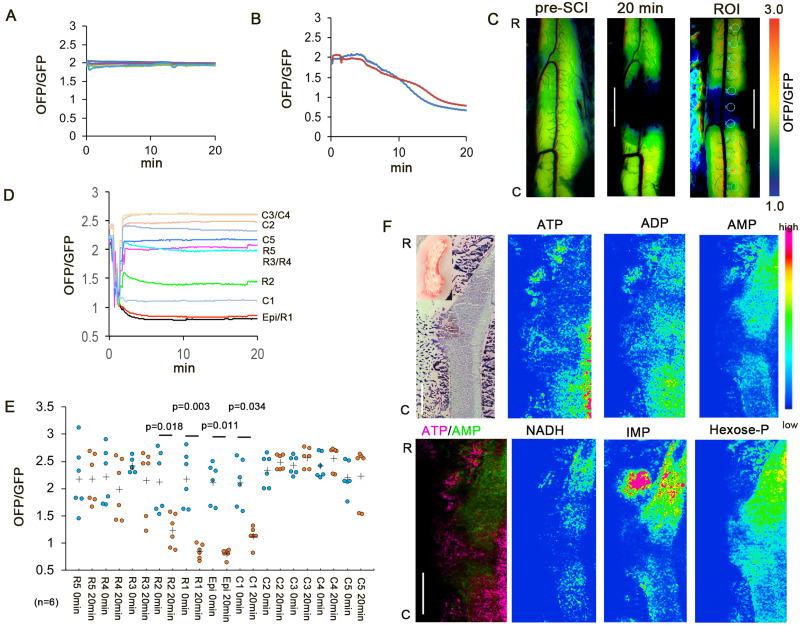
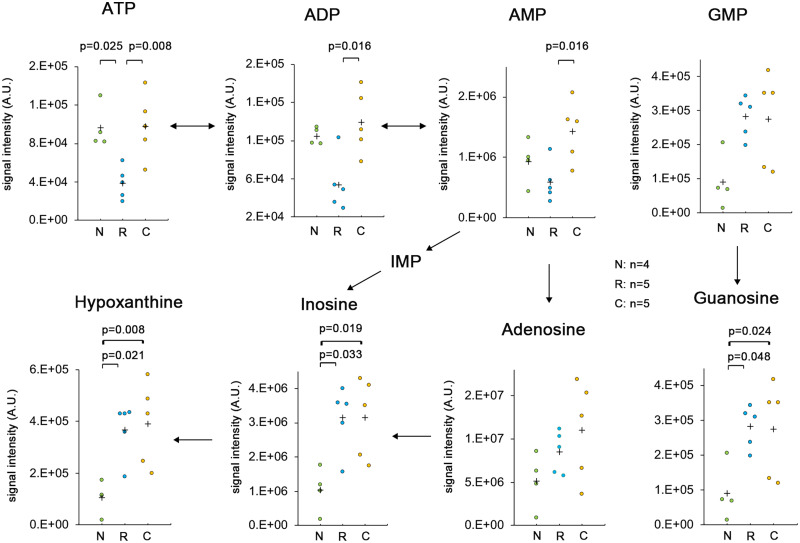
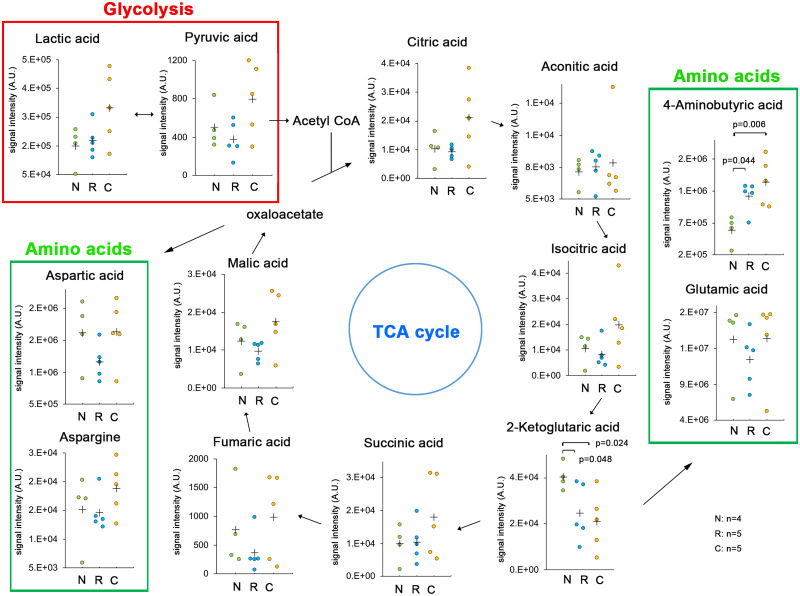
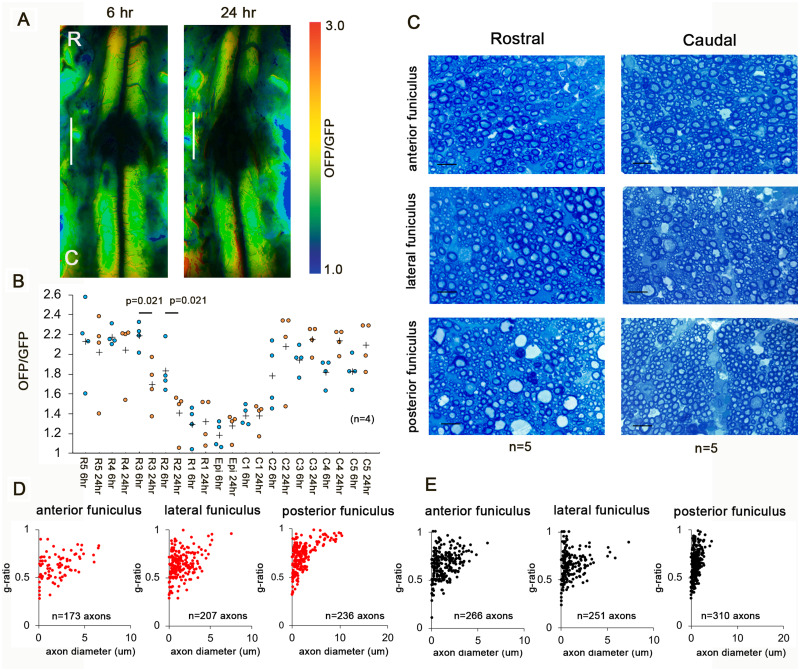
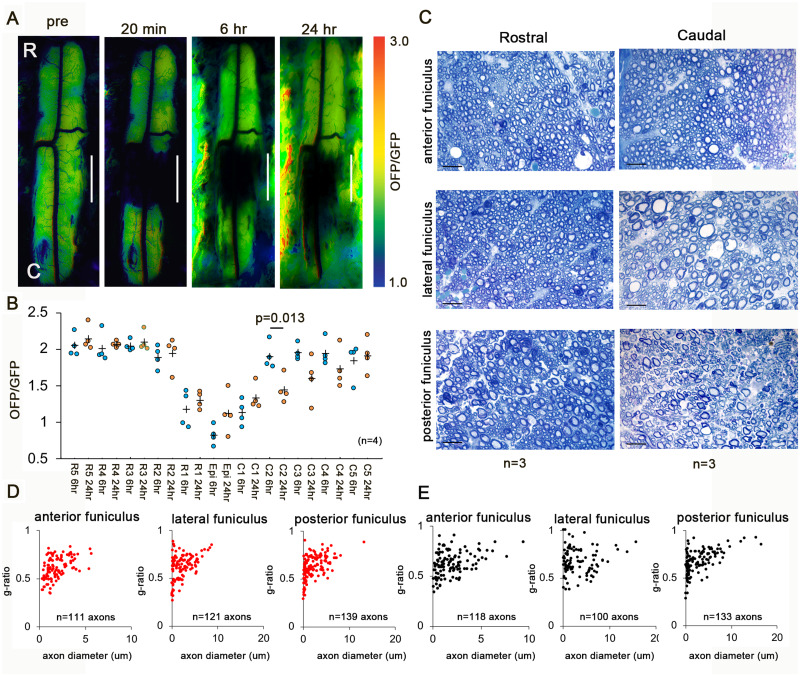
Spinal cord injury gradually spreads away from the epicentre of injury. The rate of degeneration on the rostral side of the injury differs from that on the caudal side. Rostral degeneration is an immediate process, while caudal degeneration is delayed. In this study, we demonstrated that the rostro-caudal differences in energy metabolism led to differences in the spread of degeneration in early thoracic cord injury using imaging. The blood flow at the rostral side of the injury showed ischaemia-reperfusion, while the caudal side presented stable perfusion. The rostral side had an ATP shortage 20 min after spinal cord injury, while the ATP levels were maintained on the caudal side. Breakdown products of purine nucleotides were accumulated at both sides of injury 18 h after spinal cord injury, but the principal metabolites in the tricarboxylic acid cycle and glycolytic pathway were elevated on the caudal side. Although the low-ATP regions expanded at the rostral side of injury until 24 h after spinal cord injury, the caudal-side ATP levels were preserved. The low-ATP regions on the rostral side showed mitochondrial reactive oxygen species production. Administration of 2-deoxy-d-glucose as a glycolysis inhibitor decreased the caudal ATP levels and expanded the low-ATP regions to the caudal side until 24 h after spinal cord injury. These results suggest that deficits in the glycolytic pathway accelerate the caudal degeneration, while immediate rostral degeneration is exacerbated by oxidative stress in early thoracic cord injury.
脊髓损伤会逐渐从损伤中心向周围扩散。损伤头侧的退变速率与尾侧不同。头侧退变是一个即时过程,而尾侧退变则延迟发生。在本研究中,我们通过影像学证明,在早期胸段脊髓损伤中,能量代谢的头-尾差异导致了退变扩散的差异。损伤头侧的血流显示出缺血-再灌注,而尾侧则呈现稳定灌注。脊髓损伤后20分钟,头侧出现ATP短缺,而尾侧的ATP水平得以维持。脊髓损伤18小时后,嘌呤核苷酸的分解产物在损伤两侧均有积累,但三羧酸循环和糖酵解途径中的主要代谢产物在尾侧升高。尽管低ATP区域在脊髓损伤后24小时内一直向损伤头侧扩展,但尾侧的ATP水平得以保留。头侧的低ATP区域显示出线粒体活性氧的产生。给予2-脱氧-D-葡萄糖作为糖酵解抑制剂会降低尾侧的ATP水平,并使低ATP区域向尾侧扩展直至脊髓损伤后24小时。这些结果表明,糖酵解途径的缺陷加速了尾侧退变,而在早期胸段脊髓损伤中,头侧的即时退变因氧化应激而加剧。