Experimental Cancer Genetics, Wellcome Sanger Institute, Hinxton, UK.
The Leucegene Project at Institute for Research in Immunology and Cancer, Université de Montréal, 2950 Chemin de Polytechnique Pavillon, Marcelle-Coutu, Montréal, QC, Canada.
Nat Commun. 2021 Apr 30;12(1):2482. doi: 10.1038/s41467-021-22750-8.
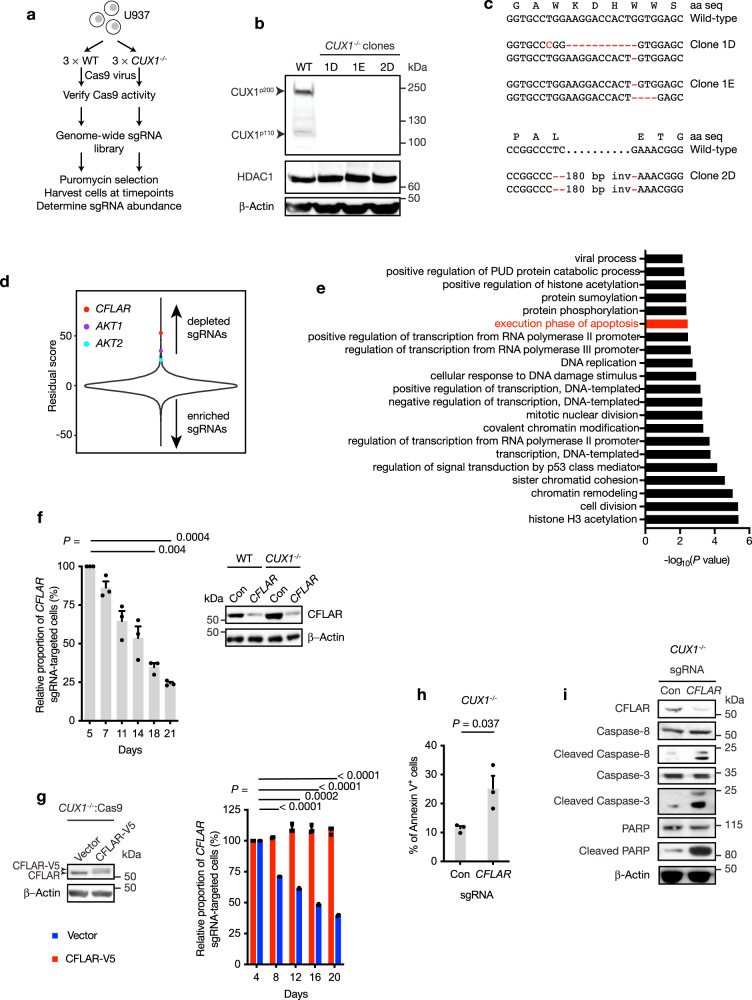
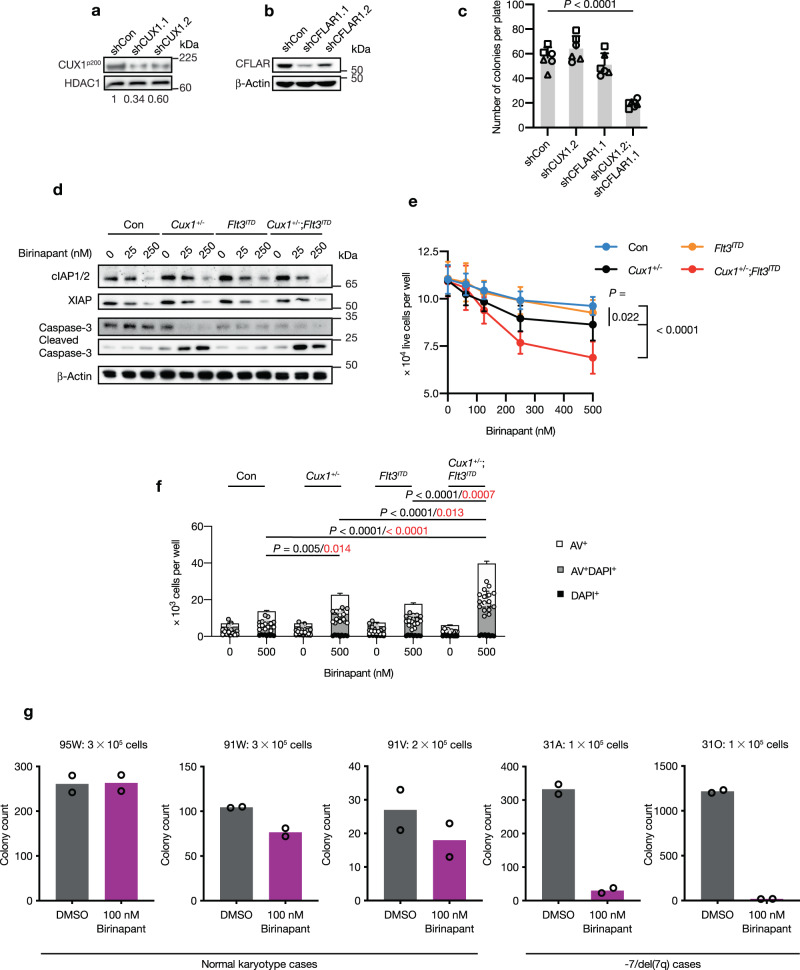
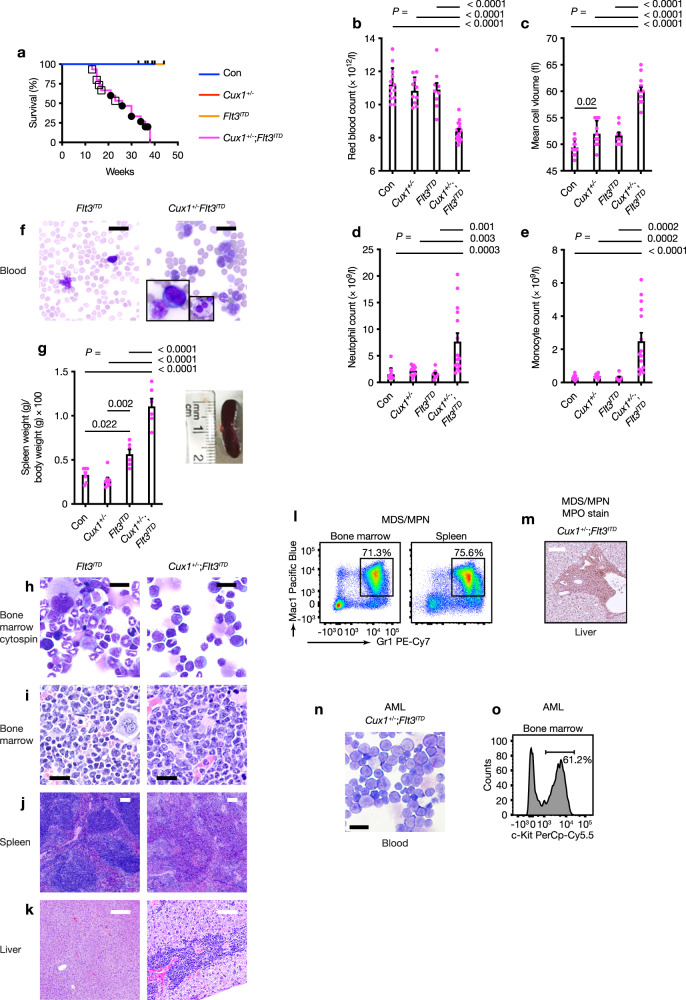
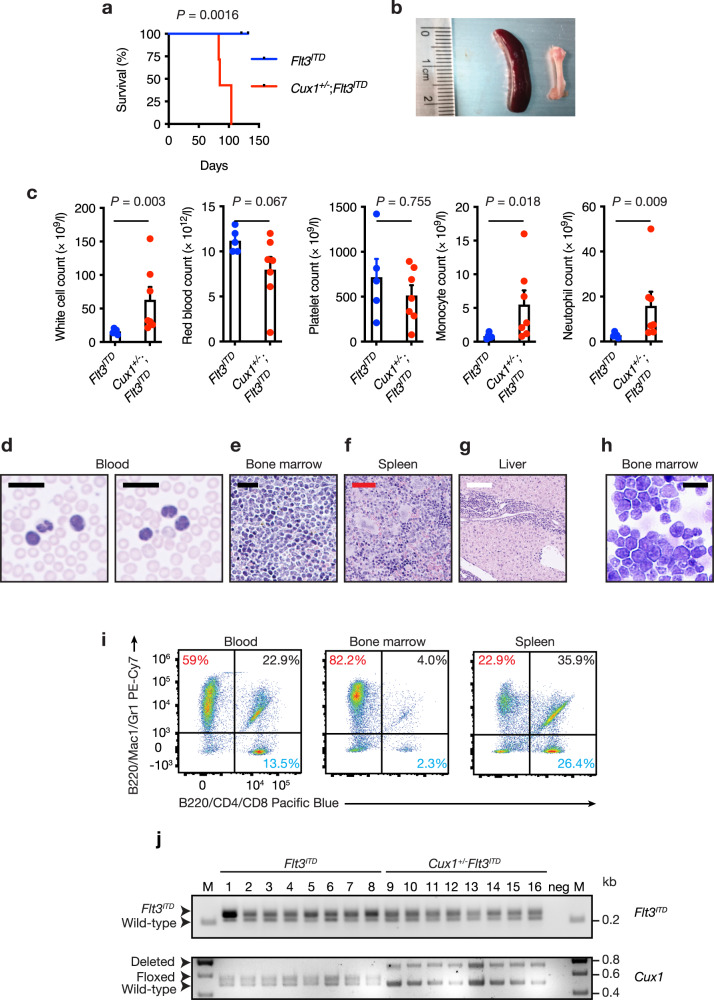
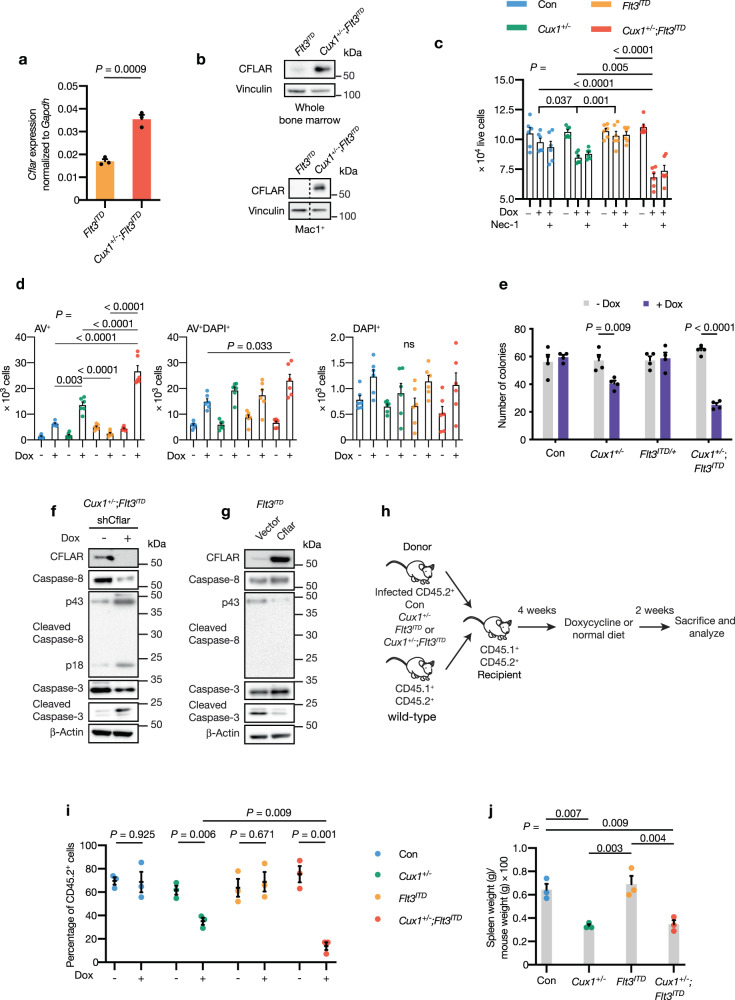
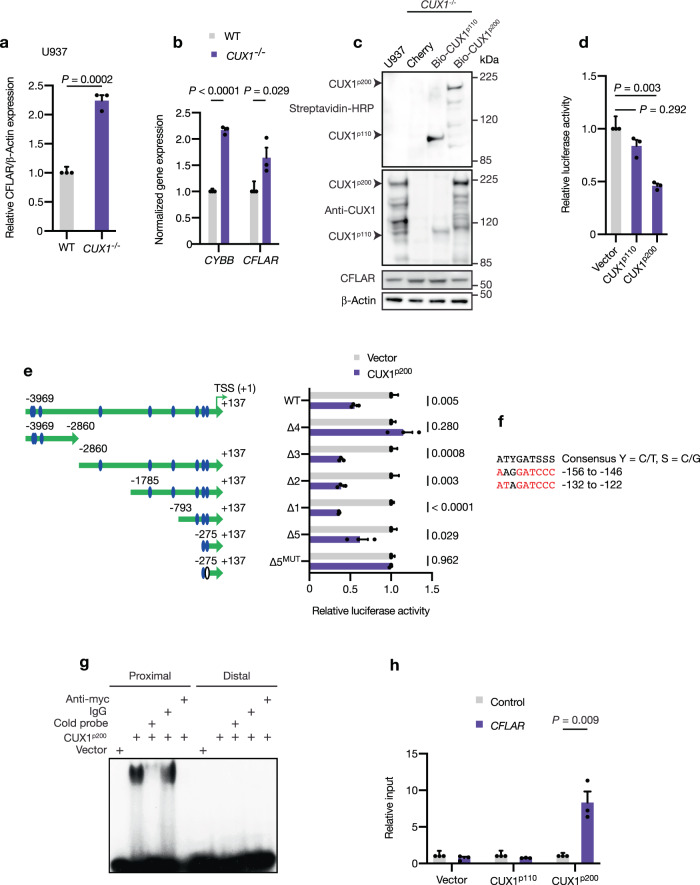
While oncogenes promote tumorigenesis, they also induce deleterious cellular stresses, such as apoptosis, that cancer cells must combat by coopting adaptive responses. Whether tumor suppressor gene haploinsufficiency leads to such phenomena and their mechanistic basis is unclear. Here, we demonstrate that elevated levels of the anti-apoptotic factor, CASP8 and FADD-like apoptosis regulator (CFLAR), promotes apoptosis evasion in acute myeloid leukemia (AML) cells haploinsufficient for the cut-like homeobox 1 (CUX1) transcription factor, whose loss is associated with dismal clinical prognosis. Genome-wide CRISPR/Cas9 screening identifies CFLAR as a selective, acquired vulnerability in CUX1-deficient AML, which can be mimicked therapeutically using inhibitor of apoptosis (IAP) antagonists in murine and human AML cells. Mechanistically, CUX1 deficiency directly alleviates CUX1 repression of the CFLAR promoter to drive CFLAR expression and leukemia survival. These data establish how haploinsufficiency of a tumor suppressor is sufficient to induce advantageous anti-apoptosis cell survival pathways and concurrently nominate CFLAR as potential therapeutic target in these poor-prognosis leukemias.
虽然癌基因促进肿瘤发生,但它们也会诱导有害的细胞应激,如细胞凋亡,癌症细胞必须通过利用适应性反应来对抗。肿瘤抑制基因单倍不足是否会导致这种现象及其机制基础尚不清楚。在这里,我们证明了抗凋亡因子 CASP8 和 FADD 样凋亡调节剂(CFLAR)水平的升高促进了急性髓系白血病(AML)细胞中细胞凋亡的逃逸,这些细胞对剪接同源盒 1(CUX1)转录因子单倍不足,其缺失与不良的临床预后相关。全基因组 CRISPR/Cas9 筛选鉴定出 CFLAR 是 CUX1 缺陷型 AML 中的一个选择性、获得性脆弱性,在鼠和人 AML 细胞中,使用凋亡抑制剂(IAP)拮抗剂进行治疗可以模拟这种脆弱性。从机制上讲,CUX1 缺陷直接缓解了 CUX1 对 CFLAR 启动子的抑制作用,从而驱动 CFLAR 表达和白血病存活。这些数据确立了肿瘤抑制基因的单倍不足如何足以诱导有利的抗细胞凋亡细胞存活途径,并同时将 CFLAR 作为这些预后不良白血病的潜在治疗靶点。