Division of Medical Oncology, University of Washington, 825 Eastlake Ave E, Seattle, WA, 98109, USA.
Clinical Research Division, Fred Hutchinson Cancer Research Center, Seattle, USA.
Sci Rep. 2021 Apr 30;11(1):9362. doi: 10.1038/s41598-021-88703-9.
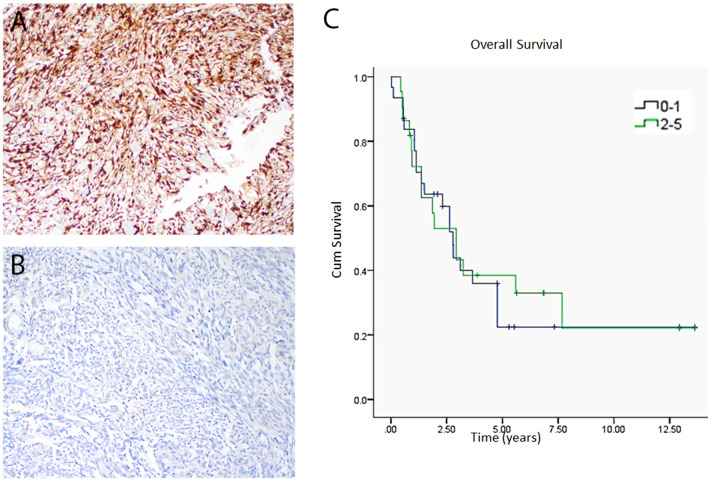
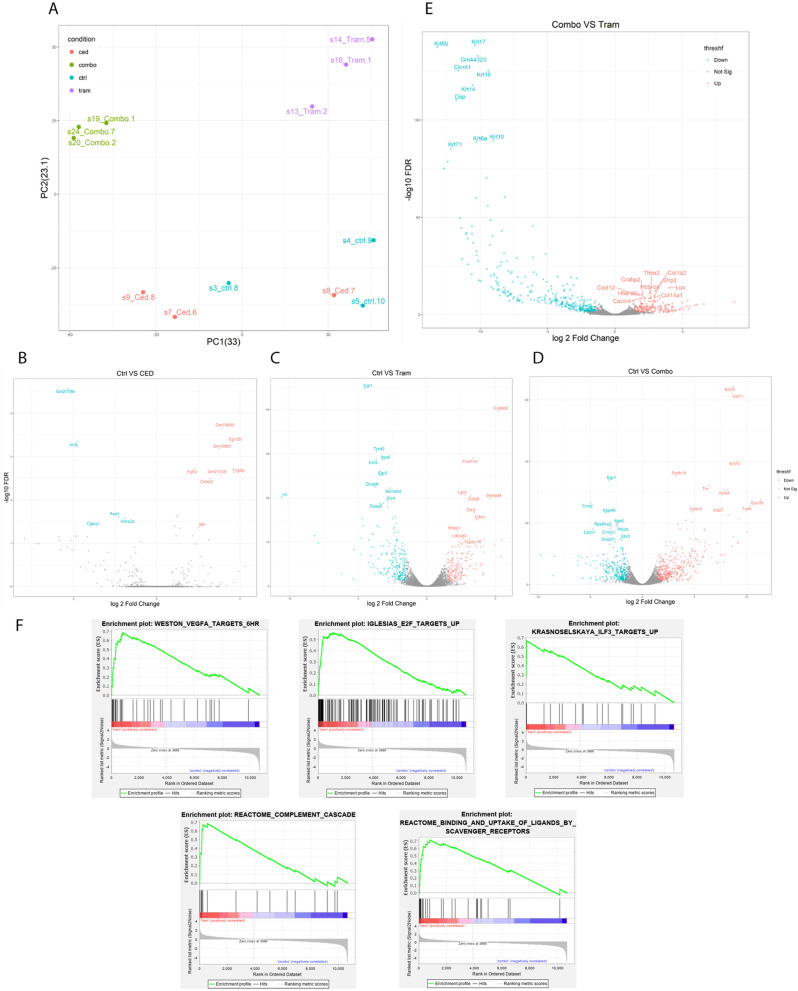
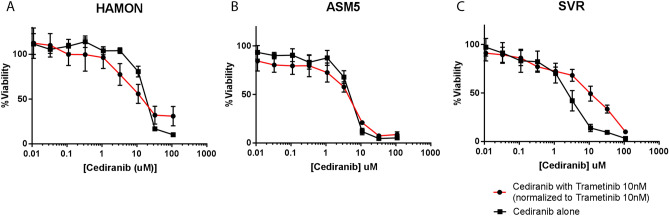
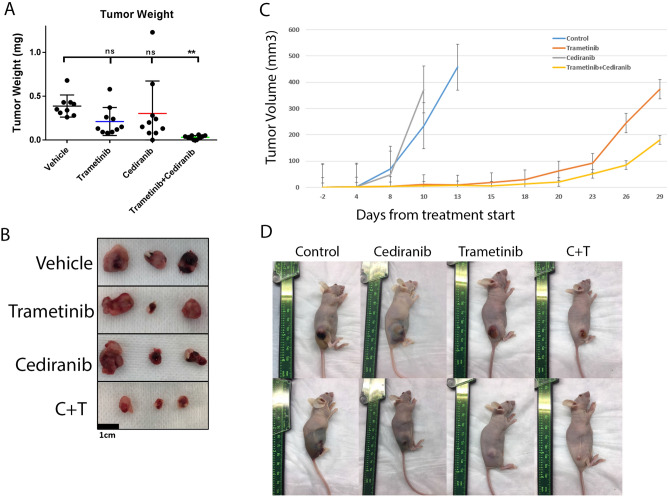
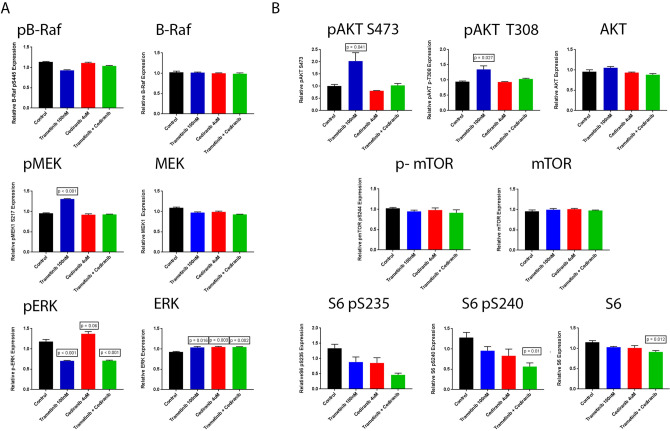
Angiosarcoma is an aggressive malignancy of endothelial cells that carries a high mortality rate. Cytotoxic chemotherapy can elicit clinical responses, but the duration of response is limited. Sequencing reveals multiple mutations in angiogenesis pathways in angiosarcomas, particularly in vascular endothelial growth factor (VEGFR) and mitogen-activated protein kinase (MAPK) signaling. We aimed to determine the biological relevance of these pathways in angiosarcoma. Tissue microarray consisting of clinical formalin-fixed paraffin embedded tissue archival samples were stained for phospho- extracellular signal-regulated kinase (p-ERK) with immunohistochemistry. Angiosarcoma cell lines were treated with the mitogen-activated protein kinase kinase (MEK) inhibitor trametinib, pan-VEGFR inhibitor cediranib, or combined trametinib and cediranib and viability was assessed. Reverse phase protein array (RPPA) was performed to assess multiple oncogenic protein pathways. SVR angiosarcoma cells were grown in vivo and gene expression effects of treatment were assessed with whole exome RNA sequencing. MAPK signaling was found active in over half of clinical angiosarcoma samples. Inhibition of MAPK signaling with the MEK inhibitor trametinib decreased the viability of angiosarcoma cells. Combined inhibition of the VEGF and MAPK pathways with cediranib and trametinib had an additive effect in in vitro models, and a combinatorial effect in an in vivo model. Combined treatment led to smaller tumors than treatment with either agent alone. RNA-seq demonstrated distinct expression signatures between the trametinib treated tumors and those treated with both trametinib and cediranib. These results indicate a clinical study of combined VEGFR and MEK inhibition in angiosarcoma is warranted.
血管肉瘤是一种内皮细胞的侵袭性恶性肿瘤,死亡率很高。细胞毒性化疗可以引起临床反应,但反应持续时间有限。测序揭示了血管肉瘤中血管生成途径的多种突变,特别是血管内皮生长因子(VEGFR)和丝裂原活化蛋白激酶(MAPK)信号通路。我们旨在确定这些通路在血管肉瘤中的生物学相关性。组织微阵列由临床福尔马林固定石蜡包埋组织存档样本组成,用免疫组织化学法对磷酸化细胞外信号调节激酶(p-ERK)进行染色。用丝裂原活化蛋白激酶激酶(MEK)抑制剂曲美替尼、泛血管内皮生长因子受体(VEGFR)抑制剂西地尼布或联合曲美替尼和西地尼布处理血管肉瘤细胞系,并评估其活力。进行反向蛋白质阵列(RPPA)以评估多种致癌蛋白通路。将 SVR 血管肉瘤细胞在体内生长,并通过全外显子 RNA 测序评估治疗的基因表达效应。MAPK 信号在超过一半的临床血管肉瘤样本中被发现是活跃的。用 MEK 抑制剂曲美替尼抑制 MAPK 信号降低了血管肉瘤细胞的活力。用西地尼布和曲美替尼联合抑制 VEGF 和 MAPK 通路在体外模型中具有相加作用,在体内模型中具有协同作用。联合治疗导致的肿瘤比单独使用任何一种药物治疗的肿瘤都小。RNA-seq 显示了曲美替尼治疗的肿瘤与曲美替尼和西地尼布联合治疗的肿瘤之间存在明显不同的表达特征。这些结果表明,在血管肉瘤中联合 VEGFR 和 MEK 抑制的临床研究是合理的。