Wiener Gesundheitsverbund, Vienna, Austria.
Department of Internal Medicine 2, Emergency Department, Klinik Donaustadt, 122 Langobardenstrasse, 1210, Vienna, Austria.
Sci Rep. 2021 Apr 30;11(1):9365. doi: 10.1038/s41598-021-88844-x.
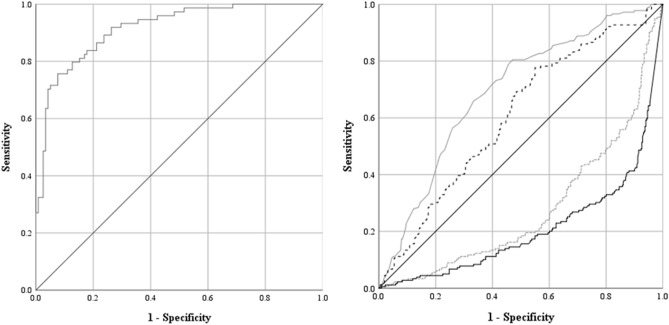
Standard blood laboratory parameters may have diagnostic potential, if polymerase-chain-reaction (PCR) tests are not available on time. We evaluated standard blood laboratory parameters of 655 COVID-19 patients suspected to be infected with SARS-CoV-2, who underwent PCR testing in one of five hospitals in Vienna, Austria. We compared laboratory parameters, clinical characteristics, and outcomes between positive and negative PCR-tested patients and evaluated the ability of those parameters to distinguish between groups. Of the 590 patients (20-100 years, 276 females and 314 males), 208 were PCR-positive. Positive compared to negative PCR-tested patients had significantly lower levels of leukocytes, neutrophils, basophils, eosinophils, lymphocytes, neutrophil-to-lymphocyte ratio, monocytes, and thrombocytes; while significantly higher levels were detected with erythrocytes, hemoglobin, hematocrit, C-reactive-protein, ferritin, activated-partial-thromboplastin-time, alanine-aminotransferase, aspartate-aminotransferase, lipase, creatine-kinase, and lactate-dehydrogenase. From all blood parameters, eosinophils, ferritin, leukocytes, and erythrocytes showed the highest ability to distinguish between COVID-19 positive and negative patients (area-under-curve, AUC: 72.3-79.4%). The AUC of our model was 0.915 (95% confidence intervals, 0.876-0.955). Leukopenia, eosinopenia, elevated erythrocytes, and hemoglobin were among the strongest markers regarding accuracy, sensitivity, specificity, positive and negative predictive value, positive and negative likelihood ratio, and post-test probabilities. Our findings suggest that especially leukopenia, eosinopenia, and elevated hemoglobin are helpful to distinguish between COVID-19 positive and negative tested patients.
标准的血液实验室参数可能具有诊断潜力,如果聚合酶链反应(PCR)测试不能及时进行。我们评估了奥地利维也纳的五家医院中接受 PCR 检测的 655 名疑似感染 SARS-CoV-2 的 COVID-19 患者的标准血液实验室参数。我们比较了 PCR 检测阳性和阴性患者的实验室参数、临床特征和结局,并评估了这些参数区分两组的能力。在 590 名患者(20-100 岁,276 名女性和 314 名男性)中,208 名患者的 PCR 检测呈阳性。与 PCR 检测阴性的患者相比,PCR 检测阳性的患者白细胞、中性粒细胞、嗜碱性粒细胞、嗜酸性粒细胞、淋巴细胞、中性粒细胞与淋巴细胞比值、单核细胞和血小板计数显著降低;而红细胞、血红蛋白、血细胞比容、C 反应蛋白、铁蛋白、活化部分凝血活酶时间、丙氨酸氨基转移酶、天门冬氨酸氨基转移酶、脂肪酶、肌酸激酶和乳酸脱氢酶水平显著升高。在所有血液参数中,嗜酸性粒细胞、铁蛋白、白细胞和红细胞对区分 COVID-19 阳性和阴性患者的能力最强(曲线下面积,AUC:72.3-79.4%)。我们模型的 AUC 为 0.915(95%置信区间,0.876-0.955)。白细胞减少症、嗜酸性粒细胞减少症、红细胞和血红蛋白升高是准确性、敏感性、特异性、阳性和阴性预测值、阳性和阴性似然比以及后验概率方面最强的标志物之一。我们的研究结果表明,特别是白细胞减少症、嗜酸性粒细胞减少症和血红蛋白升高有助于区分 COVID-19 检测阳性和阴性的患者。