Department of Cardiovascular Surgery, The First Affiliated Hospital of Zhengzhou University, No. 1 Jianshe East Road, Erqi District, Zhengzhou, 453100, China.
Department of Ophthalmology, The First Affiliated Hospital of Zhengzhou University, No. 1 Jianshe East Road, Erqi District, Zhengzhou, 453100, China.
BMC Cardiovasc Disord. 2021 May 1;21(1):221. doi: 10.1186/s12872-021-01998-4.
The dysfunction and injury of human umbilical vein endothelial cells (HUVECs) are key events of atherosclerosis (AS). Atorvastatin (ATV) has been shown to play a protective role on endothelial cells. However, the associated molecular mechanisms remain not fully illustrated.
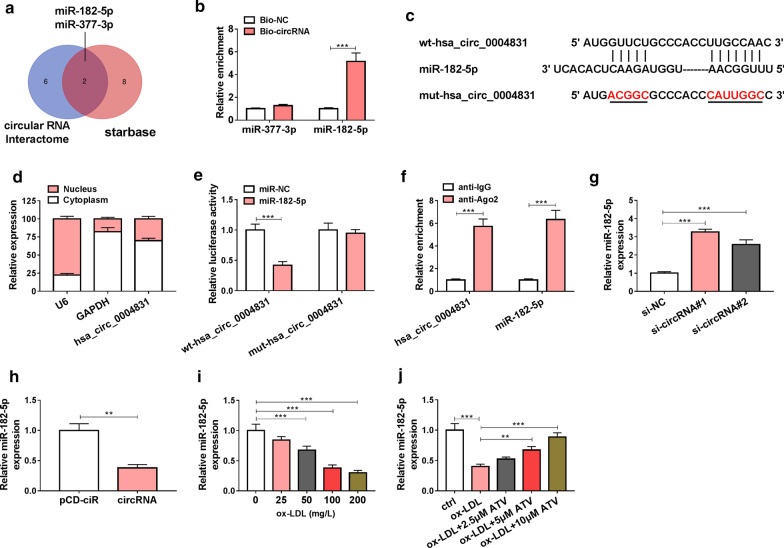
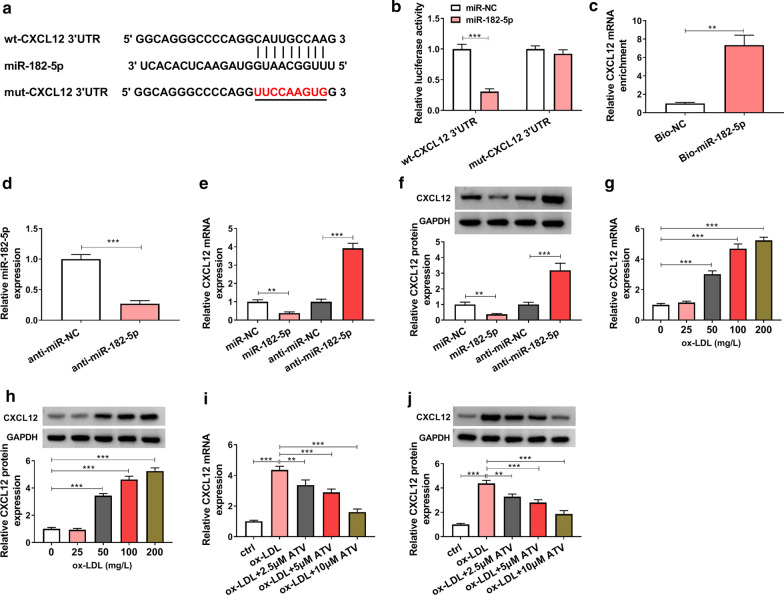
HUVECs were treated with oxidized low-density lipoprotein (ox-LDL) to mimic the pathological conditions of endothelial cell injury in AS. Cell injuries were assessed according to cell viability, cell apoptosis, cycle progression, oxidative stress and inflammatory responses using CCK-8 assay, flow cytometry assay or commercial kits. The expression of hsa_circ_0004831, miR-182-5p, and C-X-C motif chemokine 12 (CXCL12) mRNA was examined using quantitative real-time PCR (qPCR). The expression of CXCL12 protein was quantitated by western blot. The predicted target relationship between miR-182-5p and hsa_circ_0004831 or CXCL12 was verified by pull-down assay, dual-luciferase reporter assay or RIP assay.
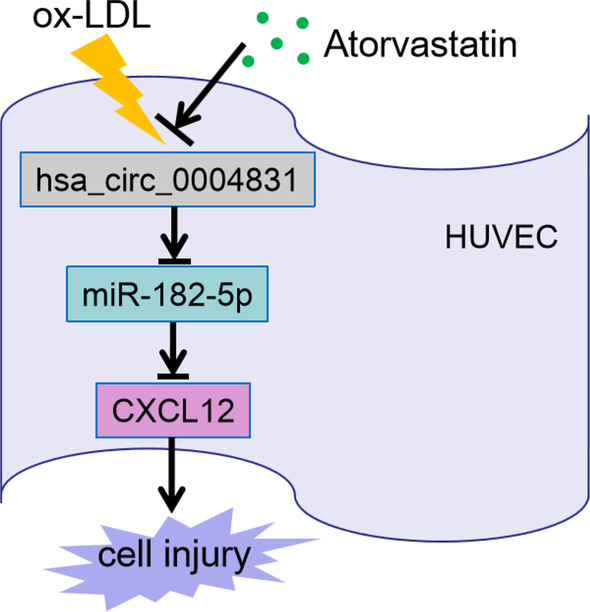
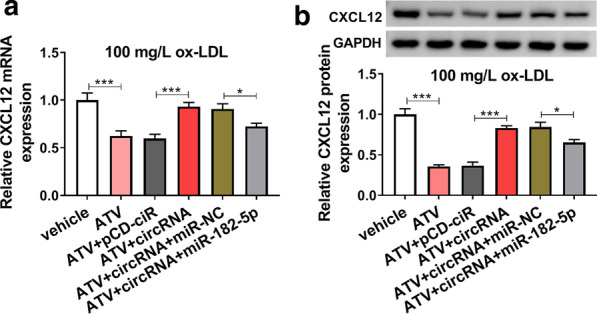
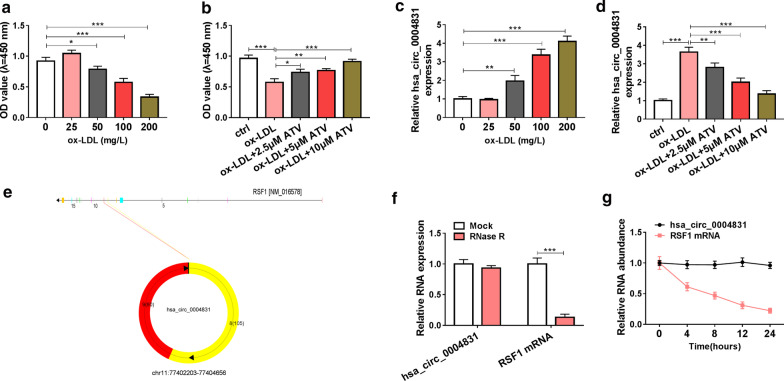
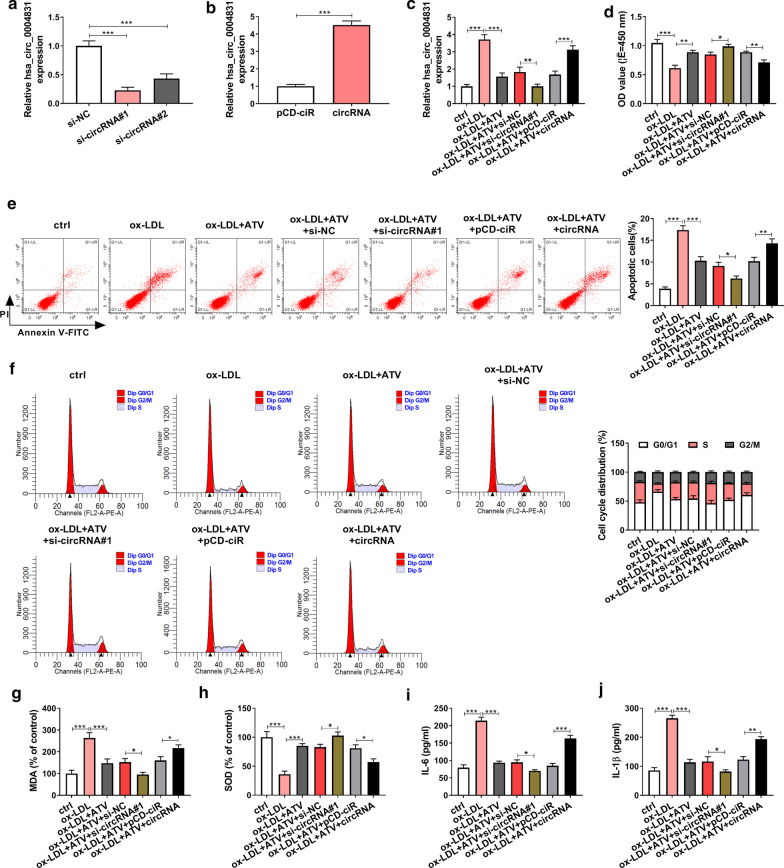
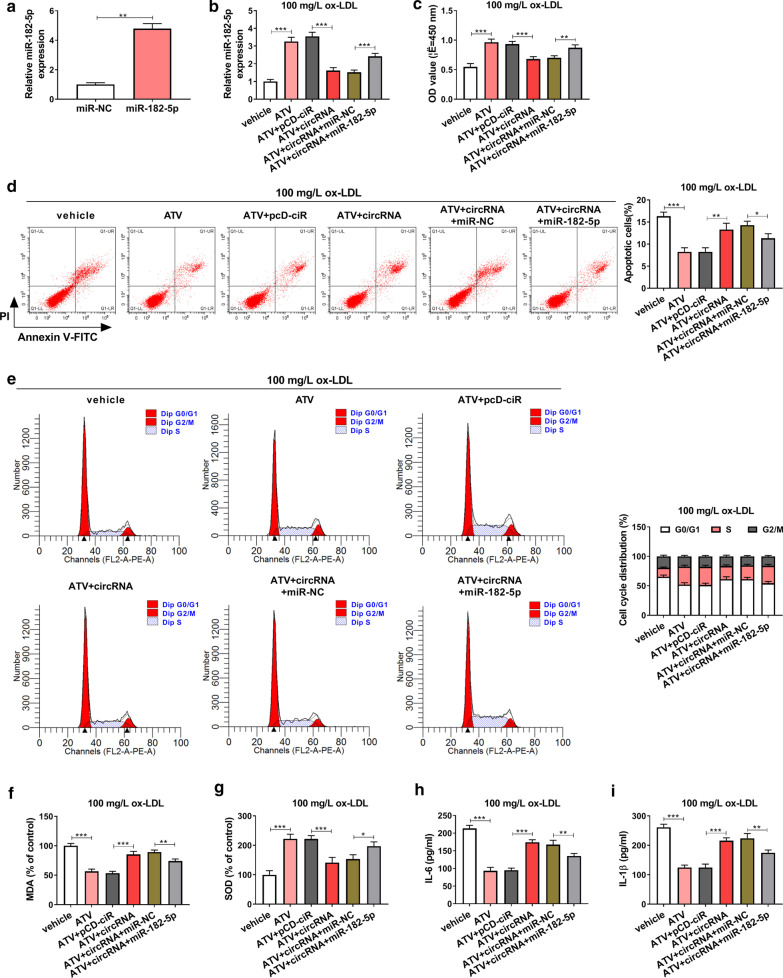
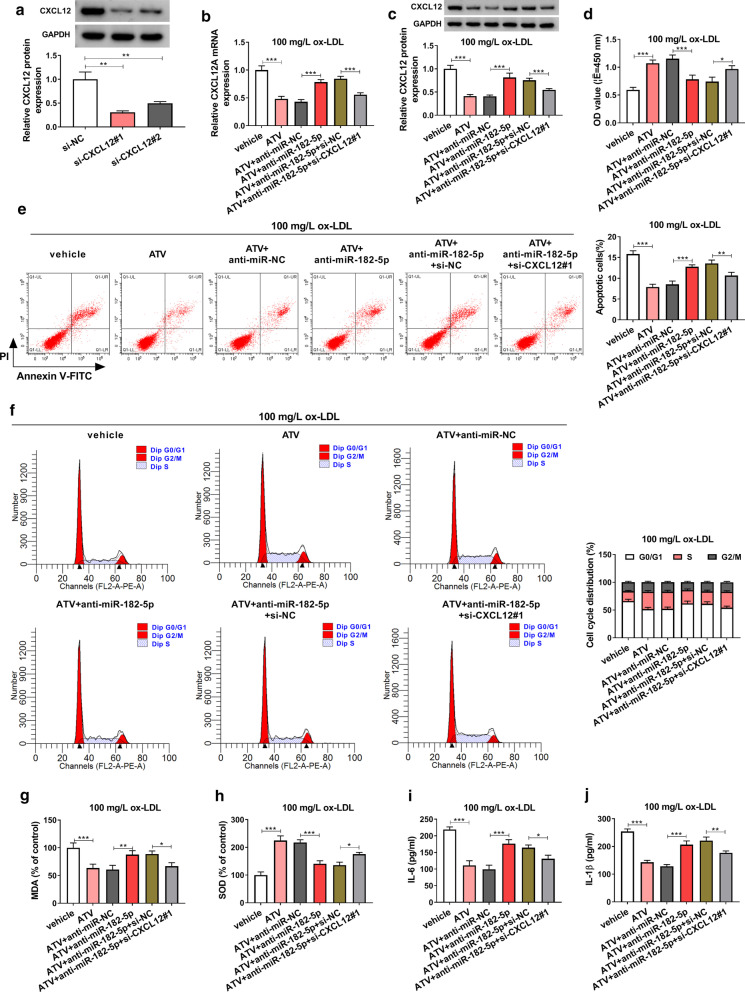
The expression of hsa_circ_0004831 was upregulated by ox-LDL but downregulated by ATV in HUVECs. ATV promoted cell viability and cell cycle progression but inhibited apoptosis, oxidative stress and inflammation in ox-LDL-treated HUVECs, while the role of ATV was partially reversed by hsa_circ_0004831 overexpression. MiR-182-5p was targeted by hsa_circ_0004831, and hsa_circ_0004831 overexpression-restored apoptosis, oxidative stress and inflammation were blocked by miR-182-5p restoration. Further, CXCL12 was targeted by miR-182-5p, and miR-182-5p inhibition-stimulated apoptosis, oxidative stress and inflammation were lessened by CXCL12 knockdown.
Hsa_circ_0004831-targeted miR-182-5p/CXCL12 regulatory network is one of the pathways by which ATV protects against ox-LDL-induced endothelial injuries.
人脐静脉内皮细胞(HUVEC)功能障碍和损伤是动脉粥样硬化(AS)的关键事件。阿托伐他汀(ATV)已被证明对内皮细胞具有保护作用。然而,相关的分子机制仍未完全阐明。
用氧化型低密度脂蛋白(ox-LDL)处理 HUVEC,模拟 AS 内皮细胞损伤的病理状态。根据 CCK-8 测定、流式细胞术测定或商业试剂盒,用细胞活力、细胞凋亡、周期进程、氧化应激和炎症反应评估细胞损伤。采用实时定量 PCR(qPCR)检测 hsa_circ_0004831、miR-182-5p 和 C-X-C 基序趋化因子 12(CXCL12)mRNA 的表达。用 Western blot 定量 CXCL12 蛋白的表达。通过下拉测定、双荧光素酶报告测定或 RIP 测定验证 miR-182-5p 与 hsa_circ_0004831 或 CXCL12 的预测靶关系。
ox-LDL 上调 HUVEC 中 hsa_circ_0004831 的表达,而 ATV 下调其表达。ATV 促进 ox-LDL 处理的 HUVEC 中细胞活力和细胞周期进程,但抑制细胞凋亡、氧化应激和炎症,而过表达 hsa_circ_0004831 部分逆转了 ATV 的作用。miR-182-5p 是 hsa_circ_0004831 的靶标,hsa_circ_0004831 过表达恢复的凋亡、氧化应激和炎症被 miR-182-5p 恢复所阻断。此外,CXCL12 是 miR-182-5p 的靶标,miR-182-5p 抑制刺激的凋亡、氧化应激和炎症在 CXCL12 敲低时减轻。
hsa_circ_0004831 靶向 miR-182-5p/CXCL12 调节网络是 ATV 对抗 ox-LDL 诱导的内皮损伤的途径之一。