Department of Microbiology, School of Medicine, Shahid Beheshti University of Medical Sciences, Tehran, Iran.
Data Analytics Unit, bioMérieux 3, Route de Port Michaud, La Balme Les Grottes, France.
Antimicrob Resist Infect Control. 2021 May 1;10(1):75. doi: 10.1186/s13756-021-00943-6.
Staphylococcus aureus (S. aureus) is one of the most common pathogens causing nosocomial and community-acquired infections with high morbidity and mortality rates. Fusidic acid has been increasingly used for the treatment of infections due to methicillin-susceptible S. aureus (MSSA) and methicillin-resistant S. aureus (MRSA). The present study aimed to determine the precise prevalence of fusidic acid resistant MRSA (FRMRSA), fusidic acid resistant MSSA (FRMSSA), and total fusidic acid resistant S. aureus (FRSA) on a global scale.
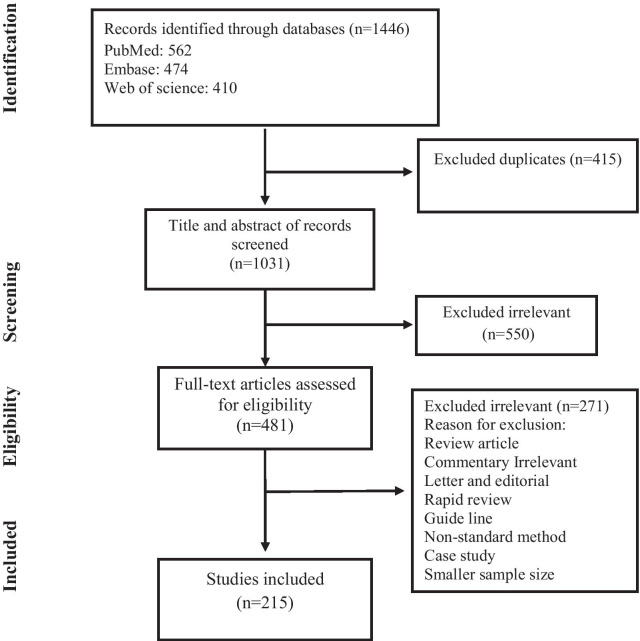
Several international databases including Medline, Embase, and the Web of Sciences were searched (2000-2020) to discern studies addressing the prevalence of FRSA, FRMRSA, and FRMSSA. STATA (version14) software was used to interpret the data.
Of the 1446 records identified from the databases, 215 studies fulfilled the eligibility criteria for the detection of FRSA (208 studies), FRMRSA (143 studies), and FRMSSA (71 studies). The analyses manifested that the global prevalence of FRSA, FRMRSA, and FRMSSA was 0.5%, 2.6% and 6.7%, respectively.
This meta-analysis describes an increasing incidence of FRSA, FRMSSA, and FRMRSA. These results indicate the need for prudent prescription of fusidic acid to stop or diminish the incidence of fusidic acid resistance as well as the development of strategies for monitoring the efficacy of fusidic acid use.
金黄色葡萄球菌(S. aureus)是引起医院获得性和社区获得性感染的最常见病原体之一,其发病率和死亡率都很高。由于耐甲氧西林金黄色葡萄球菌(MSSA)和耐甲氧西林金黄色葡萄球菌(MRSA),人们越来越多地使用夫西地酸来治疗感染。本研究旨在确定全球范围内夫西地酸耐药 MRSA(FRMRSA)、夫西地酸耐药 MSSA(FRMSSA)和总夫西地酸耐药金黄色葡萄球菌(FRSA)的确切流行率。
检索了 Medline、Embase 和 Web of Sciences 等多个国际数据库(2000-2020 年),以确定研究 FRSA、FRMRSA 和 FRMSSA 流行率的研究。使用 STATA(版本 14)软件解释数据。
从数据库中确定的 1446 条记录中,有 215 项研究符合检测 FRSA(208 项研究)、FRMRSA(143 项研究)和 FRMSSA(71 项研究)的标准。分析表明,FRSA、FRMRSA 和 FRMSSA 的全球流行率分别为 0.5%、2.6%和 6.7%。
这项荟萃分析描述了 FRSA、FRMSSA 和 FRMRSA 的发病率不断上升。这些结果表明,需要谨慎处方夫西地酸,以阻止或减少夫西地酸耐药的发生,并制定监测夫西地酸使用效果的策略。