Yue Jingwei, Hou Xinhua, Liu Xin, Wang Ligang, Gao Hongmei, Zhao Fuping, Shi Lijun, Shi Liangyu, Yan Hua, Deng Tianyu, Gong Jianfei, Wang Lixian, Zhang Longchao
Key Laboratory of Animal (Poultry) Genetics Breeding and Reproduction, Ministry of Agriculture; Institute of Animal Science, Chinese Academy of Agricultural Sciences, Beijing, 100193, China.
J Anim Sci Biotechnol. 2021 May 3;12(1):56. doi: 10.1186/s40104-021-00577-z.
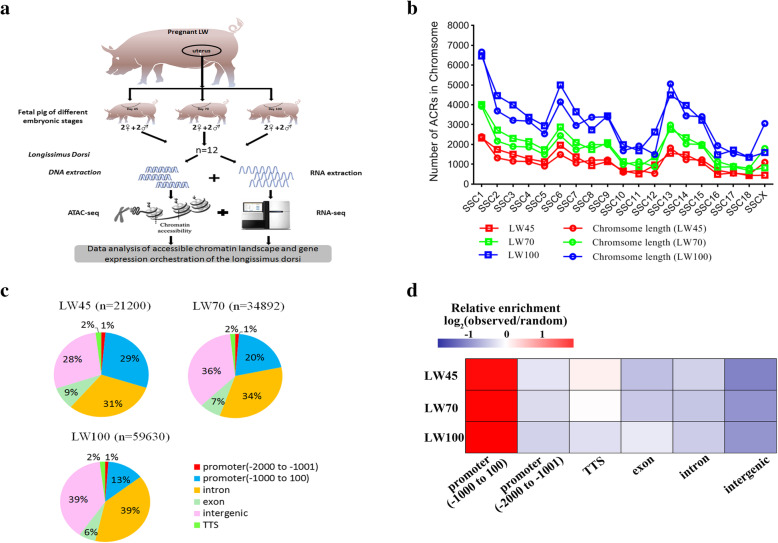
The development of skeletal muscle in pigs during the embryonic stage is precisely regulated by transcriptional mechanisms, which depend on chromatin accessibility. However, how chromatin accessibility plays a regulatory role during embryonic skeletal muscle development in pigs has not been reported. To gain insight into the landscape of chromatin accessibility and the associated genome-wide transcriptome during embryonic muscle development, we performed ATAC-seq and RNA-seq analyses of skeletal muscle from pig embryos at 45, 70 and 100 days post coitus (dpc).
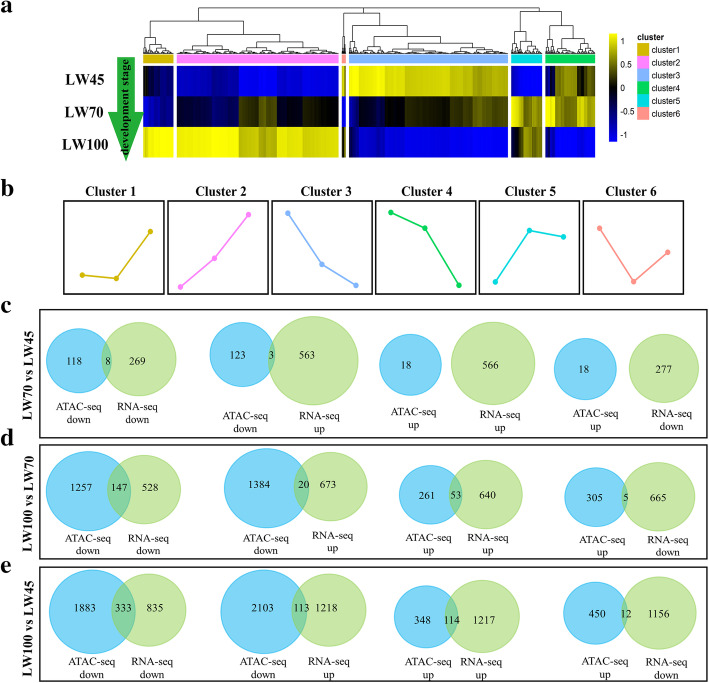
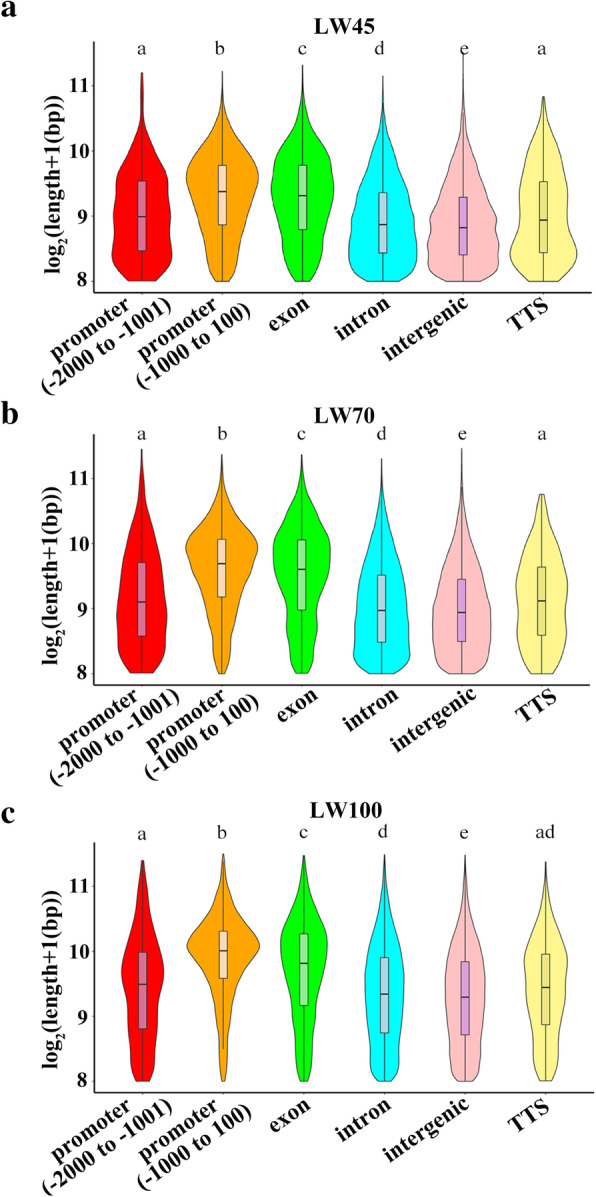
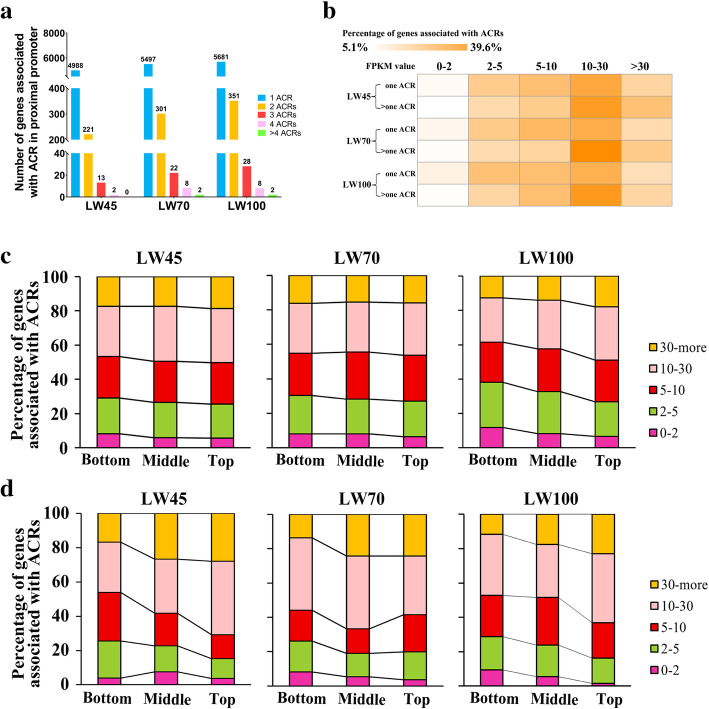
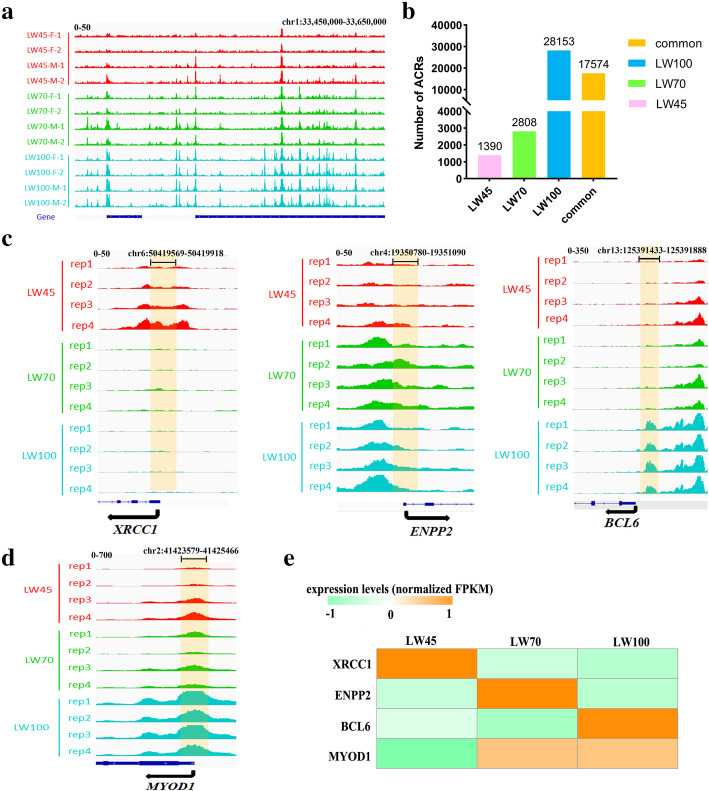
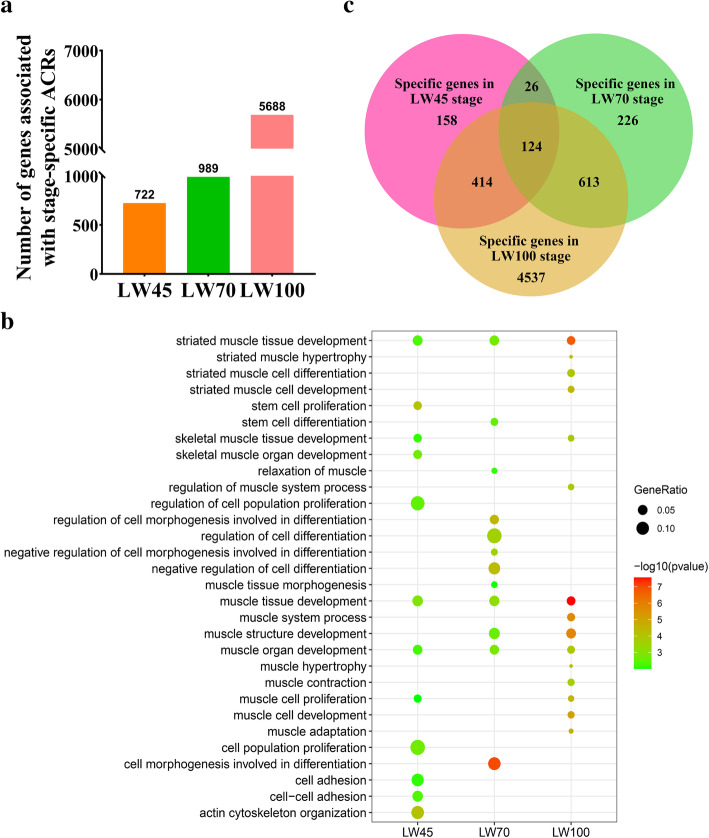
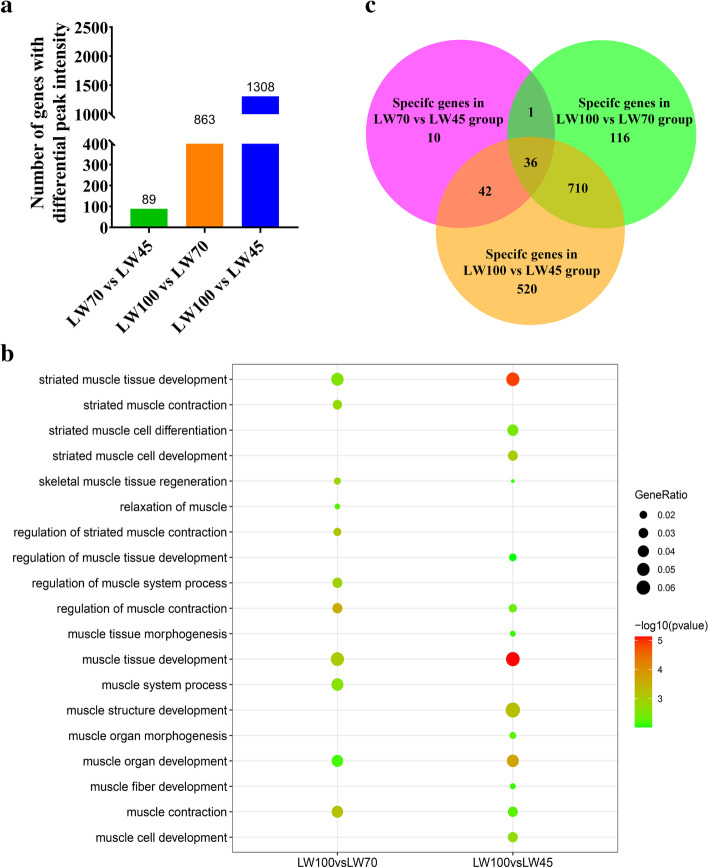
In total, 21,638, 35,447 and 60,181 unique regions (or peaks) were found across the embryos at 45 dpc (LW45), 70 dpc (LW70) and 100 dpc (LW100), respectively. More than 91% of the peaks were annotated within - 1 kb to 100 bp of transcription start sites (TSSs). First, widespread increases in specific accessible chromatin regions (ACRs) from embryos at 45 to 100 dpc suggested that the regulatory mechanisms became increasingly complicated during embryonic development. Second, the findings from integrated ATAC-seq and RNA-seq analyses showed that not only the numbers but also the intensities of ACRs could control the expression of associated genes. Moreover, the motif screening of stage-specific ACRs revealed some transcription factors that regulate muscle development-related genes, such as MyoG, Mef2c, and Mef2d. Several potential transcriptional repressors, including E2F6, OTX2 and CTCF, were identified among the genes that exhibited different regulation trends between the ATAC-seq and RNA-seq data.
This work indicates that chromatin accessibility plays an important regulatory role in the embryonic muscle development of pigs and regulates the temporal and spatial expression patterns of key genes in muscle development by influencing the binding of transcription factors. Our results contribute to a better understanding of the regulatory dynamics of genes involved in pig embryonic skeletal muscle development.
猪胚胎期骨骼肌的发育受转录机制精确调控,而转录机制依赖于染色质可及性。然而,染色质可及性在猪胚胎骨骼肌发育过程中如何发挥调控作用尚未见报道。为深入了解胚胎肌肉发育过程中染色质可及性景观及相关全基因组转录组情况,我们对交配后45、70和100天(dpc)的猪胚胎骨骼肌进行了ATAC-seq和RNA-seq分析。
在45 dpc(LW45)、70 dpc(LW70)和100 dpc(LW100)的胚胎中,分别共发现21,638、35,447和60,181个独特区域(或峰)。超过91%的峰位于转录起始位点(TSS)的-1 kb至100 bp范围内。首先,从45 dpc到100 dpc胚胎中特定可及染色质区域(ACR)广泛增加,表明胚胎发育过程中调控机制变得越来越复杂。其次,整合ATAC-seq和RNA-seq分析结果表明,ACR的数量和强度不仅可以控制相关基因的表达。此外,阶段特异性ACR的基序筛选揭示了一些调控肌肉发育相关基因(如MyoG、Mef2c和Mef2d)的转录因子。在ATAC-seq和RNA-seq数据之间表现出不同调控趋势的基因中,鉴定出了几种潜在的转录抑制因子,包括E2F6、OTX2和CTCF。
这项工作表明染色质可及性在猪胚胎肌肉发育中起重要调控作用,并通过影响转录因子的结合来调节肌肉发育关键基因的时空表达模式。我们的结果有助于更好地理解参与猪胚胎骨骼肌发育的基因调控动态。