Marescotti Diego, Lo Sasso Giuseppe, Guerrera Diego, Renggli Kasper, Ruiz Castro Pedro A, Piault Romain, Jaquet Vincent, Moine Fabian, Luettich Karsta, Frentzel Stefan, Peitsch Manuel C, Hoeng Julia
PMI R&D, Philip Morris Products S.A., Neuchâtel, Switzerland.
Front Pharmacol. 2021 Apr 16;12:639716. doi: 10.3389/fphar.2021.639716. eCollection 2021.
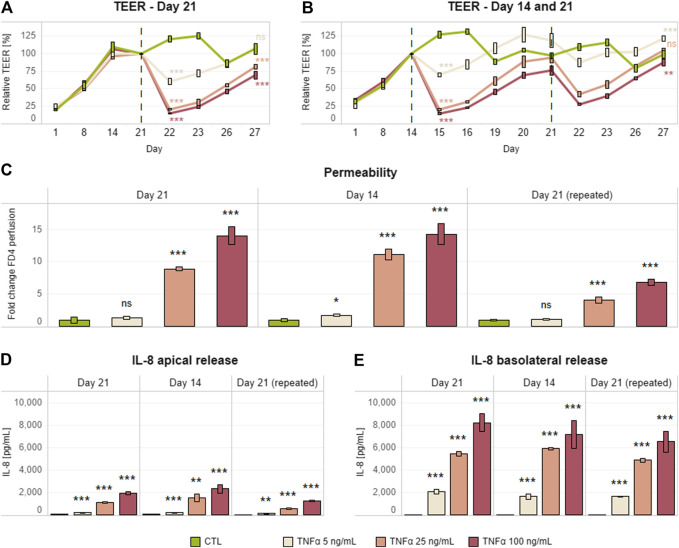
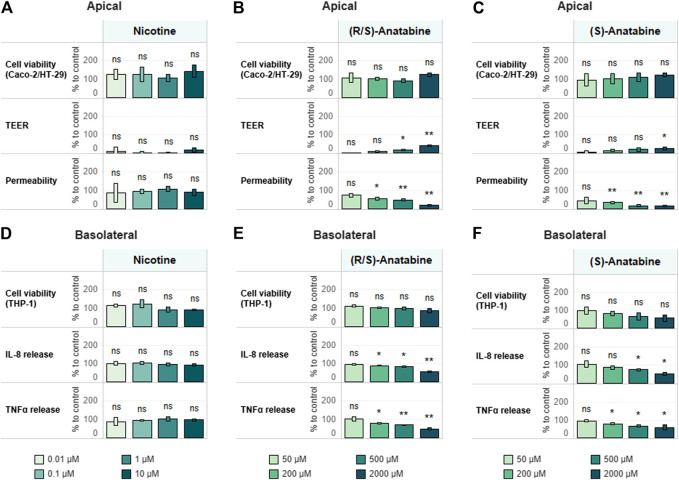
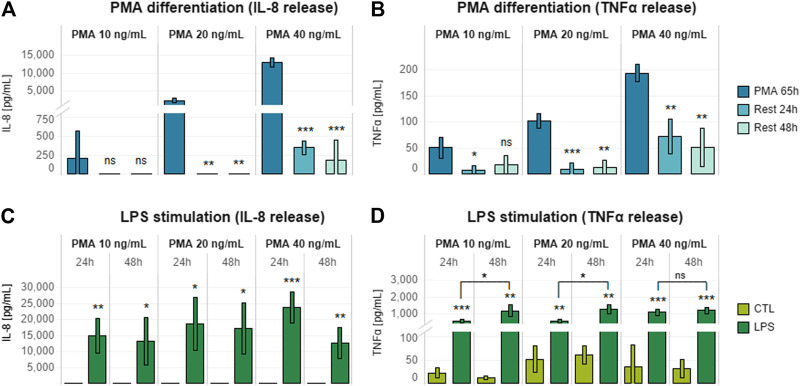
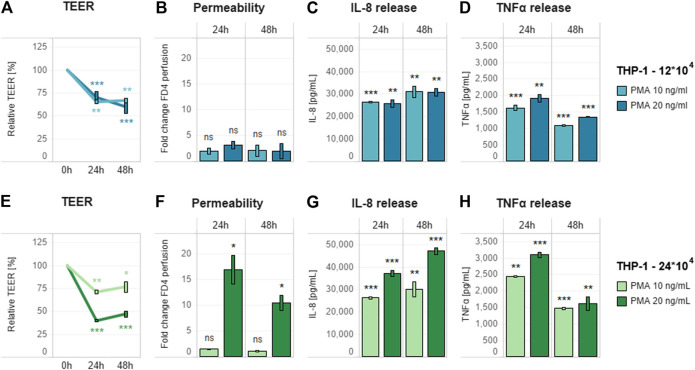
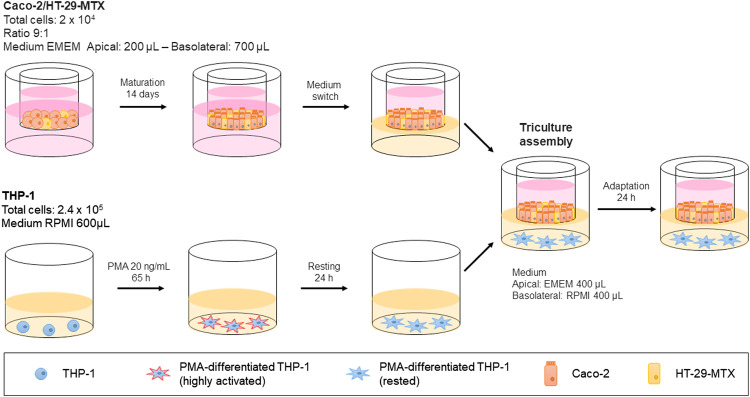
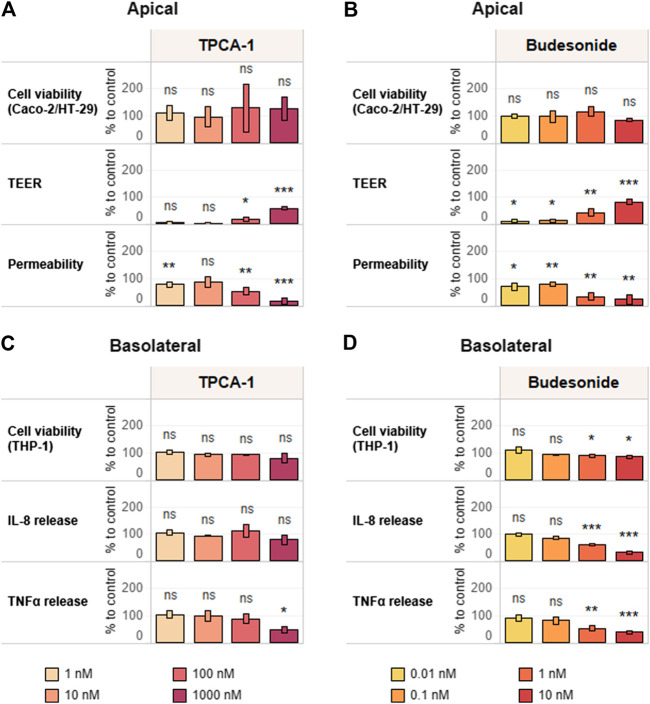
Intestinal inflammation is the collective term for immune system-mediated diseases of unknown, multifactorial etiology, with often complex interactions between genetic and environmental factors. To mechanistically investigate the effect of treatment with compounds possessing immunomodulating properties in the context of intestinal inflammation, we developed an immunocompetent triculture intestinal model consisting of a differentiated intestinal epithelial layer (Caco-2/HT29-MTX) and immunocompetent cells (differentiated THP-1). The triculture mimicked a healthy intestine with stable barrier integrity. Lipopolysaccharide treatment triggered a controlled and reversible inflammatory state, resulting in significant impairment of barrier integrity and release of pro-inflammatory cytokines and chemokines, which are known hallmarks of intestinal inflammation. Treatment with known anti-inflammatory reference compounds (TPCA-1 and budenoside) prevented the induction of an inflammatory state; the decreasing triculture responses to this treatment measured by cytokine release, transepithelial electric resistance (TEER), and epithelial layer permeability proved the suitability of the intestinal model for anti-inflammatory drug screening. Finally, selected tobacco alkaloids (nicotine and anatabine (/ and forms)) were tested in the triculture for their potential anti-inflammatory properties. Indeed, naturally occurring alkaloids, such as tobacco-derived alkaloids, have shown substantial anti-inflammatory effects in several and models of inflammation, gaining increasing interest. Similar to the anti-inflammatory reference compounds, one of the tobacco alkaloids under investigation partially prevented the decrease in the TEER and increase in permeability and reduced the release of pro-inflammatory cytokines and chemokines. Taken together, these data confirm that our model is suitable for screening potential anti-inflammatory compounds in the context of intestinal inflammation.
肠道炎症是病因不明、多因素导致的免疫系统介导疾病的统称,遗传和环境因素之间常常存在复杂的相互作用。为了从机制上研究具有免疫调节特性的化合物在肠道炎症背景下的治疗效果,我们构建了一种具有免疫活性的三元培养肠道模型,该模型由分化的肠道上皮层(Caco-2/HT29-MTX)和免疫活性细胞(分化的THP-1)组成。这种三元培养模型模拟了具有稳定屏障完整性的健康肠道。脂多糖处理引发了一种可控且可逆的炎症状态,导致屏障完整性显著受损以及促炎细胞因子和趋化因子的释放,这些都是肠道炎症的典型特征。用已知的抗炎参考化合物(TPCA-1和布地奈德)进行处理可防止炎症状态的诱导;通过细胞因子释放、跨上皮电阻(TEER)和上皮层通透性来衡量,三元培养对这种处理的反应降低,证明了该肠道模型适用于抗炎药物筛选。最后,在三元培养中测试了选定的烟草生物碱(尼古丁和安那他宾(/和 形式))的潜在抗炎特性。实际上,天然存在的生物碱,如烟草衍生的生物碱,在多种炎症模型中已显示出显著的抗炎作用,越来越受到关注。与抗炎参考化合物类似,所研究的一种烟草生物碱部分防止了TEER的降低和通透性的增加,并减少了促炎细胞因子和趋化因子的释放。综上所述,这些数据证实我们的模型适用于在肠道炎症背景下筛选潜在的抗炎化合物。