Shi Jenny, Lo Brian, Wong Howard W, Hollenberg Elisa, Sanches Marcos, Abi-Jaoudé Alexxa, Chaim Gloria, Cleverley Kristin, Henderson Joanna, Johnson Andrew, Levinson Andrea, Pham Quynh, Robb Janine, Voineskos Aristotle, Wiljer David
Office of Education, Centre for Addiction and Mental Health, 1025 Queen Street West, Toronto, ON M6J 1H4, Canada.
Information Management Group, Centre for Addiction and Mental Health, 100 Stokes Street, Toronto, ON M6J 1H4, Canada.
Internet Interv. 2021 Mar 26;24:100386. doi: 10.1016/j.invent.2021.100386. eCollection 2021 Apr.
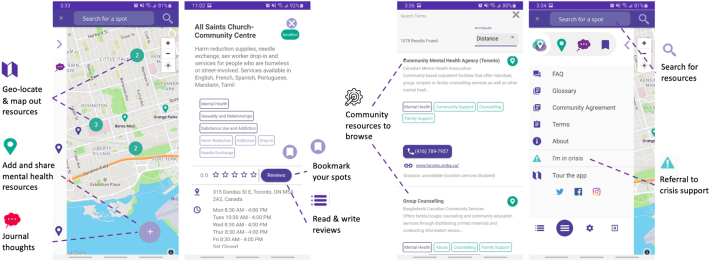
To evaluate the perceived usability of and user engagement with a digital platform (Thought Spot) designed to enhance mental health and wellness help-seeking among transition-aged youth (TAY; 17-29-years old).
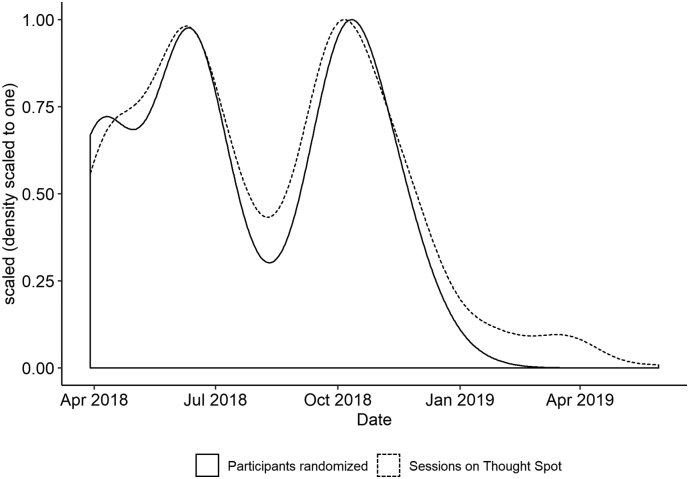
Survey responses and usage patterns were collected as part of a randomized controlled trial evaluating the efficacy of Thought Spot. Participants given Thought Spot completed an adapted Usefulness, Satisfaction, and Ease of Use (USE) Questionnaire to measure perceived usability of the platform. User engagement patterns on Thought Spot were examined using analytics data collected throughout the study (March 2018-June 2019).
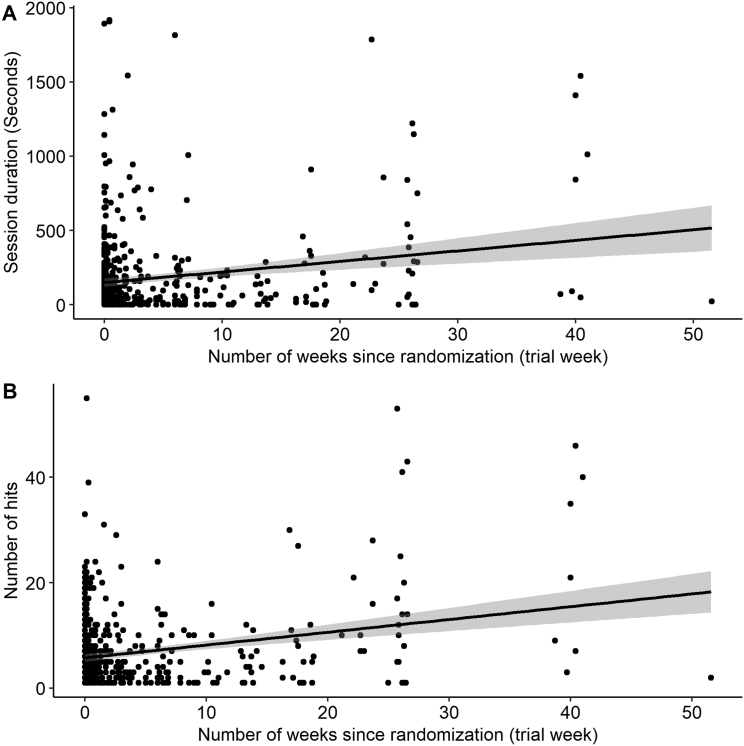
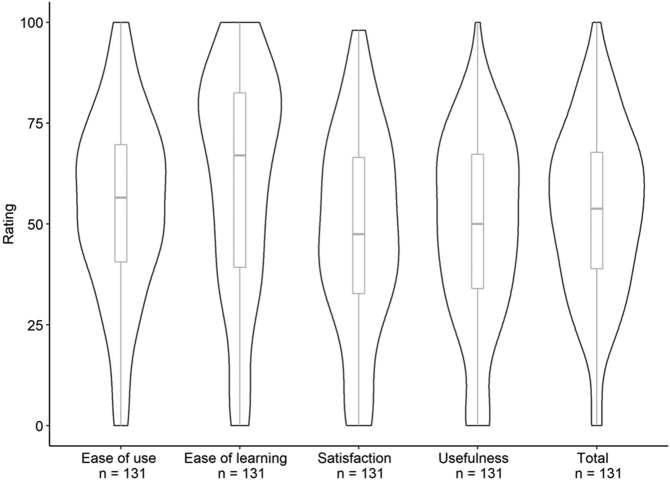
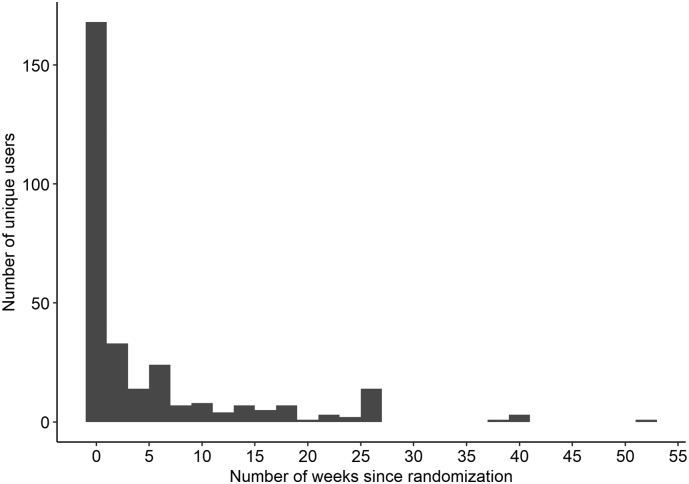
A total of 131 transition-aged participants completed the USE questionnaire and logged on to Thought Spot at least once. Ease of learning scored higher than ease of use, usefulness and satisfaction. Participants identified numerous strengths and challenges related to usability, visual appeal, functionality and usefulness of the content. In terms of user engagement, most participants stopped using the platform after 3 weeks. Participants searched and were interested in a variety of resources, including mental health, counselling and social services.
Participants reported mixed experiences while using Thought Spot and exhibited low levels of long-term user engagement. User satisfaction, the willingness to recommend Thought Spot to others, and the willingness for future use appeared to be influenced by content relevance, ease of learning, available features, and other contextual factors. Analysis of the types of resources viewed and searches conducted by TAY end-users provided insight into their behaviour and needs.
Users had mixed perceptions about the usability of Thought Spot, which may have contributed to the high attrition rate. User satisfaction and engagement appears to be influenced by content relevance, ease of learning, and the types of features available. Further investigation to understand the contextual factors that affect TAYs' adoption and engagement with digital mental health tools is required.
评估一个旨在促进转型期青年(17 - 29岁)寻求心理健康和幸福感帮助的数字平台(Thought Spot)的感知可用性和用户参与度。
作为评估Thought Spot疗效的随机对照试验的一部分,收集了调查回复和使用模式。使用Thought Spot的参与者完成了一份改编后的有用性、满意度和易用性(USE)问卷,以衡量该平台的感知可用性。通过整个研究(2018年3月 - 2019年6月)收集的分析数据,研究了Thought Spot上的用户参与模式。
共有131名转型期参与者完成了USE问卷,并至少登录过一次Thought Spot。易学性得分高于易用性、有用性和满意度。参与者指出了与内容的可用性、视觉吸引力、功能和有用性相关的众多优点和挑战。在用户参与方面,大多数参与者在3周后停止使用该平台。参与者搜索并对包括心理健康、咨询和社会服务在内的各种资源感兴趣。
参与者在使用Thought Spot时报告了不同的体验,并且长期用户参与度较低。用户满意度、向他人推荐Thought Spot的意愿以及未来使用的意愿似乎受到内容相关性、易学性、可用功能和其他背景因素的影响。对转型期青年最终用户查看的资源类型和进行的搜索的分析,为他们的行为和需求提供了见解。
用户对Thought Spot的可用性看法不一,这可能导致了高流失率。用户满意度和参与度似乎受到内容相关性、易学性和可用功能类型的影响。需要进一步调查以了解影响转型期青年采用和参与数字心理健康工具的背景因素。