Jose Wesley Mannirathil, Munirathnam Vinayak, Narendranath V, Philip Arun, Keechilat Pavithran
Department of Medical Oncology and Hematology, Cancer Institute, Amrita Institute of Medical Sciences, Amrita Vishwa Vidyapeetham, Kochi, Kerala, India.
Department of Molecular Medicine, Amrita Institute of Medical Sciences, Amrita Vishwa Vidyapeetham, Kochi, Kerala, India.
South Asian J Cancer. 2020 Jul;9(3):126-129. doi: 10.1055/s-0041-1723078. Epub 2021 Apr 26.
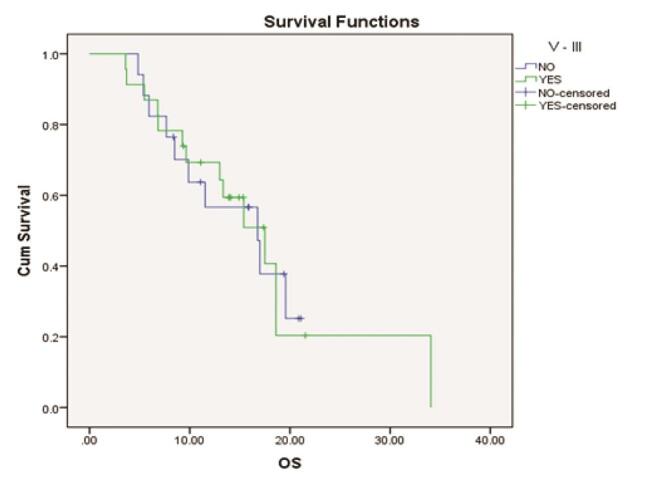
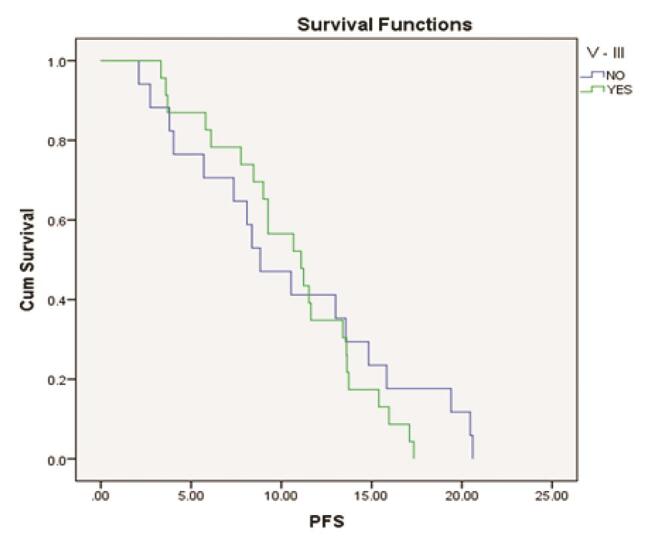
Glioblastoma multiforme (GBM) is a disease with poor outcome. Alterations or mutations in epidermal growth factor receptors (EGFRs) are found in GBM and may be targeted to improve outcomes. We analyzed the frequency of EGFR variant III (vIII) mutations in patients with GBM and their outcomes after standard treatment. This is a retrospective study conducted in a single tertiary cancer center in south India. Forty patients with GBM who had their entire treatment done at this center were identified, and their primary tumor tissue blocks were retrieved. Genomic DNA was extracted, and molecular analysis was performed and analyzed. The results of mutational analysis were correlated with treatment outcome of the patients. Survival outcome was analyzed using the Kaplan-Meier method. The log-rank test was used to assess the association between the groups and various parameters. Our study showed a similar incidence of EGFR vIII alterations as published in world literature, but we did not find any difference in overall survival (OS) and progression-free survival (PFS) in patients with EGFR vIII mutation compared with nonmutant cohort. Contrary to the existing literature which indicated EGFR vIII alterations to be a negative prognostic indicator, our study did not find it to be an independent predictor of prognosis among Indian GBM patients treated with present standard of care.
多形性胶质母细胞瘤(GBM)是一种预后较差的疾病。在GBM中发现了表皮生长因子受体(EGFR)的改变或突变,这些改变或突变可能是改善预后的靶点。 我们分析了GBM患者中EGFR变异体III(vIII)突变的频率及其在标准治疗后的预后情况。 这是一项在印度南部一家单一的三级癌症中心进行的回顾性研究。确定了40例在该中心完成全部治疗的GBM患者,并获取了他们的原发性肿瘤组织块。提取基因组DNA,进行分子分析并加以分析。将突变分析结果与患者的治疗结果相关联。 使用Kaplan-Meier方法分析生存结果。采用对数秩检验评估各组与各种参数之间的关联。 我们的研究显示,EGFR vIII改变的发生率与世界文献报道的相似,但我们发现与非突变队列相比,EGFR vIII突变患者的总生存期(OS)和无进展生存期(PFS)没有差异。 与现有文献表明EGFR vIII改变是不良预后指标相反,我们的研究没有发现它是接受当前标准治疗的印度GBM患者预后的独立预测因素。