School of Biological Sciences, The University of Adelaide, Adelaide, SA, Australia.
CSIRO, Agriculture and Food, Hobart, Tas, Australia.
J Appl Microbiol. 2021 Nov;131(5):2528-2538. doi: 10.1111/jam.15113. Epub 2021 May 4.
This study evaluated the microbial viability of fish gut microbiota in both digesta (faecal) and mucosal samples using a modified propidium monoazide (PMA) protocol, followed by 16S ribosomal RNA (rRNA) gene sequencing.
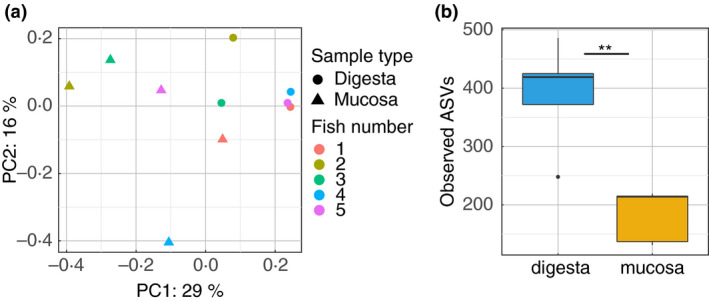
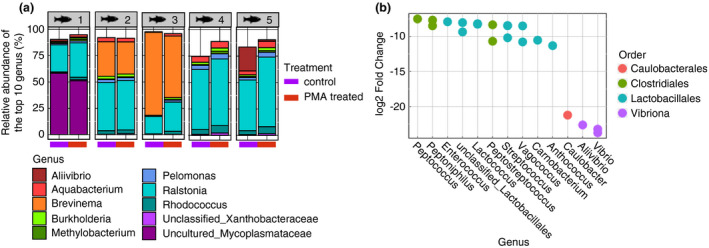
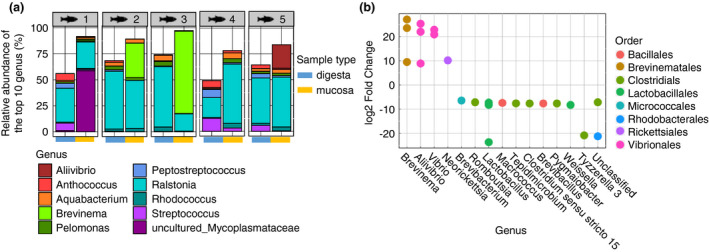
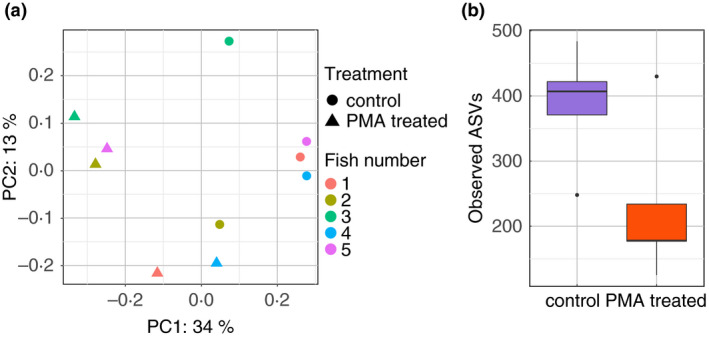
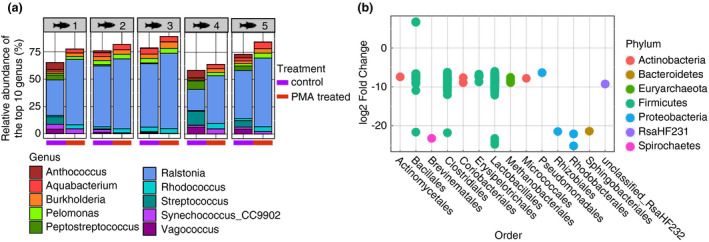
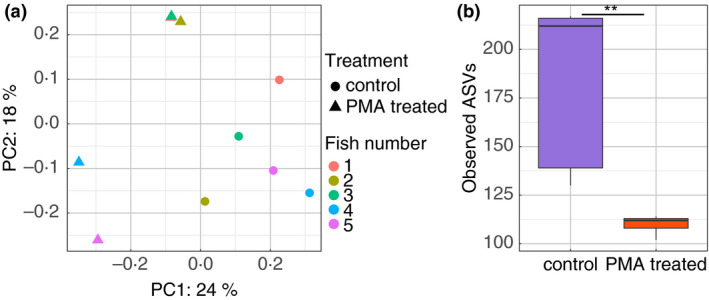
Digesta and gut mucosal samples from farmed yellowtail kingfish (Seriola lalandi) were collected and a modified PMA treatment was applied prior to DNA extraction to differentiate both active and nonviable microbial cells in the samples. All samples were then sequenced using a standard 16S rRNA approach. The digesta and mucosal samples contained significantly different bacterial communities, with a higher diversity observed in digesta samples. In addition, PMA treatment significantly reduced the microbial diversity and richness of digesta and mucosal samples and depleted bacterial constituents typically considered to be important within fish, such as Lactobacillales and Clostridales taxa.
These findings suggest that important bacterial members may not be active in the fish gut microbiota. In particular, several beneficial lactic acid bacteria (LAB) were identified as nonviable bacterial cells, potentially influencing the functional potential of the fish microbiota.
Standardizing the methods for characterizing the fish microbiota are paramount in order to compare studies. In this study, we showed that both sample type and PMA treatment influence the bacterial communities found in the fish gut microbiota. Our findings also suggest that several microbes previously described in the fish gut may not be active constituents. As a result, these factors should be considered in future studies to better evaluate the active bacterial communities associated with the host.
本研究采用改良的单脒基丙啶(PMA)方案,对养殖黄鳍金枪鱼(Seriola lalandi)的消化物(粪便)和黏膜样本中的鱼肠道微生物区系的微生物活力进行评估,随后进行 16S 核糖体 RNA(rRNA)基因测序。
采集养殖黄鳍金枪鱼的消化物和肠道黏膜样本,并在提取 DNA 之前应用改良的 PMA 处理,以区分样本中活跃和非存活的微生物细胞。然后使用标准的 16S rRNA 方法对所有样本进行测序。消化物和黏膜样本中含有明显不同的细菌群落,消化物样本中的多样性更高。此外,PMA 处理显著降低了消化物和黏膜样本中的微生物多样性和丰富度,并消耗了被认为是鱼类中重要组成部分的细菌成分,如乳杆菌目和梭菌目分类群。
这些发现表明,重要的细菌成员可能在鱼类肠道微生物群中不活跃。特别是,几种有益的乳酸菌(LAB)被鉴定为非存活细菌细胞,可能影响鱼类微生物群的功能潜力。
为了进行比较研究,规范表征鱼类微生物群的方法至关重要。在本研究中,我们表明,样本类型和 PMA 处理都会影响鱼类肠道微生物群中发现的细菌群落。我们的研究结果还表明,以前在鱼类肠道中描述的几种微生物可能不是活跃的组成部分。因此,在未来的研究中应考虑这些因素,以更好地评估与宿主相关的活跃细菌群落。