Ingala Melissa R, Simmons Nancy B, Dunbar Miranda, Wultsch Claudia, Krampis Konstantinos, Perkins Susan L
Department of Vertebrate Zoology, National Museum of Natural History, Washington, DC, USA.
Department of Mammalogy, The American Museum of Natural History, New York, NY, USA.
Anim Microbiome. 2021 Dec 14;3(1):82. doi: 10.1186/s42523-021-00139-8.
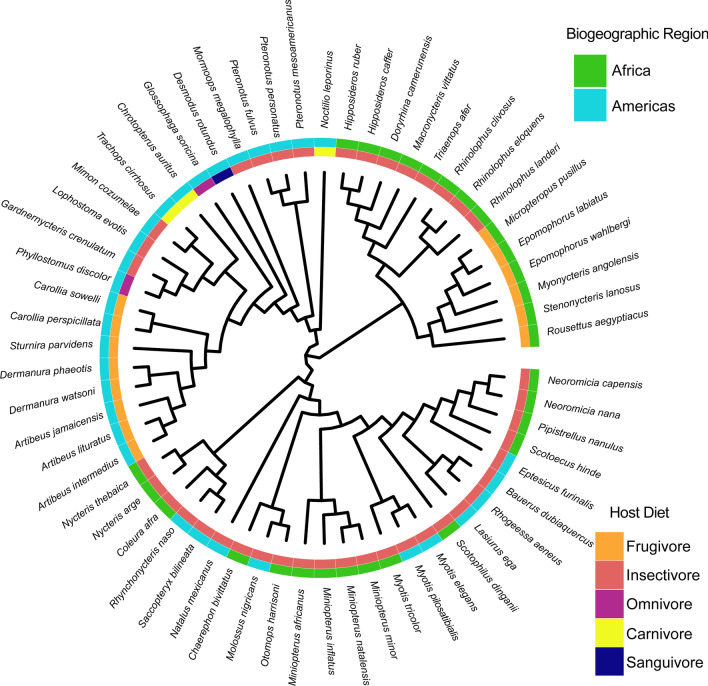
Animals evolved in a microbial world, and their gut microbial symbionts have played a role in their ecological diversification. While many recent studies report patterns of phylosymbiosis between hosts and their gut bacteria, fewer studies examine the potentially adaptive functional contributions of these microbes to the dietary habits of their hosts. In this study, we examined predicted metabolic pathways in the gut bacteria of more than 500 individual bats belonging to 60 species and compare the enrichment of these functions across hosts with distinct dietary ecologies.
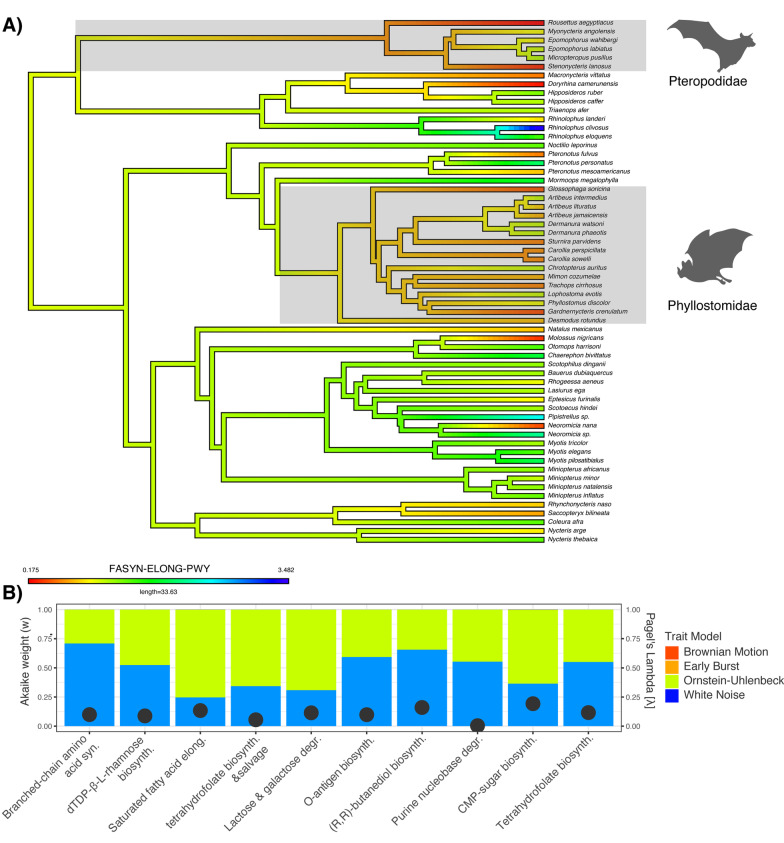
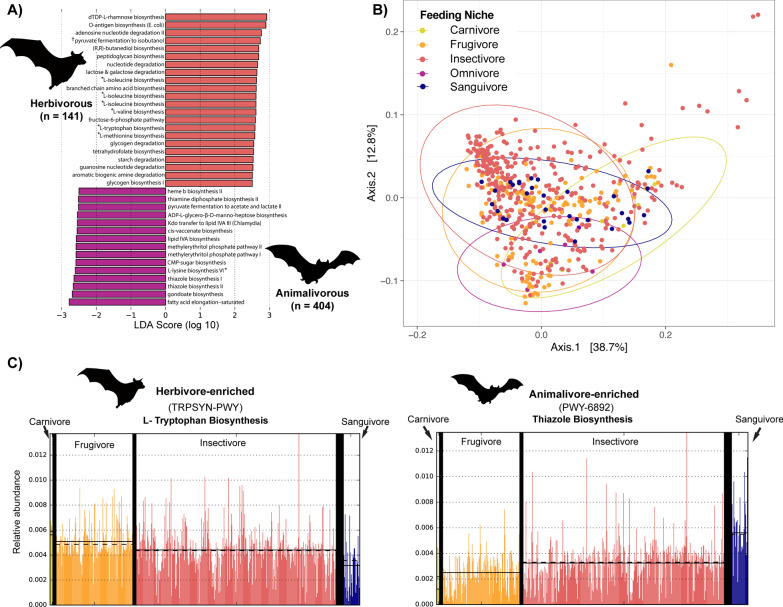
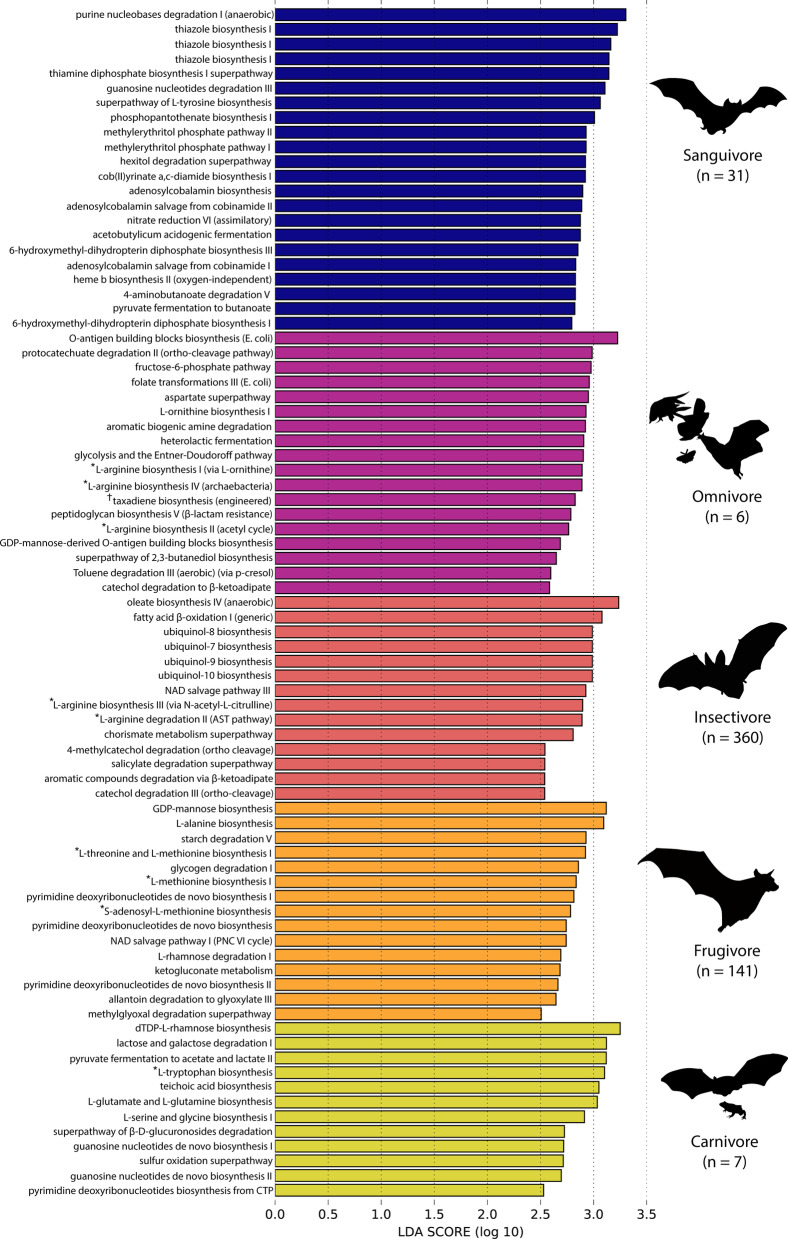
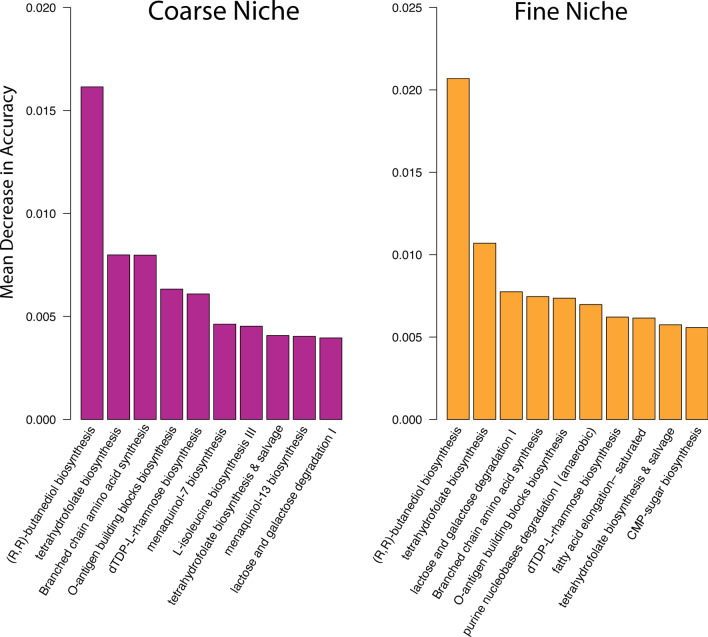
We found that predicted microbiome functions were differentially enriched across hosts with different diets. Using a machine-learning approach, we also found that inferred microbiome functions could be used to predict specialized host diets with reasonable accuracy. We detected a relationship between both host phylogeny and diet with respect to microbiome functional repertoires. Because many predicted functions could potentially fill nutritional gaps for bats with specialized diets, we considered pathways discriminating dietary niches as traits of the host and fit them to comparative phylogenetic models of evolution. Our results suggest that some, but not all, predicted microbiome functions may evolve toward adaptive optima and thus be visible to the forces of natural selection operating on hosts over evolutionary time.
Our results suggest that bats with specialized diets may partially rely on their gut microbes to fulfill or augment critical nutritional pathways, including essential amino acid synthesis, fatty acid biosynthesis, and the generation of cofactors and vitamins essential for proper nutrition. Our work adds to a growing body of literature suggesting that animal microbiomes are structured by a combination of ecological and evolutionary processes and sets the stage for future metagenomic and metabolic characterization of the bat microbiome to explore links between bacterial metabolism and host nutrition.
动物在微生物世界中进化,其肠道微生物共生体在生态多样化过程中发挥了作用。尽管最近许多研究报道了宿主与其肠道细菌之间的系统共生模式,但较少有研究探讨这些微生物对宿主饮食习惯潜在的适应性功能贡献。在本研究中,我们检测了60个物种的500多只蝙蝠肠道细菌中的预测代谢途径,并比较了具有不同饮食生态的宿主间这些功能的富集情况。
我们发现,不同饮食的宿主中,预测的微生物组功能存在差异富集。使用机器学习方法,我们还发现推断出的微生物组功能可用于以合理的准确度预测宿主的特定饮食。我们检测到宿主系统发育和饮食与微生物组功能库之间的关系。由于许多预测功能可能会填补特定饮食蝙蝠的营养缺口,我们将区分饮食生态位的途径视为宿主特征,并将其应用于进化的比较系统发育模型。我们的结果表明,一些(但不是全部)预测的微生物组功能可能会朝着适应性最优方向进化,因此在进化时间内对作用于宿主的自然选择力量而言是可见的。
我们的结果表明,具有特定饮食的蝙蝠可能部分依赖其肠道微生物来实现或增强关键的营养途径,包括必需氨基酸合成、脂肪酸生物合成以及对适当营养至关重要的辅因子和维生素的生成。我们的工作为越来越多的文献增添了内容,这些文献表明动物微生物组是由生态和进化过程共同构建的,并为未来蝙蝠微生物组的宏基因组和代谢特征研究奠定了基础,以探索细菌代谢与宿主营养之间的联系。